

400kW Diesel Generator Ranking: Best Models for Power Reliability
2026-09-13
When the grid fails or a remote site demands unwavering energy, a 400kW diesel generator often becomes the backbone of your operation. But not all models are built equal—and choosing the wrong one can mean costly downtime, excessive fuel burn, or premature failure. In this ranking, we cut through the noise to spotlight the best 400kW units that truly deliver on power reliability. Whether you’re running a hospital, data center, or industrial plant, the right pick here could mean the difference between seamless continuity and a crippling blackout. Read on to see which models stand tall—and where DINGBO POWER fits into the reliability conversation.
What Separates a 400kW Diesel Generator That Lasts From One That Doesn’t
The gap usually starts with components that never show up on a marketing cut sheet. In a 400kW set that lasts, the skid is rigid enough to keep the engine and alternator aligned under load, the alternator uses Class H insulation with sealed bearings, and the radiator can shed heat at full rated output when the intake air is already above 40°C. The units that fail early tend to save money in those exact spots: thin base rails flex and shear coupling bolts, the alternator gets a lower temperature rating, and the cooling package has no margin for a dirty site or a hot afternoon.
Service access is another telling difference. A durable 400kW package places the fuel separator, oil filter, and coolant drain where a technician can reach them without removing side panels or leaning over a hot manifold. Wiring is routed through sealed conduit away from chafe and heat points. The quick-to-fail alternative hides filters behind brackets, runs harnesses over sharp edges, and skips clear circuit labels. Once routine maintenance becomes a two-person job, it gets delayed, and the damage compounds.
Fuel and cooling management draw the final line. A long-life generator comes with a water separator that actually gets drained, a radiator sized for a 45°C ambient, and low-coolant shutdown wired into the control system. A short-life unit might hold full load on a cool morning, then overheat by mid-afternoon or clog injectors after a few tanks of marginal fuel. If the package was validated only in a controlled test cell, the first dusty site with real operators will expose every shortcut.
The Real Cost of Downtime When a 400kW Unit Fails Mid-Operation
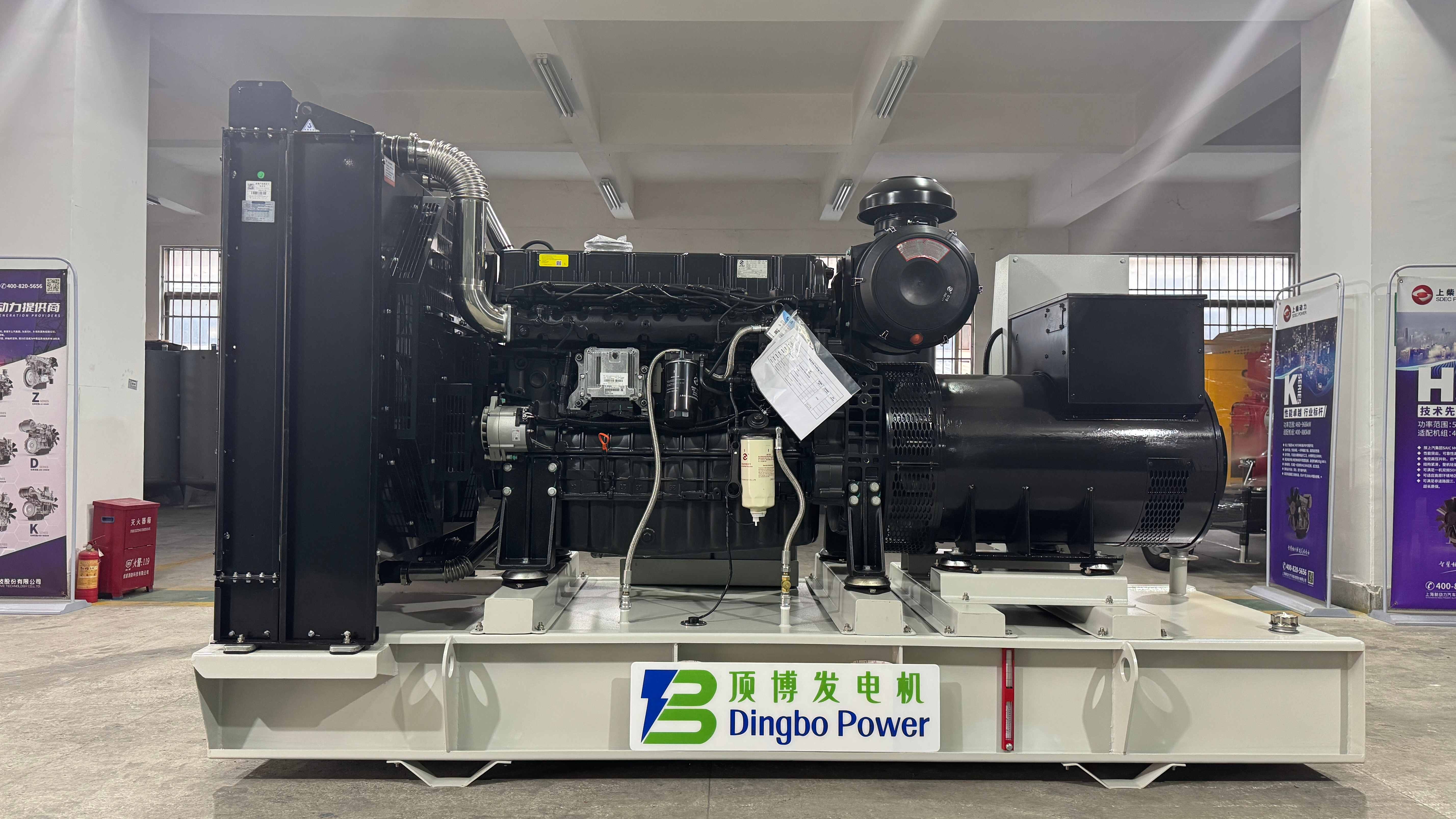
When a 400kW unit cuts out without warning, the first number most operators reach for is the direct revenue loss. But that often understates the blow. Imagine a mid-size fabrication shop where the 400kW generator backs up the whole floor during a grid fluctuation. The line stops, and every station goes quiet. If the shop bills out at $180 per labor-hour per worker and you've got twelve people standing around, that's over $2,100 in idle wages each hour, plus the value of the parts that didn't get built. If the failure lasts four hours, you're already past $8,000 in labor alone before a single repair invoice shows up.
Beyond the obvious production gap, there's the scramble cost. You either wait for the OEM tech who might be two counties away or you bring in a rental 400kW unit, which comes with delivery charges, connection fees, and a minimum hire period that usually runs 24 hours. If the unit runs critical cooling or ventilation, product integrity starts to degrade quickly. A food distributor losing refrigeration for half a day could write off $50,000 or more in spoiled stock. Then you've got the overtime needed to make up lost output once power returns—often at 1.5x or 2x rates.
Long after the unit is running again, the downtime bill keeps climbing. Abrupt shutdowns stress engine components, injection systems, and alternator windings, meaning you may face a major overhaul sooner than the maintenance schedule predicted. Insurance underwriters review outage frequency when renewing premiums, and repeated failures can push your rates up. If the outage caused you to miss a contractual delivery date, you might eat penalty clauses or lose a key client. In some data center contracts, a single hour of downtime can trigger six-figure service credits. So the real cost is rarely the $400 part that failed—it's the cascade of idle labor, spoiled product, expedited logistics, overtime, and trust that takes months to rebuild.
Why Some 400kW Generators Burn More Fuel Than Their Datasheets Promise
Datasheet fuel figures are usually taken under perfect lab conditions: steady load at exactly 75% or 100% prime rating, calibrated injectors, and a clean cooling system. Real sites rarely work that way. A 400kW genset feeding a building with variable air conditioning, motor starts, or uneven phase loading will spend most of its life below optimal thermal efficiency. The governor keeps revs stable, but the engine burns extra diesel just to recover from every load step, and that transient consumption never shows up on a static spec sheet.
Another hidden factor is fuel mapping. Many manufacturers tune the ECU to pass emissions tests rather than to deliver the lowest brake-specific fuel consumption across the entire curve. On top of that, wet stacking occurs when the unit runs below 30% load for long periods—unburned fuel collects in the exhaust and the engine must work harder to push through increased back pressure. Operators then see 10-18% higher consumption than promised, even though the engine itself is not defective.
Don't overlook basics like air filter restriction, injector wear after 500-800 hours, or low cetane diesel. A clogged air filter alone can push a 400kW set from 210 g/kWh to over 230 g/kWh. If the unit is installed at altitude or in high ambient temperatures, the turbocharger has to spin harder to maintain manifold pressure, and that extra effort becomes extra fuel. The datasheet number is a useful benchmark, but treating it as a guarantee in the field is how budgets quietly bleed.
How Noise Regulations Can Make or Break Your Installation Plans
Noise regulations vary significantly from one jurisdiction to the next, and they often hinge on subtle details like how decibel levels are measured at the property line versus the nearest neighbor's window. A plan that looks fine on paper can fall apart if you assume the manufacturer's published sound rating will automatically satisfy local limits. Early verification of the exact ordinance language—including any time-of-day restrictions and penalties for non-compliance—should be a prerequisite before locking in equipment locations.
In many cases, the problem isn't the primary unit itself but the cumulative effect of multiple components cycling on and off in the same area. Two or three rooftop fans or condenser banks that individually pass a spot check can together exceed the allowed ambient-plus-background threshold, especially during nighttime hours when limits often drop by ten decibels or more. Factoring in how the equipment will actually operate together, not just its standalone spec, prevents a rude surprise during the final sound test.
Installation schedules also collide with noise rules when construction activities such as drilling, pile driving, or extended generator use are restricted to certain windows. If your plan calls for weekend or evening work to meet a deadline, a local noise curfew can force a complete rescheduling and add weeks of delay. Treating these regulations as a design constraint from day one—rather than an afterthought at permit time—keeps the project moving and avoids expensive last-minute changes.
Maintenance Schedules You Should Actually Expect, Not Just What Brochures Claim
Brochures love to sell you on “low maintenance” until you realize the fine print assumes you drive on freshly paved roads in perfect weather. In real conditions, brake fluid picks up moisture within two years even if the manual stays quiet about it, and automatic transmission fluid that's supposedly “lifetime” often starts to smell burnt around 80,000 miles. Expect to flush both sooner than the showroom poster suggests.
Oil change intervals have become a marketing game, with 10,000-mile claims that fall apart under short trips, stop-and-go traffic, or dusty commutes. If your engine sees any of that, you will likely need a change around 5,000 to 7,000 miles no matter what the sticker says. Watch the oil itself: once it turns dark and gritty between your fingers, it is time, not when the dashboard reminder finally agrees.
Coolant and timing belts are the quiet budget killers. Many brochures list coolant as good for 100,000 miles, but by year five the anti-corrosion additives are often spent, leaving your water pump and radiator to eat themselves slowly. Timing belts typically need replacement between 60,000 and 90,000 miles, yet nearly every “worry-free” maintenance plan omits that cost until the belt snaps. Ask for the unglamorous schedule up front, not the one printed in the glossy brochure.
Comparing Top 400kW Models Without Falling for Same-Spec Illusions
Many buyers assume that a 400kW rating tells you most of what you need to know. But peak output figures are often measured under ideal conditions that rarely match a real installation. Voltage range, maximum input current per MPPT, and thermal derating behavior can differ sharply between two units that both claim 400kW. If you stop at the headline number, you might miss that one model clips output at 45°C while the other holds full power to 50°C. That difference alone can cost thousands of kilowatt-hours per year.
Another illusion comes from efficiency curves. A 98.5% peak efficiency is easy to advertise, but the weighted European or CEC efficiency matters far more for realistic solar yield. Compare those numbers across data sheets, and check how efficiency is defined at partial load. Some vendors quote inverter efficiency only, while others include transformer and cooling losses. That's why two products with identical 400kW and 98%+ specs can deliver meaningfully different energy over a decade.
Build quality and serviceability also hide behind same-spec illusions. Look at enclosure ratings, fan replacement intervals, and whether the unit requires specialized lifting gear for routine maintenance. A model with tool-less DC entry and modular power stages might avoid days of downtime later, even if both sheets list IP65 and 400kW. Don't fall for the illusion that equal numbers mean equal long-term value.
FAQ
Cummins C400D6, Caterpillar C15, Kohler 400REOZT, and MTU 6R1600 series regularly appear near the top of shortlists. What sets them apart isn't just brand reputation but proven engine blocks, electronic governors that hold frequency tight, and cooling packages designed for high ambient temperatures.
Pay attention to engine displacement and whether the block is designed for standby or prime duty. Check the alternator's voltage regulation under block load, the coolant system's ambient temperature rating, and how fast the set can accept a large load step without excessive frequency dip. Noise levels and fuel consumption at 75% load matter more than datasheet peak numbers.
Start with your actual peak running load, then add the starting surge from motors or compressors. Remember that altitude and high inlet air temperature derate output, sometimes by 10-15%. Instead of sizing exactly at 400kW, leave headroom of 20% so the engine isn't constantly running near its limit, which shortens service intervals.
Electronic common rail injection and variable-speed cooling fans improve part-load consumption noticeably. But the biggest factor is running the set at 50-75% of rated load. Long periods under 30% load cause wet stacking and higher per-kWh fuel burn, so a right-sized engine with good governor mapping often beats a bigger engine with a better brochure number.
Stick to oil and filter changes based on hours, not calendar alone. Test the coolant's SCA or ELC level, load-bank the set quarterly if it rarely sees outages, and exercise it under at least 40% load for 30 minutes monthly. Check battery voltage, fuel tank for water, and exhaust back pressure at the same intervals.
Most open skid units sit between 85 and 100 dBA at one meter. A quality sound-attenuated enclosure brings that down to 65-75 dBA, which is usually acceptable for commercial areas. Adding a critical-grade silencer, mounting the set on spring isolators, and pointing exhaust outlets away from buildings further reduces complaints.
Undersized ventilation is the big one: rooms get hot, the radiator recirculates hot air, and the engine derates. Exhaust pipe runs with too many bends create back pressure. Fuel lines that are too small or too long starve the injection pump. Poorly bonded neutral-ground connections and concrete pads that aren't level also cause trouble years later.
For small hospitals, medical clinics, or single data halls, 400kW can cover essential loads plus some HVAC. But these facilities usually need N+1 redundancy, so you'd install two units or pair the generator with a UPS. The automatic transfer switch and load management system determine whether 400kW is truly reliable, not just the generator's prime rating.
Conclusion
Choosing a 400kW diesel generator that actually delivers long-term power reliability means looking past glossy spec sheets and focusing on what fails in the real world. The difference between a unit that lasts a decade and one that dies young often comes down to build quality, cooling system design, and whether the manufacturer used heavy-duty alternators and block heaters rated for continuous industrial loads. Downtime isn't just an inconvenience—it can cost thousands per hour in lost production, spoiled inventory, or emergency response failures, so the best models are those with proven track records for cold starts, low harmonic distortion, and parts availability even in remote locations. Fuel burn is another sore point: many 400kW generators sip far more diesel than their datasheets promise because of poor load matching, dirty injectors, or overly optimistic test conditions. Top-ranked models in this class typically show real-world consumption within 5% of published figures when properly load-banked, while cheap imports often burn 15–20% more once you push them to 75% load for sustained periods.
Noise regulations can make or break your entire installation plan, especially if you're running near residential zones, hospitals, or noise-sensitive industrial parks. The best 400kW units ship with sound-attenuated enclosures and residential-grade mufflers that keep levels below 65 dB(A) at 7 meters—without derating the engine. Maintenance expectations also separate honest brands from brochure fluff: realistic oil change intervals for a 400kW diesel under prime power use are 250–400 hours, not the 500+ some vendors claim, and coolant, belts, and fuel filters need quarterly attention. Finally, when comparing top models side by side, don't fall for same-spec illusions—two units can both say "400kW standby" yet differ wildly in voltage regulation, step load response, and alternator temperature rise. The models that rank highest for power reliability are those with documented third-party test reports, readily available service kits, and a local dealer network that stocks major components rather than ordering them from overseas. In short, the best 400kW diesel generator isn't the one with the flashiest marketing or lowest sticker price—it's the one that keeps running quietly, efficiently, and predictably when the grid fails.
Contact Us
Contact Person: Rita
Email: [email protected]
Tel/WhatsApp: +8613481024441
Website: https://www.dbdieselgenerator.com/