

Angle Steel Tangent Tower Solutions for Reliable Transmission Lines
2026-07-21
In the world of power transmission, the strength of a single tower can define the reliability of an entire line. Angle steel tangent towers are at the heart of this challenge, enduring nature's forces while keeping the grid stable. At Anbang, we've engineered these structures not just to meet standards, but to outlast them—combining precision design with rugged resilience. Discover how smart engineering turns ordinary steel into the backbone of uninterrupted energy.
Why Angle Steel Towers Outperform in Rugged Terrain
Angle steel towers have long been the go-to choice for transmission lines crossing challenging landscapes, and for good reason. Their lattice structure, composed of interconnected steel angles, offers an exceptional strength-to-weight ratio that allows them to withstand high wind loads and uneven terrain stresses without buckling. Unlike tubular or monopole designs, the open framework lets wind pass through, reducing aerodynamic drag and minimizing foundation demands on rocky or unstable slopes. This inherent flexibility also simplifies transportation and assembly in remote areas, where heavy machinery may be limited and components must be carried in by hand or helicopter.
Another key advantage is adaptability. Angle steel towers can be easily customized to match the exact topographical and span requirements of a site, with leg extensions, variable base widths, and modular bracing patterns that accommodate steep grades or abrupt changes in elevation. Field connections using bolted joints eliminate the need for complex welding in harsh weather, speeding up construction even under adverse conditions. The material itself is rugged and corrosion-resistant when hot-dip galvanized, ensuring decades of reliable service with minimal maintenance—vital for lines running through forests, mountains, or deserts where regular inspections are costly.
Finally, the modularity of angle steel towers facilitates repairs and upgrades without dismantling the entire structure. Damaged members can be swapped out individually, an essential feature for installations in remote, hard-to-access regions. This combination of structural efficiency, ease of logistics, and long-term dependability makes them especially well-suited for rugged terrain projects, where reliability and adaptability aren't just benefits—they're necessities.
Designing for Wind, Ice, and Seismic Loads
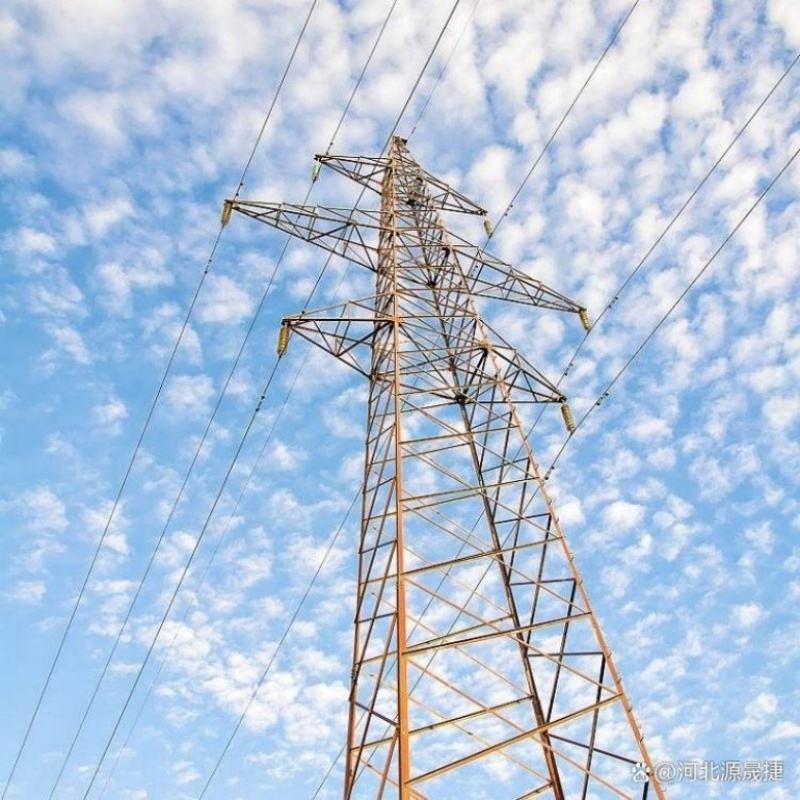
Structures don’t fail because a single force overwhelms them—they fail when multiple forces interact in ways the designer didn’t anticipate. Wind, ice, and seismic loads each demand attention on their own, but together they expose hidden vulnerabilities. Wind pushes surfaces prone to oscillation; ice adds weight where it was never intended; seismic shaking turns static frames into dynamic ones. The real challenge isn’t calculating each load separately—it’s recognizing how a iced-up truss behaves differently when an earthquake hits, or how a wind gust can snap a member already fatigued by freeze-thaw cycles. Codes often treat these loads as isolated events, but reality rarely cooperates.
One overlooked aspect is material creep under sustained ice loads combined with thermal cycling. A beam might hold up fine under a single winter storm, but repeated cycles of loading and relief can introduce micro-cracks that seismic waves later exploit. Engineers increasingly rely on nonlinear time-history analysis to capture such sequences, but that’s only half the battle. The other half lies in detailing connections that don’t concentrate stress when the building sways—especially in cold regions where steel embrittlement lowers fracture toughness. Welded joints that work in California might snap in Alaska unless the weld procedure is adjusted for the local climate. Small choices like bolted slip-critical connections rather than welded ones can make the difference between a repairable crack and a catastrophic collapse.
There’s also a cultural dimension: architects love glass curtain walls and long spans, but those features amplify wind-driven ice accumulation and reduce inherent damping. The most resilient designs often look heavier, chunkier. Yet subtle adjustments—like orienting the structure’s narrow face into prevailing winds, or using tuned mass dampers disguised as architectural features—can preserve the aesthetic while shedding risk. Ultimately, designing for these combined hazards means thinking less like a code-checker and more like a detective, searching for the few critical load combinations that really matter. The rest is just noise.
Streamlining Assembly Without Sacrificing Strength
Modern manufacturing demands components that snap together quickly without compromising structural integrity. Engineers have turned to snap-fit joints, which rely on precise material flex and rebound to lock parts in place. By fine-tuning the beam geometry—taper angles, undercut depths, and root radii—you can distribute stress more evenly, preventing brittle fractures while keeping assembly force low. It’s a balancing act that rewards careful design, allowing repeated disassembly for maintenance without the gradual weakening that plagued earlier fastener-based methods.
Material selection plays an equally vital role. Advanced thermoplastics with a well-defined yield point and high fatigue resistance, like glass-filled nylons or polycarbonate blends, absorb the elastic strain of snapping without permanent deformation. These polymers can be molded into complex, lightweight forms that rival metal counterparts in durability. The secret lies in orienting the molecular flow during injection molding to align with stress paths, so the part stretches where it needs to and stays rigid elsewhere. When done right, the assembly process becomes a seamless click that holds up under vibration, thermal cycling, and everyday wear.
Beyond the snap itself, incorporating gentle lead-ins and clear audible or tactile feedback transforms assembly from a guess into a confident, one-motion action. Workers on the line—or even end users—can join pieces without tools, reducing ergonomic strain and cycle time. By designing stops that prevent over-insertion and ribs that guide alignment, you eliminate the risk of partial engagement. The result is a joint that’s not only strong in tension and shear but also disconnects cleanly when needed, leaving no stripped threads or loose hardware behind.
Corrosion Protection That Extends Service Life
Protecting assets from corrosion isn't just about applying a coating—it's about engineering a barrier that actively fights deterioration. Our approach combines advanced surface preparation with multi-layer protective systems designed to seal out moisture, chemicals, and oxygen, the primary triggers of rust. By tailoring each solution to the specific environmental challenges a structure faces, we ensure that protection lasts far longer than conventional methods. The result is less downtime, fewer repairs, and a dramatically extended service life for critical components.
What truly sets effective corrosion protection apart is its ability to self-heal and adapt. Microscopic scratches that would normally invite rust are quickly neutralized by sacrificial anodes or reactive inhibitors embedded within the coating. This means that even when the surface is breached, the underlying metal remains shielded. This intelligent response to damage prevents the kind of hidden corrosion creep that often goes unnoticed until major failures occur, saving both time and capital over the asset's lifecycle.
Beyond the chemistry, we focus on the practical conditions of application and long-term exposure. From saltwater immersion to industrial chemical fumes, our protective systems are field-proven in the harshest environments. By rigorously testing for adhesion, flexibility, and ultraviolet resistance, we eliminate weak points that could compromise performance. It's this meticulous attention to real-world behavior that keeps equipment operational year after year, even under relentless stress.
Tailoring Tower Geometry to Line Requirements
Every transmission line presents a unique set of constraints—voltage level, conductor count, phase spacing, insulation demands, and local weather patterns all shape the tower’s final form. Rather than applying a generic design, engineers fine-tune the tower’s silhouette to match the line’s electrical and mechanical needs. Wider crossarms might be needed to maintain safe clearance under heavy wind, while a taller body ensures sufficient ground clearance in uneven terrain. Even the angle of the tower head can shifts based on how many circuits must be accommodated and how they interact electrically.
This tailoring process extends into the tower body and foundation as well. For lines running through coastal areas or high-corrosion zones, thicker steel sections is chosen and galvanizing is enhanced, directly altering the tower’s geometry to add durability. In regions with heavy ice loads, towers gain extra lateral strength through wider bases or redundant bracing—details that emerge only after studying the specific line’s probability of ice accretion. The goal is to avoid overbuilding while still meeting every performance requirement, so each meter of steel is placed where analysis shows it will work hardest.
The payoff is a structure that feels almost deliberately sculpted to its route. A line threading through a narrow mountain pass may use compact tower profiles with shorter crossarms and insulated mid-span, while a double-circuit river crossing demands a robust tower with high tensile resistance and carefully calculated conductor positions to prevent galloping. By shaping the tower around the line’s actual demands, utilities save material, speed up construction, and end up with a transmission system that withstands local stresses without costly overdesign.
Balancing Cost and Long-Term Reliability
Finding the sweet spot between upfront expenditure and lasting performance is rarely a straight line. It’s tempting to chase the lowest price tag, but that often ignores the hidden expenses of replacements, downtime, and maintenance that creep in later. A slightly higher initial outlay can frequently translate into quieter operations, fewer interruptions, and a much smoother ownership experience over the years. The trick is to weigh what you pay now against what you’re likely to spend—or save—in the future, and to recognize that the cheapest option rarely stays cheap for long.
Components that bear repeated stress, like bearings, seals, or electronic circuits, tell the real story. Investing in superior materials or proven design here can extend life cycles by margins that far outstrip the additional cost. It’s not about overengineering every part, but about identifying the few points where failure is most disruptive and choosing robustness over bargain pricing. This approach often reduces the frequency of service calls and keeps your timeline predictable, which in some industries is far more valuable than the savings from a low bid.
Beyond the numbers, there’s a human element: trust. When a product lasts longer than expected and rarely lets you down, it builds confidence that no spreadsheet can fully capture. That reliability can become part of your own reputation, whether you’re outfitting a facility or recommending solutions to clients. The balance isn’t static—it shifts with use patterns and evolving needs—but aiming for durability where it counts almost always pays off in ways that go beyond the balance sheet.
FAQ
Angle steel tangent towers are lattice structures built from angle steel components, primarily used along straight sections of transmission lines to support conductors. They are designed to handle the mechanical loads from the conductors, such as tension and wind, while maintaining proper clearance. These towers are common in high-voltage transmission grids because they offer a good balance of strength, durability, and cost-effectiveness.
Their reliability comes from robust structural design and material properties. The lattice design provides redundancy, so stress is distributed across multiple members, reducing the risk of catastrophic failure. High-quality galvanization protects against corrosion, ensuring long-term performance even in harsh environments. Regular inspection-friendly geometry also helps maintenance crews identify issues early, minimizing downtime.
They are primarily made from high-strength structural steel angles, usually hot-dip galvanized. Steel provides excellent tensile and compressive strength, essential for withstanding dynamic loads. Galvanization coats the steel with zinc, forming a barrier against rust and atmospheric corrosion, which extends the service life to several decades without frequent repainting.
Absolutely. These towers are modular and can be tailored by adjusting leg lengths, bracing patterns, and cross-arm configurations. For higher voltages, the tower height and conductor spacing are increased to meet insulation requirements. In mountainous or uneven terrains, specialized foundations and unequal leg extensions are used to level the structure. This flexibility makes them suitable for a wide range of projects.
Angle steel towers offer a lighter yet strong structure, making transportation and assembly easier, especially in remote areas. Their open lattice design presents less wind resistance, reducing foundation loads. Assembly is bolt-together, requiring no heavy on-site welding, which speeds up construction. Compared to concrete poles, they are more adaptable to design changes and easier to recycle.
Design follows international standards like ASCE or IEC, using detailed load cases for wind, ice, and conductor tension. Finite element analysis verifies stress distribution and buckling resistance. In manufacturing, raw steel is tested for chemical and mechanical properties, and galvanization thickness is checked. Prototype testing, often including full-scale load tests, validates the design before mass production.
Routine visual inspections for rust, bolt loosening, or member damage are key. Any damaged galvanization should be touched up with zinc-rich paint. Vegetation control around bases reduces moisture retention. In coastal or industrial areas, more frequent inspections are recommended. Properly maintained, these towers can easily exceed 50 years of service.
Yes, using angle steel towers can minimize environmental impact because the required foundation footprint is relatively small compared to heavier structures. The steel is fully recyclable at end-of-life. During construction, helicopter-assisted assembly can reduce the need for access roads in sensitive ecosystems. Also, the open lattice design is less disruptive to bird flight paths compared to solid structures.
Conclusion
Angle steel tangent towers serve as a resilient backbone for transmission lines crossing rugged terrain, where their lattice design excels over monopoles or guyed structures. The open framework, built from high-strength angle sections, efficiently distributes stresses from wind, ice, and seismic events while remaining lightweight enough for foundation savings. Unlike rigid alternatives, the bolted connections absorb vibration and allow slight flexing without fatigue cracking, a critical advantage in earthquake-prone zones. Field crews appreciate the puzzle-like assembly: compact, pre-punched members are easily sorted and erected with basic tools, avoiding on-site welding that could compromise steel's integrity. This bolt-together approach also supports precise geometric tailoring—engineers adjust leg slopes, cross-arm lengths, and tower heights to match conductor tension, ground clearance, and even avian protection needs, all from a standardized component inventory.
Long-term performance hinges on corrosion defense; modern duplex coatings pairing hot-dip galvanizing with epoxy or zinc-rich primers push maintenance intervals far beyond the 50-year mark, even in coastal or industrial environments. The real-world value emerges when balancing upfront costs against lifecycle reliability. Standardized yet flexible configurations cut engineering time and fabrication waste, while the towers' robust simplicity slashes transport and labor expenses. Repair is equally pragmatic: a single damaged angle can be replaced without dismantling the entire structure, minimizing line downtime. By unifying these design, material, and logistics strategies, angle steel tangent tower solutions deliver a cost-efficient, durable, and adaptive infrastructure that keeps power flowing reliably through the most demanding landscapes.
Contact Us
Contact Person: antor khan
Email: [email protected]
Tel/WhatsApp: 8613863903569
Website: https://www.qdabtower.com/