

Best Permanent Magnet Options for Powerful Industrial Applications
2026-08-10
When your industrial application demands brute strength and unwavering reliability, choosing the right permanent magnet isn’t just a technical decision—it’s a competitive advantage. From wind turbines defying gravity to electric vehicle motors pushing efficiency limits, the backbone often lies in rare-earth magnets that quietly deliver exceptional performance. At DAWA, we understand that the real world rarely fits spec sheets, which is why we bridge the gap between theoretical magnetism and rugged, real-life solutions. But what makes some magnets thrive where others fail? Let’s cut through the noise and explore the options that truly power progress.
Samarium Cobalt: Dominating Extreme Heat Environments
When temperatures soar past 300°C and most magnetic materials give up, samarium cobalt quietly steps into the spotlight. Its metallurgical backbone—a blend of samarium and cobalt—gives it an extraordinary resistance to thermal demagnetization. While neodymium magnets start waving the white flag around 150°C, SmCo holds its coercivity and flux density with barely a shrug. That’s because its crystal structure doesn’t just tolerate heat; it’s practically built for it. In the guts of a jet engine or the sweltering innards of an oil drill, where equipment bakes for hours on end, this alloy doesn't just survive—it delivers unwavering performance.
The secret isn't just raw temperature tolerance, though. Samarium cobalt boasts a Curie point that can exceed 800°C, meaning its fundamental magnetism remains rock-solid long after competitors have lost theirs. Even more impressive, it shrugs off oxidation and corrosion without the need for protective coatings—a trait that’s gold in chemical processing plants or high-altitude aerospace gear. Engineers don’t need to baby these magnets; they just install them and forget, trusting that dimensional stability and magnetic consistency won’t drift over years of thermal cycling. That irreplaceable reliability is why SmCo still dominates niches where failure isn’t an option, from downhole sensors to spacecraft actuators.
Yet this high-temperature mastery comes with a trade-off: samarium cobalt is brittle, demanding careful handling and precision machining. But for those who design systems around extreme heat, the material’s quirks are a small price to pay. It’s not the cheapest option on the shelf, and it never will be, but when a wind turbine generator in the desert or a motor inside a nuclear reactor calls for a magnetic field that refuses to fade, SmCo answers. No bloated marketing, no fancy nano-coatings—just metallurgy that laughs in the face of heat. That’s why, after decades of material science advances, engineers keep circling back to this uncompromising performer.
Neodymium Alloys: Unmatched Strength-to-Weight for Compact Designs
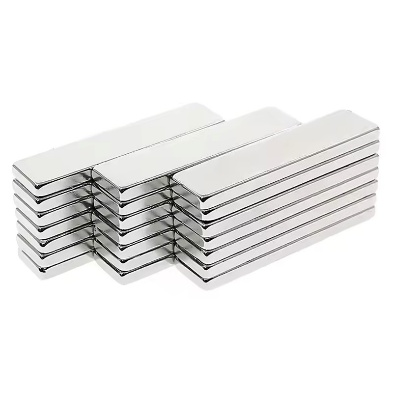
When engineers face the challenge of shrinking a device without sacrificing performance, neodymium alloys often become the quiet hero of the design. These materials deliver a rare combination of high magnetic energy and low mass, making it possible to create motors, sensors, and actuators that punch well above their weight. The alloy’s inherent ability to maintain a powerful magnetic field while occupying minimal space allows for sleeker profiles and lighter end products—critical in fields like aerospace, medical devices, and wearable tech. Unlike bulkier ferrite or samarium-cobalt alternatives, neodymium-based solutions let designers trim down housings and support structures, resulting in assemblies that feel impossibly small yet perform remarkably.
One overlooked advantage is how this heightened strength-to-weight ratio cascades through an entire product. With a smaller, lighter magnet doing the same job, adjacent components like bearings, shafts, and cooling systems can also be downsized. This multiplier effect slashes total system weight and bulk, while often improving energy efficiency—less mass to move means lower power draw. In electric vehicle traction motors or drone propulsion, every gram saved translates directly to extended range or flight time. Neodymium alloys thus become not just a material choice but a strategic enabler, letting engineering teams push boundaries that traditional magnetic materials simply can’t touch.
Durability concerns are frequently cited, yet modern alloy formulations have evolved far beyond early brittle grades. By fine-tuning the microstructure and adding elements like dysprosium, today’s neodymium magnets resist demagnetization under heat and reverse fields while retaining their incredible strength-to-weight character. This means they’re no longer confined to benign environments—they now thrive in automotive underhood conditions, industrial automation, and renewable energy systems. The result is a material that not only fits into tighter spaces but stays reliable there, opening doors to compact, long-life designs that were once deemed impractical.
Alnico: The Time-Tested Choice for High-Temperature Stability
For decades, engineers have relied on Alnico magnets when applications demand unwavering performance under extreme heat. Unlike many modern magnet materials that quickly lose strength as temperatures climb, Alnico’s metallurgical structure is inherently stable, delivering predictable magnetic flux even well beyond 500°C. This resilience stems from its iron-cobalt-nickel-aluminum matrix, which resists demagnetization without the need for complex cooling systems or protective coatings. In furnace controls, aerospace sensors, and high-current industrial instruments, Alnico remains the pragmatic, no-surprises option.
What truly sets Alnico apart is not just its thermal ceiling but the gradual, reversible nature of its losses when pushed to the edge. Where rival materials might suffer permanent damage from a momentary spike, Alnico typically recovers as temperatures normalize, preserving long-term reliability. This forgiving behavior simplifies design margins and lets engineers avoid over-specifying components. It’s a quiet advantage that veteran designers value—especially in safety-critical systems where consistent performance is non-negotiable.
Bonded Magnets: Flexibility and Precision in Complex Assemblies
When intricate geometries and tight tolerances define a project, bonded magnets step into the spotlight. Unlike their sintered counterparts, these magnets blend magnetic powders with a polymer binder, allowing them to be injection molded, compression bonded, or extruded into almost any shape you can imagine. This process delivers components that snap seamlessly into complex assemblies—think multi-pole rotors, over-molded sensor rings, or thin-walled cylinders—without the brittleness or post-processing headaches of traditional magnets. The result is a part that not only fits perfectly but also streamlines the entire manufacturing flow.
Precision isn’t just about shape; it’s about magnetic performance tailored to the application. With bonded magnets, engineers can fine-tune magnetic properties by selecting the powder type—ferrite, neodymium, or samarium cobalt—and adjusting the loading ratio. Need a specific flux pattern or a tight tolerance on field strength? The molding process enables in-situ magnetization, embedding complex pole patterns directly during production. That means fewer assembly steps and consistent part-to-part uniformity, crucial for devices like automotive sensors or medical instruments where reliability can’t be compromised.
What really sets bonded magnets apart in today’s design landscape is their ability to merge function with form. They can be molded directly onto shafts, housings, or other components, creating a single, integrated piece that reduces inventory and simplifies supply chains. Add in the option for hybrid designs—combining magnetic and non-magnetic regions in one shot—and you get a level of integration that traditional magnets simply can’t match. For engineers pushing the boundaries of miniaturization and smart assembly, bonded magnets aren’t just another material choice; they’re a strategic advantage that turns complex challenges into clean, repeatable solutions.
Ceramic Magnets: Corrosion Resistance Without the Cost Premium
Unlike many high-performance magnets that demand protective coatings or careful environmental shielding, ceramic magnets bring inherent corrosion resistance to the table without inflating your budget. Their oxide-based composition ensures they withstand moisture, salt spray, and mild chemical exposure without rusting or degrading—no extra plating, no hidden maintenance costs, and no performance surprises when conditions get damp.
This natural durability makes them a hassle-free choice for outdoor signage, automotive sensors, marine hardware, and any application where humidity or wetness is a given. You avoid the expense and complexity of stainless steel housings or epoxy encapsulation, and you never have to worry about flaking nickel coatings compromising your assembly. It’s a straightforward material that just keeps working, season after season.
Opting for ceramic magnets often means you can meet performance requirements without creeping into the premium price tier of rare-earth alternatives. They deliver dependable magnetic strength and unbeatable resistance to oxidation, offering a practical balance that suits both tight budgets and long-term reliability. For many engineers, it’s the logical path to a rugged design that sidesteps corrosion worries from day one.
Custom Composites: Tailoring Magnetic Profiles for Niche Demands
In fields where off-the-shelf magnets fall short, custom composites step in to bridge the gap. By blending different magnetic powders with polymers or specialty binders, engineers can dial in properties like coercivity, remanence, and thermal stability to an exacting degree. This approach isn't just about making a magnet stronger or weaker—it's about sculpting the entire magnetic response to fit a precise, often peculiar, set of requirements that no standard alloy can meet.
The real art lies in navigating the trade-offs. Need a magnet that holds its field at 200°C but still flexes under vibration? A composite can be designed with high-temperature ferrite particles in a silicone matrix, but the challenge is maintaining dispersion and avoiding oxidation during bonding. Each choice—from particle size distribution to the curing profile of the binder—ripples through the final magnetic signature, often requiring dozens of iterations before the profile locks into place.
Niche applications demand this level of customization. A medical implant might require a biocompatible, remotely actuated magnet that degrades gracefully over time, while a satellite thruster needs a component that resists demagnetization under extreme radiation. These aren't just tweaks to an existing catalog item; they are ground-up inventions where the magnetic composite becomes a co-engineered element of the system, not an afterthought.
FAQ
Neodymium (NdFeB) magnets are the go-to choice when brute force matters. Their exceptional energy product allows compact designs without sacrificing pull, ideal for motors and lifting equipment.
Neodymium offers significantly higher magnetic strength per volume at a lower cost. Samarium cobalt still wins in extreme heat or corrosive settings, but for most industrial tasks, neodymium's punch is hard to beat.
Grades with higher coercivity, like N35AH or N42SH, maintain performance above 150°C. They resist demagnetization when things get hot, making them suitable for automotive and aerospace actuators.
Start by matching the magnet grade to the actual operating temperature and required flux density. Over-specifying drives up price unnecessarily—often a mid-range grade like N42 delivers plenty of strength without the premium of exotic high-temp versions.
Absolutely. Manufacturers routinely tailor shapes, sizes, and even magnetization patterns to fit specialized machinery. Custom coatings also protect against corrosion or abrasion in demanding environments.
Periodic inspection for cracks, chips, or rust is essential, especially if the protective coating wears thin. In wet areas, sealing the magnet or using stainless-steel encapsulation prevents moisture ingress that leads to degradation.
Recycled rare-earth magnets are emerging as a viable path, offering performance close to virgin material. Some producers also explore reduced-dysprosium formulas that lower both environmental footprint and cost while keeping coercivity high.
Conclusion
When selecting the optimal permanent magnet for demanding industrial uses, the choice often boils down to the specific environmental and performance requirements. For extreme heat, Samarium Cobalt magnets stand out with their exceptional thermal stability and resistance to demagnetization, maintaining integrity at temperatures that would cripple other options. Where space is at a premium and sheer strength is critical, Neodymium alloys deliver unmatched power-to-size ratios, enabling compact yet forceful designs in motors and generators. In applications demanding long-term reliability under high heat with moderate magnetic output, Alnico remains a time-honored solution, prized for its stable flux density and minimal temperature coefficient. These three established materials each carve out a distinct niche based on thermal demands and physical constraints.
Beyond these traditional choices, specialized applications often call for tailored solutions. Bonded magnets offer game-changing versatility, allowing intricate shapes and precise tolerances in complex assemblies without sacrificing performance, while Ceramic magnets provide a cost-effective and corrosion-resistant alternative for less demanding yet moist environments, eliminating the need for protective coatings. When standard grades cannot meet unique demands, custom composites step in, blending different powders and binders to engineer magnetic profiles that perfectly align with niche operational needs. Each of these permanent magnet types brings its own blend of trade-offs between performance, cost, durability, and manufacturability, ensuring that even the most challenging industrial scenarios have a viable and efficient magnetic solution.
Contact Us
Contact Person: Kelvin Lo
Email: [email protected]
Tel/WhatsApp: 0769-88561131
Website: https://dawamagnetic.com/