

China CI Flexo Printing Machinery Benefits and Selection Tips for Modern Printers
2026-11-16
For modern label and packaging converters, flexo printing is no longer just about keeping up with tight turnaround times—it’s about controlling costs, reducing downtime, and producing repeatable quality across complex jobs. Yet with so many CI flexo press options on the market, choosing equipment that actually supports faster makeready and cleaner output can feel overwhelming. This guide breaks down the key benefits of China CI flexo printing machinery and offers practical selection tips to help you evaluate performance, automation, and long-term value. Along the way, we highlight insights from HuiPeng to show how a well-engineered press can improve both productivity and print consistency without overcomplicating your workflow.
Tension Control and Drying Capacity: Where Chinese CI Presses Differ
Walk through a Chinese CI press line and you will notice the tension zones behave differently than what many European operators expect. Rather than relying on a single centralized logic for every roller, the control architecture often splits the web path into smaller, locally managed segments. This means a splice or a sudden change in substrate caliper gets absorbed at the nearest dancer or load cell without sending a correction ripple through the entire machine. The practical result is that operators can run lightweight films and thin paper stocks at higher speeds without constantly chasing oscillation marks or edge wander.
Drying capacity is another area where assumptions quickly fall apart. Chinese-built CI presses frequently pair the main central drum with a series of high-velocity air bars arranged in shorter, more aggressive zones. The airflow is not just about temperature; it is tuned to strip the boundary layer of solvent or water vapor off the ink surface early, then taper off to avoid skinning. This staged approach lets converters push higher ink coverage on non-absorbent substrates without slowing the line down. Where a legacy press might need two passes, a well-configured Chinese unit often completes the job in one, provided the exhaust balance keeps the solvent concentration below the lower explosive limit.
What separates the better machines is not a single spec on a datasheet but how these two systems interact. A press with excellent drying but mediocre tension control will still show registration drift on extensible films. Conversely, a machine with superb tension isolation but weak drying will force the operator to reduce speed or accept residual solvent. The Chinese press builders that have gained traction internationally tend to treat the dryer and the tension zones as one coupled system, using the web path design itself to minimize the trade-off. That is why two presses with identical motor sizes and dryer lengths can behave so differently on the floor.
Matching Cylinder Repeat Length to Your Actual Job Mix
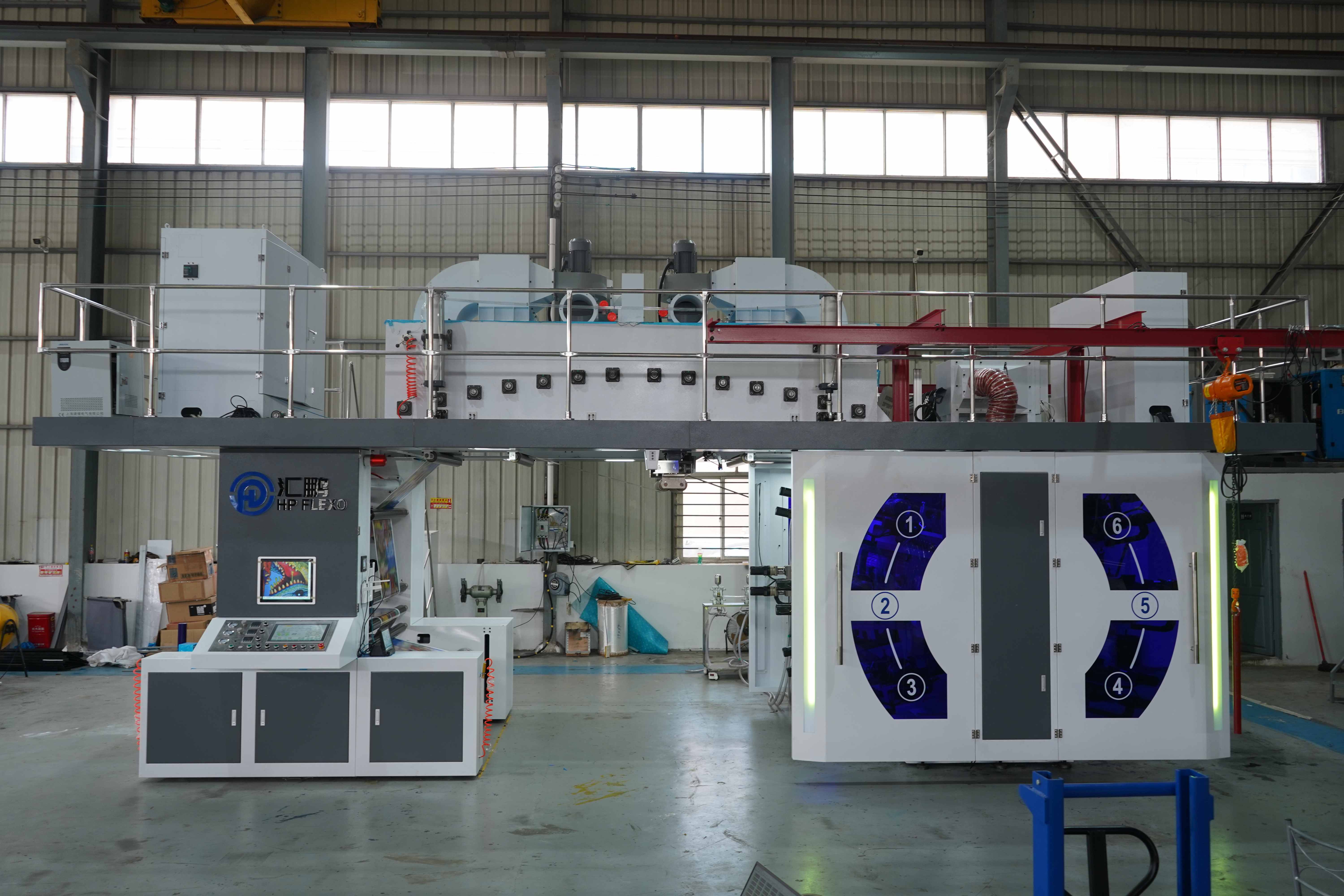
Repeat length is often treated as a fixed spec on the spec sheet, but the smarter approach starts with a hard look at what actually moves through your press week after week. If most of your work clusters around a handful of packaging formats or label sizes, buying cylinders for every possible cutoff wastes both capital and floor space. Instead, pull your last six to twelve months of job tickets and group them by repeat. You will usually find that three or four lengths cover the overwhelming majority of the volume, while the rest are occasional one-offs that can be handled more economically another way.
Once you know your true mix, think about how much flexibility you really need. A shop running long, stable production runs can justify dedicated cylinders for each core repeat and treat odd sizes as exceptions with longer lead times or higher pricing. A shop with constantly shifting short-run work may get more value from a smaller set of repeats paired with sleeves or adapters, accepting a slightly higher per-job setup cost in exchange for less locked-up capital. The key is to match the cylinder inventory to the rhythm of your order book, not to a theoretical list of every repeat you might someday run.
Revisiting that mix every quarter or after any major customer shift keeps the strategy honest. When a large account moves from one format to another, or a new product line starts taking off, your repeat priorities change faster than most shops realize. A quick review of recent job data tells you whether to add, retire, or repurpose cylinders before the mismatch quietly eats into margins through underused assets or unnecessary rush orders.
Why Gearless Drives Are Not Always the Default Win
On paper, removing the gearbox looks like a clean win: fewer rotating parts, no gear mesh losses, and less oil to handle. In practice, a gearless motor has to produce all of its torque at the load's own speed. That usually means a larger rotor diameter, a heavier stator, and a bigger footprint than a geared package built for the same job. When space is tight or existing mounting points have to be reused, those extra centimeters and kilograms quickly become a real constraint.
Cost tends to follow physical size. A low-speed, high-torque machine needs more copper, more magnet material or field windings, and often a more expensive drive to manage a high pole count and precise low-speed control. A conventional gearbox paired with a compact, high-speed motor is frequently cheaper to buy and easier to replace. The gearbox also takes most of the mechanical abuse; if it fails, it can be swapped without rewinding or shipping an entire direct-drive motor.
Efficiency comparisons become less flattering once real duty cycles are considered. Gear losses are real, but they are often only a few percent, while a gearless system may spend much of its time at part load where its efficiency advantage shrinks. Cooling requirements for a large low-speed motor add further parasitic load. Gearless drives remain a strong fit in some applications, but they are not an automatic upgrade everywhere.
Factory Visits and the Telltale Signs of a Reliable Builder
A showroom can hide a thousand shortcuts, but a factory floor rarely lies. When you step past the front office and into the actual production area, pay attention to how materials are stored, whether cut lists are visible, and if unfinished sections are left open for inspection. Builders who are proud of their process tend to keep half-built frames, joinery samples, and raw material stacks accessible. If the yard feels staged, with every station suspiciously clean and no work in progress, treat that as a quiet warning rather than a bonus.
Reliable builders tend to point out details before you ask. They may lift a corner of a panel to show how the edge banding was applied, or explain why a particular sealant is used around window openings. The equipment itself also tells a story: well-maintained blades, calibrated jigs, and clearly labeled waste bins suggest a team that values repeatability. When you see the same measurement checked at multiple stages without being prompted, that consistency usually carries over into the homes they deliver.
Conversations on the floor matter just as much. A trustworthy builder will admit when a material has limitations or when a certain finish requires more upkeep, rather than reciting a flawless pitch. Ask to see a unit that is mid-assembly, and watch how the crew reacts. If workers remain relaxed and the supervisor gives clear answers, the operation has nothing to hide. If your visit is restricted to a polished model and a coffee counter, the real product may not be ready for scrutiny.
Calculating Payback When Short Runs Outnumber Long Ones
When short runs pile up faster than long ones, the usual payback formula starts to break down. You can't simply divide total cost by average daily savings and call it a day, because each short cycle carries its own timing quirks. A string of quick, shallow trades might look active on paper, but the real question is whether they generate enough net edge to offset transaction drag before the occasional long runner finally arrives.
The practical way to handle this is to split your ledger into two columns: one for the frequent small losses, another for the rare oversized gains. Track the running deficit that the shorts create, then estimate how many long moves you actually need to recover that hole. If the math shows you need a once-a-quarter trend to pay back two weeks of short churn, the strategy is probably bleeding slowly regardless of what the win rate suggests.
A sharper approach is to measure payback in terms of opportunity time rather than raw dollars. Short runs consume attention, margin, and emotional capital even when they break even. So instead of asking when the long ones will repay the shorts, ask whether the shorts are buying you better entry points into the long ones. If they aren't, pruning the short side often shortens the payback window more than any tweak to the long side ever could.
Spare Parts Strategy Before You Sign the Contract
Spare parts are often treated as an afterthought once the machinery is already on the floor, but that is exactly when leverage disappears. Before signing, it makes sense to fix the terms for high-wear items and long-lead components: agreed price bands, minimum stock levels held in a nearby warehouse, and a clear notification period if the supplier plans to discontinue a part. Those details are much harder to negotiate later as a change order.
Another area worth pressing on is whether the stock commitment is real. A supplier can promise availability in vague language, but it carries more weight if the contract requires a named list of parts to remain in regional stock, backed by periodic inventory reports and a remedy path when a part cannot be shipped within the agreed window. For custom or obsolescent components, ownership of drawings, tooling and the right to source from a third party can prevent a single vendor from holding an entire line hostage.
Finally, build in an exit. Ask for a last-buy option at a discounted rate, or a buyback clause for unused critical spares when the equipment is eventually retired or upgraded. Turning these expectations into contract language before signature changes spare parts support from a verbal assurance into something operations can actually plan around.
FAQ
Many Chinese manufacturers have moved past the budget-only reputation. The better builders now use direct-drive servo systems, enclosed doctor chambers, and precision-ground CI drums, so registration stays tight on film and stretchable substrates. The main draw is getting a highly configured machine at a price that leaves room for additional finishing equipment.
The central impression drum holds the substrate against a single large cylinder, which reduces register drift on thin films and extensible materials. Compared with older in-line or stack presses, a well-built CI press from China can deliver cleaner halftones, more consistent ink laydown, and faster changeovers when sleeved tooling is specified.
Look at the drum temperature control, the design of the bridge and dryer nozzles, and whether the press uses direct-driven decks or mechanical gearboxes. Direct drives offer faster setup and less backlash, while a well-designed dryer determines whether you can actually run water-based inks at production speed without trapping solvents.
Build quality varies by factory, so it is smart to visit the production floor or request a video tour of completed installations. Look at the frame construction, surface finishes, and component brands inside the cabinets. A machine that uses proven PLCs, drives, and bearings is easier to keep running and usually has better spare parts support.
Check the airflow volume and nozzle velocity rather than just the number of dryers. For water-based inks on film, you need enough impingement and exhaust capacity to pull moisture out without over-drying the substrate. Ask for drying performance data on the specific substrates and ink systems you plan to run, not generic brochure numbers.
If quick job changes are part of your workflow, choose a press that supports sleeve storage, pre-register settings, and a trolley or hoist that fits your floor layout. Some Chinese builders offer motorized longitudinal registration and automated wash-up, which cut makeready time significantly on short runs.
Clarify what is included in the quote: freight, unloading, rigging, electrical connections, initial ink-up, and training days. Ask about the availability of consumables like doctor blades and anilox sleeves, and confirm whether the supplier has local service or a remote diagnostic portal. A low machine price can quickly disappear if you have to source support from scratch.
Conclusion
Chinese CI flexo presses have moved well past the era of crude copies, and the real differences now show up in how tension zones are managed and how drying capacity is matched to the actual ink and solvent load. A machine with enough airflow and temperature headroom lets you run water-based or solvent inks at production speed without softening the film or leaving retained solvent, while segmented tension control keeps thin substrates from drifting or wrinkling through long repeats. Repeat length itself deserves more attention than top speed: if most of your work clusters around a few cylinder sizes, buying a press sized around your true job mix usually pays off better than chasing the widest possible range. Gearless drives get a lot of attention, but they are not automatically the right choice. For shops running mostly mid-range repeats with stable tension requirements, a well-built geared machine can hold register and cost noticeably less to purchase and maintain.
Selection gets more reliable when you treat the supplier like a long-term partner rather than a catalog seller. Visiting the factory reveals whether frames are stress-relieved, machining is consistent, and the builder actually test-runs the press with your repeat lengths before crating. When short runs outnumber long ones, payback calculations should focus on setup time, waste per changeover, and how quickly the press reaches saleable color, not just rated meters per minute. A slightly slower press that changes over cleanly can outperform a faster one on real production floors. Before signing, lock down the spare parts conversation: which boards, rollers, and seals are stocked locally, what the lead times are for imported components, and whether remote support includes live video troubleshooting. Those practical details often determine whether the machine remains an asset or becomes a waiting game after the warranty ends.
Contact Us
Contact Person: Isaias
Email: [email protected]
Tel/WhatsApp: 86-13868693129
Website: https://www.hpflexo.com/