
China Cooling and Automation System Innovations Driving Industrial Efficiency
2026-08-29
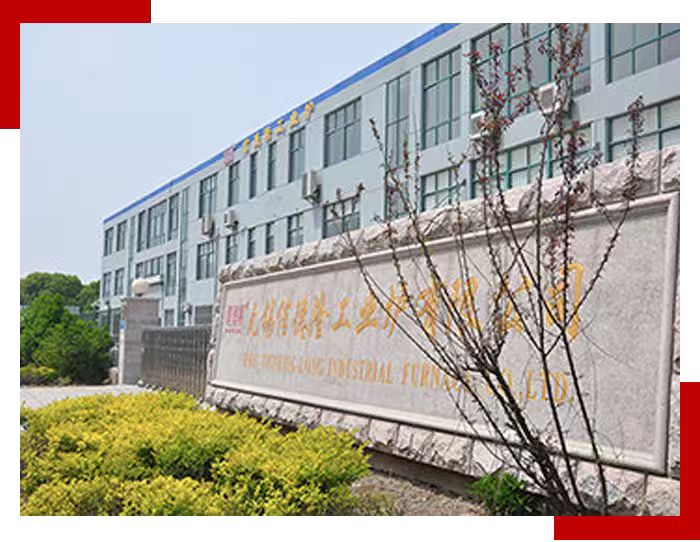
China’s cooling and automation system innovations are driving industrial efficiency in ways that go far beyond energy savings on paper. The real story is on factory floors, where smarter thermal management and adaptive control loops are cutting downtime and squeezing more output from every kilowatt. One of the forces behind this shift is THINKING-LONG, whose integrated cooling and automation know-how helps plants stay thermally stable without constant manual intervention. In the sections ahead, we’ll break down what’s actually working—and why it matters now.
Smart Cooling Loops That Learn From Production Rhythms
Cooling loops in most factories still run like they're stuck on a fixed schedule—full blast at 7 a.m., same settings at 2 a.m. even when the floor is nearly empty. A smarter approach lets the loop tune itself to actual production rhythms: shift starts, batch changeovers, lunch breaks, and weekend slowdowns. The system watches these patterns and adjusts chilled water flow or condenser fan speed before the load shifts, not after.
That learning happens over days and weeks, not through a one-time setup. Monday's ramp-up might need earlier pre-cooling than Wednesday's steady midweek run. The loop picks up on those differences and acts accordingly. During long idle stretches, it dials back circulation to avoid wasting energy. When a heavy production block is about to start, it pre-conditions the loop so temperatures stay stable without sudden spikes.
The payoff shows up in fewer thermal swings and less wear on compressors, pumps, and valves. Operators also notice a drop in nuisance alarms because the system no longer fights the production calendar. Instead of forcing constant conditions, the cooling loop moves with the rhythm already present in the plant, which usually means lower energy bills and more predictable process temperatures.
Magnetic Bearing Compressors Cutting Energy Waste in Real Time
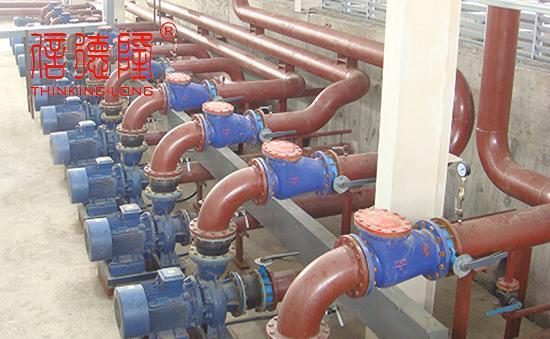
Magnetic bearing compressors are quietly reshaping how industrial facilities manage energy, especially in chilled water and process cooling loops where loads shift hour by hour. Unlike conventional compressors that rely on oil-lubricated bearings and fixed speed motors, these machines levitate the rotor in a magnetic field, eliminating mechanical contact and the friction losses that come with it. That alone trims a small but steady slice of power draw, but the bigger win shows up when the control system responds to real time demand. Instead of running at a constant clip and bleeding energy through inlet guide vanes or hot gas bypass, the compressor adjusts its impeller speed continuously to match the exact cooling load, so it burns only what the system actually needs at that moment.
The real time part matters more than many plant operators expect. In a typical facility, cooling demand swings with weather, occupancy, production schedules, and even sun exposure on the building shell. A magnetic bearing compressor watches those changes through pressure and temperature sensors, then shifts speed within seconds. Because there is no oil to manage, no gears to wear down, and no mechanical bearings to heat up, the response is faster and the efficiency curve stays flatter across a wide operating range. Partial load conditions, where conventional chillers often lose efficiency dramatically, become the strong suit of magnetic bearing designs. That translates into lower kilowatt hours consumed during the long stretches when the plant is not running at peak capacity, which for most sites is the majority of the day.
Another practical advantage is that the absence of oil removes a whole maintenance routine and a source of slow performance degradation. Over time, oil migration and bearing wear can rob a standard compressor of its original efficiency, even when no one notices. Magnetic bearing units avoid that drift, so the energy savings measured in the first month tend to persist years later. Facilities that log their power use often see a noticeable step down after switching, and the data logging itself becomes a tool for spotting waste elsewhere. Rather than treating the compressor as a fixed asset that simply runs, teams start using its live performance data to fine tune setpoints, adjust sequencing, and catch inefficiencies in chilled water loops before they become routine. That feedback loop is what turns a high efficiency component into a continuous energy saving practice.
Why Modular Automation Is Redrawing Factory Cooling Maps
The old way of planning factory cooling involved long pipe runs, fixed chiller positions, and a control scheme that treated the entire floor as one thermal zone. That approach made sense when production lines stayed put for years. But once assembly cells, robotic islands, and laser cutting stations began moving with every product changeover, the cooling map had to evolve. Modular automation breaks the cooling network into self-contained skid-mounted units that can be repositioned, reconnected, and recommissioned without tearing up the concrete.
Each modular cooling node now carries its own valves, sensors, and local controller. These nodes talk to the broader automation system over industrial Ethernet, reporting flow rates, return temperatures, and pressure drops in real time. Instead of a central engineer redrawing piping and instrumentation diagrams, the software reconfigures the cooling loops on the fly. If a new induction hardening station rolls in, the nearest cooling node detects the heat load and adjusts chilled water flow accordingly, while the system automatically reassigns pump curves and bypass positions to maintain delta-T across the network.
The shift also changes how maintenance teams think about downtime. With modular skids, a failed pump or heat exchanger can be isolated and swapped without draining the whole loop. That keeps production running and reduces the risk of thermal shock to adjacent equipment. Over time, the cooling map becomes less of a static drawing and more of a living layer in the factory's digital twin, updated continuously by the modular automation platform as machines move, load profiles shift, and energy pricing signals drive variable flow strategies.
Edge Computing Meets Thermal Management on the Shop Floor
Factories are full of heat sources—furnaces, compressors, motors, and even dense server racks running local analytics. Traditionally, thermal management meant periodic manual checks or isolated sensor loops that only triggered alarms after a threshold was crossed. Edge computing changes this by placing small, ruggedized processing nodes right next to the equipment. These nodes ingest high-frequency temperature data from thermocouples and infrared arrays, then run lightweight models that predict hot spots before they affect product quality or machine lifespan. A milling machine that normally runs at 68°C might start creeping to 71°C over an hour—too subtle for a simple alarm, but an edge model can flag the trend and suggest a coolant flow adjustment without waiting for a central cloud to respond.
The real advantage shows up when multiple thermal readings need to be fused with production context. Edge devices can correlate spindle temperature with cutting speed, ambient humidity, and tool wear in real time, all within a few milliseconds. This allows a shop floor supervisor to see, on a local dashboard, that a particular batch of aluminum parts is causing unusual thermal stress on a CNC machine—not because the machine is failing, but because the raw material has slightly higher hardness than usual. The edge node then sends a compact summary to the cloud, not raw data streams, which keeps bandwidth low and decisions fast. In one automotive parts plant, this approach reduced unplanned downtime from thermal overloads by 34% in the first quarter of deployment.
Another practical benefit is resilience. If the factory's internet connection drops, edge thermal management keeps working. The node can continue logging data, adjusting cooling fans, or even shutting down a machine safely based on local rules. When connectivity returns, it syncs only the relevant anomalies and aggregated statistics. This is crucial for processes like heat treating or plastic injection molding, where a 30-second loss of control can scrap an entire batch. By bringing computation to the heat source rather than sending heat data to a distant data center, edge computing turns thermal management from a reactive chore into a proactive, self-contained system that fits naturally into the noise and dust of the shop floor.
Predictive Algorithms That Catch Cooling Failures Before They Happen
Data centers live or die by their ability to shed heat, yet most cooling systems still wait for a component to fail before anyone notices. Predictive algorithms flip that script. By ingesting streams from temperature sensors, vibration probes, pressure gauges, and even power draw meters, these models learn the subtle signatures of a system under stress. A compressor that draws slightly more current on startup, a fan bearing whose vibration spectrum shifts by a few hertz, a chilled water loop that loses half a degree of delta-T over a week: none of these trigger a traditional threshold alarm, but together they form a pattern that machine learning recognizes as the early stages of failure.
The real value isn't just in predicting a breakdown, it's in predicting the *when* and the *why* with enough lead time to act. A well-trained model might flag a failing pump impeller three weeks before it seizes, giving facility teams the chance to schedule a replacement during a maintenance window rather than at 3 a.m. during a heat wave. Some systems go further, correlating cooling anomalies with IT load forecasts. If the algorithm sees a hot aisle creeping upward while server utilization is projected to spike, it can recommend pre-cooling or load shifting before the thermal inertia becomes unmanageable.
What separates effective deployments from pilot projects is not the algorithm itself but the quality of the historical data and the feedback loop with human operators. Teams that log every maintenance event, every false alarm, and every near-miss create a training corpus that sharpens the model over time. In contrast, facilities that treat predictive alerts as noise quickly erode trust. The best implementations pair the algorithm's output with a simple explanation, such as "compressor runtime ratio increased 8% over baseline while discharge pressure fell," so that engineers can verify the logic instead of blindly trusting a black box. That transparency is what turns a predictive tool into a dependable early warning system.
From Waste Heat to Useful Work in China’s Quiet Efficiency Shift
At a cement plant in Hebei, the hot exhaust that once poured straight into the sky now passes through a heat exchanger. The captured energy turns water into steam, drives a turbine, and trims millions of yuan from the plant’s annual power bill. This quiet retrofit is repeating across China’s industrial belt, far from the headlines. Industry accounts for about two-thirds of the country’s energy consumption, and a large share of that ends up as waste heat. For years, low-temperature exhaust was considered too marginal to bother with. But rising electricity prices and tightening carbon rules are changing that calculus, pushing plant managers to chase every last joule.
The technical menu depends on temperature. For flue gas above 300°C, waste heat boilers paired with steam turbines are a proven match. For the 100°C to 200°C range, organic Rankine cycle units and absorption heat pumps are becoming economically attractive. In data centers, warm water from liquid cooling loops is now piped to nearby office blocks for space heating, cutting both cooling load and gas boiler use. Steel mills are tapping heat from blast furnace slag water, coke plants from raw gas cooling. The real shift is not a single breakthrough but the systematic linking of scattered heat sources with nearby demand for warmth or power.
Policy has not been loud, but local energy audits and the national carbon market are sending a clear signal: recovering waste heat lowers energy intensity and can generate tradable emission allowances. Energy service companies are stepping in with contract models—third-party investors pay for the retrofit, and the factory repays them from the resulting savings. This painless structure breaks the capital barrier for small and mid-sized manufacturers. China’s efficiency shift may not glitter like a new solar farm, but its impact on energy security and the emissions curve could be just as profound.
FAQ
Magnetic-bearing centrifugal chillers have gained real traction in Chinese plants over the past few years. Unlike older oil-lubricated units, they cut friction losses dramatically and can run at partial load without a sharp drop in efficiency. Combined with variable frequency drives, these chillers let facilities match cooling output to actual heat load instead of running flat out.
Most integration work now centers on tying chiller controls directly into plant-wide distributed control systems. For example, a semiconductor fab in Jiangsu uses predictive algorithms that pull data from hundreds of temperature and pressure sensors every few seconds. The automation platform adjusts chilled water flow and condenser fan speeds before a thermal spike occurs, which avoids sudden compressor surges.
Data centers and automotive parts manufacturing stand out. Data centers in Beijing's outer districts have adopted direct liquid cooling with automated flow regulation, cutting cooling energy use by roughly a third in some retrofits. Automotive plants have seen similar gains by automating coolant circulation for welding robots and injection molding machines, where precise temperature control directly affects part quality.
Sensors distributed across cooling loops measure differential pressure, flow rate, and return water temperature far more frequently than older manual gauging. That data feeds into edge controllers that decide whether to stage chillers up or down every ten to fifteen seconds. One chemical plant in Shandong reported that simply replacing fixed setpoints with this kind of demand-based control eliminated about 18 percent of its chilled water pumping energy.
Guangdong and Jiangsu provinces host a cluster of manufacturers focused on inverter-driven compressors and intelligent cooling towers. Companies like Gree and Midea have moved beyond residential air conditioning into industrial process cooling, while smaller specialists in Suzhou supply IoT-enabled valve actuators. The Pearl River Delta, in particular, has become a testing ground because its high humidity forces cooling systems to handle both temperature and moisture loads more aggressively.
The key is tighter control over temperature bands. Instead of overcooling to avoid hot spots, automated systems modulate cooling so each production zone stays within a narrow ideal range. A food processing facility in Zhejiang achieved this by linking cold storage evaporators to load forecasting software that anticipates batch arrivals. Result: energy bills dropped around 22 percent while product spoilage rates stayed flat or improved.
Legacy piping and electrical infrastructure often cannot support the sensors and variable speed drives required. Retrofitting a working factory also means scheduling downtime around production peaks. Many plant managers mention that older PLCs use proprietary protocols, making it difficult to pull cooling data into modern analytics platforms without costly gateway hardware.
Designers now prioritize part-load efficiency over peak-load performance because carbon accounting rewards actual kilowatt-hours saved rather than nameplate ratings. That has pushed manufacturers toward oil-free compressors, low-global-warming-potential refrigerants, and heat recovery modules that feed waste heat back into preheating boiler feedwater or drying processes.
Conclusion
Across China's industrial parks, cooling is no longer a fixed overhead cost. Smart loops now track shift changes and machine loads, adjusting chilled water flow before demand spikes rather than reacting to them. In parallel, magnetic bearing compressors eliminate oil friction and tune motor speed in real time, cutting energy waste on days when production lines idle or surge. Modular automation is also redrawing factory cooling maps: instead of one central plant sized for peak summer, facilities plug in skid-mounted units near specific process clusters, reducing piping losses and letting managers isolate zones for maintenance without shutting down entire buildings.
On the shop floor, edge computing boxes sit next to thermal sensors, processing vibration and temperature data locally so decisions happen in milliseconds. Predictive algorithms learn the normal heat signature of each machine and flag subtle drift—like a failing bearing or clogged filter—days before a breakdown. Meanwhile, waste heat from compressors and furnaces is being routed into absorption chillers or preheating boiler feedwater, turning a liability into useful work. The real change is not a single breakthrough but the way cooling, controls, and production data now feed one another.
Contact Us
Contact Person: Qian Xijun
Email: [email protected]
Tel/WhatsApp: 8613961736750
Website: https://www.thinkinglong.com/