

China Corrugated Box Die Making Creasing Cutting Machine Revolutionizes Packaging Production
2026-11-16
Packaging has always been the silent salesman on the shelf, but the machinery behind it rarely gets the spotlight. That’s changing fast with the rise of China’s corrugated box die making, creasing, and cutting technology—led by innovators like ADEWO. What if a single system could slash production time, eliminate manual errors, and handle the most intricate box designs without breaking a sweat? This isn't wishful thinking—it's the new reality reshaping packaging floors across the globe. In this post, we unpack the technology that’s turning heads and why it might be the smartest investment you haven’t made yet.
Unveiling the Manufacturing Shift Behind Modern Package Lines
The steady rhythm of a traditional packaging line once echoed a simpler era—mechanical systems designed for high volume, low variability. Today’s factories, however, are rewriting that rhythm entirely. The push for personalized products and just-in-time delivery has forced a departure from rigid, single-purpose machinery. Manufacturers now build lines that behave more like adaptive organisms than static assembly sequences.
At the heart of this transformation lies a shift toward modular equipment and software-defined controls. Instead of tearing out an entire line to handle a new bottle shape or carton size, changeover happens through recipe-driven adjustments. Vision systems and embedded sensors feed data back into learning algorithms, allowing the line to self-correct misalignments before they become stoppages. The packaging floor is quietly becoming an environment where physical motion and digital intelligence fuse.
This isn’t merely about speed—it’s about resilience. When a line can switch between formats in minutes rather than hours, it absorbs demand shifts without sacrificing throughput. The result is a manufacturing ecosystem that prizes fluidity over brute force, blending human problem-solving with machine precision in ways that few predicted a decade ago.
How Precision Tooling Transforms Cardboard Into High-Value Containers
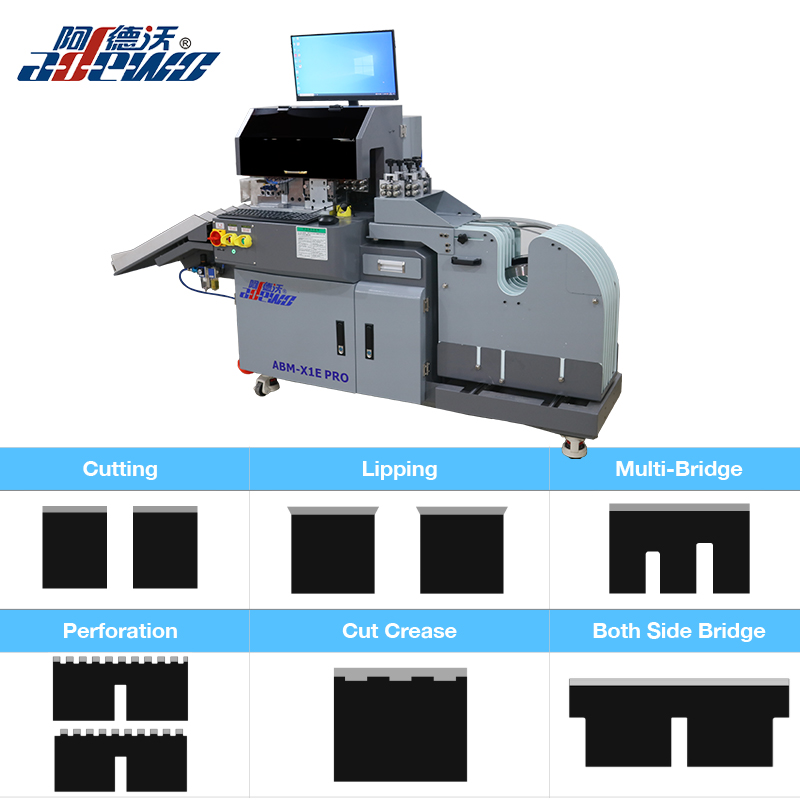
Achieving that seamless, polished look in cardboard packaging isn’t about the material itself—it’s the tooling that carves out every fold, cut, and embossed detail. Precision-engineered dies and molds turn a simple sheet into a rigid, snap-fit case or a delicately textured gift box, where even half-millimeter tolerances determine whether the lid closes with a satisfying click or just feels flimsy. The right tooling eliminates the raw, fibrous edges people associate with cheap packaging, replacing them with crisp bevels and tight joints that instantly raise perceived value.
Beyond strength, the tooling allows for complex geometries that standard processing methods can’t match. Intricate locking mechanisms, built-in hinges, or soft-touch relief patterns emerge directly from the die, not as add-ons. This integration lets brands incorporate multi-sensory features—like a micro-textured surface that mimics leather grain or a magnetic closure formed by precise flap alignment—without leaving the cardboard paradigm. It’s these seemingly minor physical cues that shift a container’s role from mere protection to part of the product experience.
Speed and repeatability hide beneath the surface. Modern tooling systems pair with automated presses to deliver several thousand perfectly identical units per hour, with consistency that handcrafting can’t approach. Every compartment, every scoring line, matches the digital design down to ±0.1 mm, making mass customization feasible. The result is a high-value container that costs surprisingly little per piece, because the initial investment in precision tooling pays off across massive runs, turning a humble substrate into something that holds its own against rigid plastics or wood.
Inside the Core Mechanism That Redefines Creasing Accuracy
It starts where most creasing tools give up—right at the microscopic gap between pressure and material memory. The centerpiece is a set of twin eccentric rollers that don't just squeeze fibers into shape; they read how the material reacts in real time, adjusting their rotational rhythm every few milliseconds. That tiny, continuous correction loop is what finally breaks the long-standing tradeoff between sharpness and surface damage. Paper, cardstock, even layered synthetics—the system adapts its approach without slowing down, sensing density shifts that no static tooling could ever register.
What holds this mechanism together isn't mere force but a bridging layer of motion control that blends analog sensitivity with digital prediction. Linear encoders track the position of each roller with sub-micron resolution, while a dedicated drive circuit converts tiny positional errors into instant torque corrections. The result feels almost intelligent: a crease that is consistently crisp at 120 sheets per minute, yet gentle enough to leave gloss coatings undisturbed. That balance didn't emerge from a single breakthrough but from treating the whole assembly—bearings, motor windings, damping elements—as one cohesive instrument rather than a chain of separate components.
What truly separates this design from conventional scoring systems is not just its onboard sensing, but how it forgets. Each sheet is treated without relying heavily on the previous one; a deliberate memory reset between cycles prevents tiny heat buildups or gradual drift from turning a run of ten thousand into a slow slope of inconsistency. This resolute cycle-by-cycle independence is what keeps the first crease in a morning run exactly as accurate as the last one before shutdown, rewriting the expectation that precision fades as the day wears on.
Why Speed Meets Strength in Next-Generation Box Forming
In modern packaging lines, the demand for rapid throughput often clashes with the need for durable, precisely folded cartons. Next-generation box forming bridges this gap by integrating materials that respond instantly to creasing and folding, allowing machines to accelerate without sacrificing structural integrity. Advanced board compositions now feature engineered fiber alignments that endure high-speed scoring while retaining the rigidity needed to protect contents during transit. This isn’t about trading off one attribute for another—it’s a deliberate fusion where machine kinematics and substrate science evolve hand in hand.
Traditional machinery relied on slower, deeper scoring to avoid cracking, which throttled overall line speeds. Today’s systems utilize servo-driven folding belts and adaptive pressure controls that adjust in real time based on board caliper and moisture content. This responsive adjustment eliminates the hesitation that once was necessary to prevent fiber rupture, effectively letting speed and strength reinforce each other. The result is a forming process that maintains flawless box geometry even at rates once thought possible only with lighter, weaker materials.
What sets this generation apart is how fine-tuned synchronization between blank handling and adhesive reactivation gives operators the freedom to run diverse box styles without constant recalibration. Quick-changeover tooling and memory-based recipes mean the line can shift from a fragile cosmetic carton to a heavy-duty shipping box in minutes, with both produced at peak speed and uncompromised sidewall strength. Speed is no longer the enemy of strength—it’s become the vehicle through which consistently robust boxes are delivered.
Material Savings and Waste Reduction Through Smarter Die Engineering
Modern die engineering shifts focus from simply shaping metal to actively conserving it. By rethinking strip layout and sequencing early on, engineers can nest parts more tightly and combine multiple operations into a single station. This reduces the amount of skeleton scrap left behind after stamping. Even subtle adjustments, like rotating a part a few degrees on the strip, can shrink coil width requirements and cut raw material usage by several percentage points without affecting output quality.
Advanced simulation tools now let die designers test material flow before any steel is cut. This virtual tryout pinpoints stretches, thinning, and fracture risks, allowing the team to tweak draw beads, blankholder pressure, and trim lines precisely. The result is a die that runs right the first time, eliminating the trial-and-error runs that chew through coils and dump imperfect panels into the recycling bin. Fewer setup scraps and fewer rejected pieces translate directly to lower tons of material purchased per shift.
Smarter engineering also sees scrap not as waste but as an co-product. Progressive dies can be designed to extract smaller secondary parts from what was once discarded lattice. On a large scale, a stamping plant might integrate a trim removal system that chops and conveys clean scrap directly back to the mill for closed-loop recycling, preserving the alloy's value. Such systemic thinking redefines efficiency: every blank, every stroke of the press, pushes the operation closer to a near-zero waste envelope.
What This Leap Means for Global Supply Chain Efficiency
The step-change lies in how information now moves in lockstep with physical freight, collapsing the lag that once forced planners into reactive mode. Traditional handoffs between shipping lines, port authorities, and landside carriers created pockets of silence where delays would quietly compound. This leap connects those islands, turning a sequence of disjointed updates into a living map that refreshes with real-time vessel positions, customs clearance triggers, and last-mile ETAs. The result is not just faster alerts, but a fundamental shift from chasing exceptions to orchestrating flows—where a two-hour berthing delay in Rotterdam can automatically re-sequence trucking assignments in Duisburg before the cargo even touches the dock.
Inventory strategies are being rewritten because the buffer stock that used to cushion uncertainty is suddenly negotiable. When a retailer can confidently reduce safety stock by double-digit percentages without raising the risk of shelf gaps, the capital unblocked ripples directly into product development or market expansion. Procurement teams, armed with granular lane performance data, are renegotiating contracts not on generic service levels but on demonstrated reliability scores per route, per season, per commodity. This granular accountability is pressuring every link in the chain to lift its game, gradually erasing the slack that once felt like an unavoidable cost of cross-border trade.
Beyond individual gains, the leap is quietly redrawing the competitiveness map for entire regions. Ports that embrace this transparency are attracting consortia of shippers who route cargo not by lowest spot rate but by highest predictability, creating a virtuous flywheel of volume, investment, and service upgrades. Meanwhile, secondary trade corridors that were once avoided due to opacity are becoming viable, dispersing pressure from choked mega-hubs and injecting resilience into a system that used to depend on a handful of critical nodes. Efficiency stops being a private win for one company and starts functioning as shared infrastructure—a layer of digital commons that lifts the baseline for global commerce itself.
FAQ
It automates several steps that used to require separate manual processes or multiple pieces of equipment. By combining die making, creasing, and cutting in one pass, it drastically shortens production time and reduces material handling errors. The consistency is also better—every cut and fold line comes out identical, which means fewer misfeeds on the gluing line and a cleaner final box.
Older methods often relied on flatbed die cutters with separate creasing rules and a lot of trial-and-error adjustment. This newer design from China uses precise laser or rotary pressure systems that can quickly adjust creasing depth and cutting force on the fly. It also handles CAD-based die patterns directly, so you're no longer tied to physical die boards for every slight design tweak. That flexibility is a real leap forward.
Yes, it's built for a range from thin micro-flute up to heavy double-wall corrugated. The operator can save settings for different materials, and the machine auto-adjusts the gap and pressure. You don't need to swap out die boards or do lengthy recalibrations each time you switch from, say, a lightweight e-commerce box to a heavy-duty shipping container.
It depends on the volume, but we're seeing more workshops with moderate output adopting it. The footprint is often smaller than a full traditional line, and because changeovers are quick, short runs actually become cost-effective. A small plant might run it for a few hours a day and still get a strong return on investment when they factor in the die storage space and labor they eliminate.
Precision is one of its biggest selling points. The crease depth is controlled to within fractions of a millimeter, so the folding is accurate without cracking the liner. Cut registration is tight, often within 0.2mm. This means you can confidently print high-quality graphics and have them line up perfectly with the structural design, which was always a challenge with conventional methods.
The routine is pretty straightforward: keep the cutting tools sharp, clean the sensors and guide rails, and occasionally check the vacuum system if it uses one. Most models have self-diagnostics that alert you when parts need attention. Beyond that, it's a sealed, well-guarded machine, so dust and paper debris don't get into the sensitive drives as easily as older open-frame equipment.
Absolutely. It's designed to take files straight from ArtiosCAD, Impact, or other packaging design software. You can queue up different jobs, and the machine will pull the correct parameters. Some versions even link with inventory systems to track board usage in real time. That end-to-end digital thread cuts out a huge amount of manual data entry and the mistakes that come with it.
Conclusion
The arrival of new-generation corrugated box die making, creasing, and cutting systems from Chinese manufacturers marks a fundamental shift in how modern package lines are conceived. Gone are the days of protracted manual setups and inconsistent fold lines; instead, these machines embed a level of tooling precision that transforms ordinary cardboard sheets into high-value containers with exacting structural integrity. At the heart of this change lies a core mechanism that redefines creasing accuracy—often blending servo-driven controls with advanced laser-guided calibration—so that every crease aligns perfectly, even at blistering production speeds. The result is a seamless fusion of speed and strength: box forming no longer forces a trade-off between rapid output and robust container walls. Next-generation designs use optimized pressure profiles and intelligent feedback loops that maintain panel rigidity while cycling through thousands of units per hour, effectively revealing the manufacturing shift unfolding behind today’s packaging benchmarks.
Beyond the shop floor, the impact of smarter die engineering ripples through material consumption and global logistics. By incorporating nesting algorithms and micro-adjustable cutting paths, these machines squeeze far more usable blanks from each board, cutting raw material needs dramatically. Waste reduction becomes a built-in feature rather than an afterthought—trim strips shrink, and rejected mis-creased pieces plummet because the die setup compensates for board caliper variations in real time. For supply chain operators, this leap translates into tangible efficiency gains: less inventory tied up in buffer stock, quicker turnaround from flat board to finished box, and a consistent product quality that eliminates costly returns. When production lines in packaging hubs adopt such technology, the entire fulfillment chain moves with new agility, shortening lead times and lowering the carbon footprint per shipment. China’s push into this equipment niche is quietly accelerating a global realignment where packaging production no longer lags behind the speed of commerce but actively enables it.
Contact Us
Contact Person: KAELYN LEE
Email: [email protected]
Tel/WhatsApp: +86 15012673758
Website: https://www.china-adewo.com