
China Levelling Agent Guide for Flawless Surface Finishes
2026-10-10
Most surface flaws can be traced back to one overlooked decision: the levelling agent. In China, where fast-track schedules and high-gloss expectations collide, choosing the wrong additive shows up as pinholing, ghosting, or uneven sheen. This guide is for anyone tired of gambling on finish quality. You’ll learn what separates a true levelling agent from a thickener in disguise — and why HAISEN keeps appearing in successful project specs.
What Makes a Levelling Agent Indispensable for Mirror-Like Finishes
A levelling agent earns its keep by quietly correcting the microscopic hills and valleys that spray application or roll coating leaves behind. Without it, even a well-formulated paint or clearcoat can dry into a surface riddled with brush marks, orange peel, or cratering. The agent works by lowering surface tension just enough to let the wet film flow into a uniform sheet before the solvents flash off. That temporary mobility is what separates a finish that merely covers from one that reflects like glass.
What really makes a levelling agent non-negotiable for mirror-like finishes is its ability to handle the moments just after application, when viscosity is climbing fast and the coating is most vulnerable. A good levelling agent doesn't just make the liquid thinner; it selectively migrates to the surface and evens out local differences in surface energy. This stops defects like pinholes, fisheyes, and edge pulling before they have a chance to lock in. In high-build systems, it also helps maintain a consistent film thickness across curved or vertical surfaces, where gravity fights against a smooth result.
Beyond the wet stage, the right levelling agent influences the final gloss and DOI (distinctness of image) by leaving behind a surface that is optically flat. Some chemistries, such as modified acrylics or silicones, offer extra benefits like better substrate wetting or reduced foaming, which further protects the mirror-like appearance. The key is dosage control: too little and the coating can't level out; too much and you risk intercoat adhesion problems or surface haze. Formulators treat the levelling agent not as an additive but as a tuning tool, adjusting the balance between flow, release, and long-term clarity to hit that flawless, deep-mirror look.
Chinese Levelling Agent Chemistry: Beyond the Basic Silicone Story
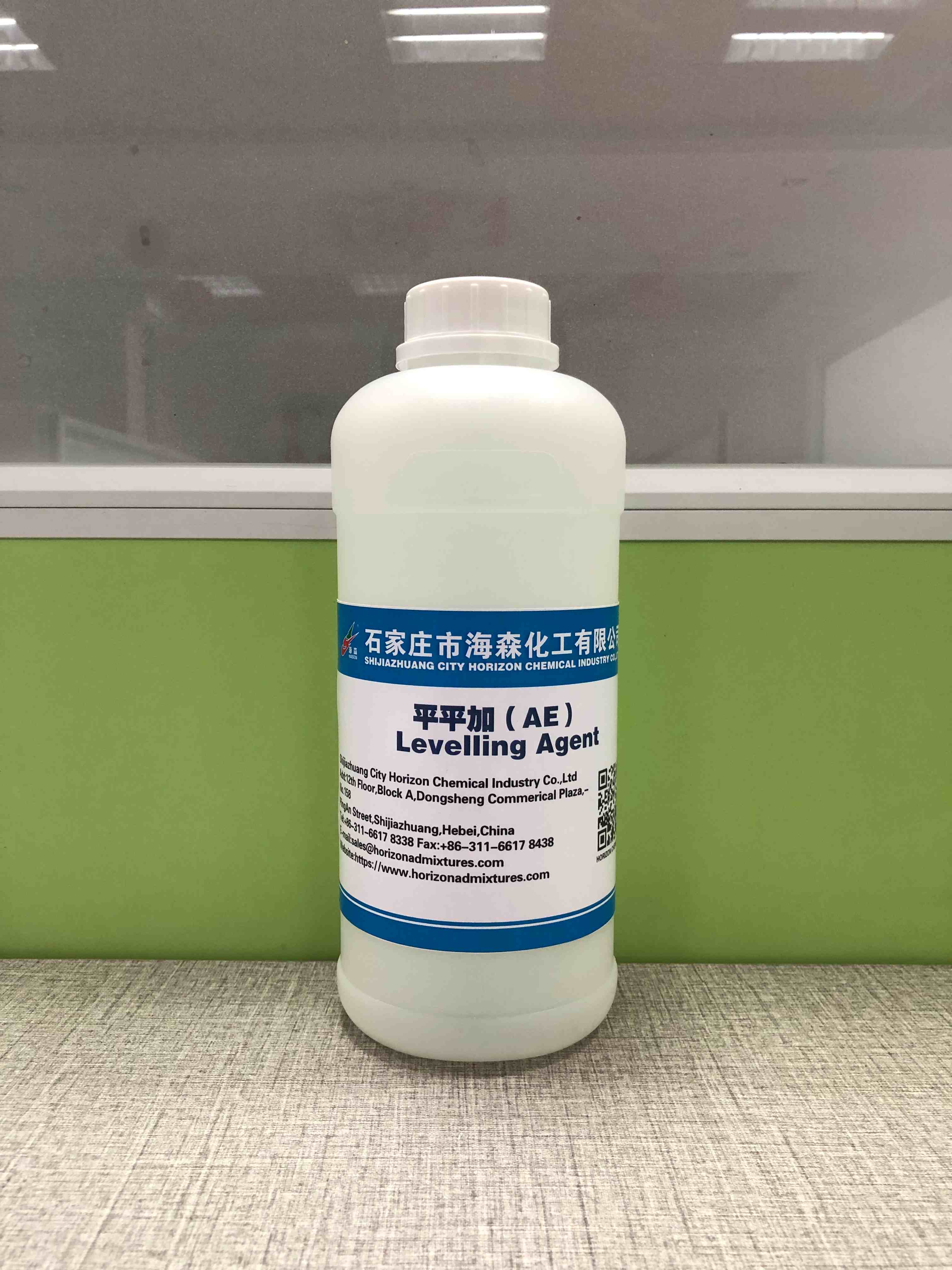
For much of the past two decades, Chinese formulators leaned heavily on straightforward polydimethylsiloxane fluids when tackling surface defects. But the rapid expansion of domestic automotive, industrial, and furniture coatings has pushed levelling agent chemistry into far more nuanced territory. Local suppliers now routinely modify silicone backbones with polyether, aralkyl, or long-chain alkyl groups—not simply to boost slip, but to fine-tune intercoat adhesion and prevent haze in high-gloss clears. This shift away from one-size-fits-all silicones reflects a deeper understanding of how molecular weight distribution and cloud point interact with resin systems, especially in fast-drying waterborne formulations.
What truly separates the current generation of Chinese levelling agents is the deliberate move beyond silicone alone. Acrylate-based levellers, for instance, have gained ground because they avoid the surface tension reduction that can cause recoatability problems, yet still suppress orange peel and improve flow in UV-curable and high-solids systems. Fluorocarbon-modified additives, once considered too costly for mainstream use, are now being engineered in lower dosage forms to handle difficult substrates like untreated polypropylene or heavily contaminated steel. Blends that combine a silicone core with acrylic or fluorine functional segments are becoming common, giving formulators a way to balance defoaming, substrate wetting, and long-term levelling without stacking multiple additives.
Environmental pressure and performance demands are pushing the field into even more specialized directions. Reactive levelling agents that copolymerize into the film, rather than migrate to the surface, are being commercialized to meet strict automotive durability tests. Hyperbranched and dendritic structures, sometimes derived from bio-based polyols, are appearing in low-VOC and powder coatings where traditional silicones fail to disperse cleanly. Meanwhile, domestic research groups are using high-throughput screening to map how levelling agents influence microfoam release and edge coverage—parameters that rarely show up in datasheets but matter enormously on a fast-moving coil line. The result is a chemistry landscape that has outgrown the basic silicone story and now competes on sophistication, not just cost.
Matching Additive Chemistry to Resin Systems: Mistakes You Can’t Afford
The single most expensive mistake is assuming an additive that performs well in one resin family will behave the same in another. Epoxy, polyester, polyurethane, and acrylic systems each carry distinct polarity, reactive sites, and cure profiles. A wetting agent that reduces surface tension in an alkyd can become a crater-causing contaminant in a two-component polyurethane simply because its molecular weight or hydrophobic tail no longer aligns with the matrix.
Reactive additives deserve particular scrutiny. In amine-cured epoxies, any additive bearing active hydrogen can steal stoichiometry from the curative, leaving the final film under-crosslinked. In isocyanate systems, hydroxyl or amine functionality in a dispersant or defoamer will react with the hardener before the resin does, altering gel time, gloss, and chemical resistance. Even non-reactive silicone additives can migrate to the interface and destroy recoat adhesion if their compatibility is misjudged.
The fix is not to rely on supplier data sheets alone. Run solubility parameter checks, examine the additive’s reactive groups, and test the complete formulation under real application conditions, not just a drawdown. Small incompatibilities often show up only after aging, humidity exposure, or intercoat stress. Reworking a failed batch costs far more than the hour it takes to verify chemistry fit up front.
Surface Defect Diagnosis: When Your Levelling Agent Is Actually Not the Problem
The orange peel looks too pronounced, the pinholes keep showing up, and the coating just won't flow out the way it should. The first instinct is almost always to blame the levelling agent—maybe it's underdosed, maybe it's incompatible, or maybe it's lost its effectiveness after sitting on the shelf too long. But before you start adjusting the additive package or swapping suppliers, it's worth checking what else changed in the formulation. A shift in resin viscosity, a different solvent balance, or even a new batch of pigment can create the exact same surface defects while the levelling agent is doing its job perfectly well.
Substrate temperature and application conditions are frequent hidden culprits. If the part is colder than usual or the booth humidity has crept up, the coating may skin over before it has a chance to level, leaving a texture that looks like poor additive performance. The same goes for film thickness—spraying just a few microns thinner than the recommended range reduces the wet edge time dramatically, and no amount of levelling agent will fix a coating that has already started to set. Check your wet film measurements and environmental logs before touching the formulation.
Another overlooked variable is the interaction between the levelling agent and other additives, particularly defoamers or wetting agents. A change in defoamer type or a slight increase in its dosage can disturb the surface tension balance enough to produce craters and fish eyes that mimic levelling failure. In many cases, the real solution isn't more levelling agent—it's restoring the original surface tension gradient or adjusting the solvent evaporation profile. Run a quick ladder study with the current formula, but vary only the application conditions and additive ratios. You'll often find the defect disappears without touching the levelling agent at all.
Why Application Conditions Override Your Levelling Agent Choice
A levelling agent that performs flawlessly in a controlled lab test can fall apart on a humid job site or a cold substrate. The same chemistry that smooths a thick epoxy at 25°C may trap bubbles or crawl away from edges when the coating is applied at 10°C. What actually dictates success is not the datasheet, but the real-world environment: temperature swings, air movement, film thickness variations, and the porosity of the surface underneath. These conditions alter viscosity, surface tension, and solvent evaporation rates so drastically that the "best" levelling agent on paper can become the worst in practice.
Take solvent-borne polyurethane on a warm, breezy afternoon. A fast-evaporating levelling additive might work in still air, but with wind pulling solvent out of the film, the additive has no time to migrate to the surface and reduce craters. The result is an orange-peel texture that no amount of post-application brushing can fix. Conversely, a slow-evaporating levelling agent chosen for those same breezy conditions will hang around too long on a cold, stagnant morning, leaving the wet film open to dust nibs and sagging on vertical surfaces. The choice must flip depending on the conditions of the day, the substrate temperature, and even the air turnover in the booth.
This is why experienced applicators ignore generic recommendations and instead adjust the levelling package to the specific application scenario. They watch the wet edge, feel the substrate temperature, and note the humidity before mixing. They know that a thin, fast-curing floor coating in a cold warehouse demands a different levelling mechanism than a thick, slow-curing clear coat in a heated spray room. The chemistry hasn't changed—what changes is the physics of film formation under the conditions you're actually dealing with.
The Shift to Waterborne Coatings and What It Means for Levelling Additives
Regulatory pressure and a genuine push toward lower-VOC systems have accelerated the move from solvent-based to waterborne coatings. But this is not a straightforward swap. Water's high surface tension and slower evaporation profile alter how the film forms, making defects like brush marks, orange peel, and cratering more likely. Formulators quickly discover that a levelling additive that worked in a solvent system rarely translates directly, because the physics at the air/liquid interface and the rheology during drying are fundamentally different.
In waterborne formulations, the role of a levelling additive becomes more nuanced. Traditional solvent-borne levelling agents often relied on reducing surface tension gradients as solvents evaporated. With water, the additive must manage a more complex environment: coexistence of water and co-solvents, latex particle coalescence, and hydrophilic/hydrophobic domains. Polyether-modified siloxanes have become common, but they demand careful balancing. Too much can cause intercoat adhesion failures or cratering in a subsequent layer; too little leaves the surface uneven. The additive's compatibility with the resin dispersion and its effect on foam stabilization are just as important as its surface tension reduction.
In practice, selecting a levelling aid for a waterborne coating often means working in tandem with substrate wetting agents, defoamers, and rheology modifiers. A recurring pitfall is using an additive originally designed for solvent systems—it can create fisheyes or compromise recoatability. Modern levelling additives for waterborne coatings are engineered around the specific needs of acrylic emulsions, polyurethane dispersions, and their co-solvent packages. They provide a narrower, more controlled surface tension reduction without introducing long-term surface activity that hurts adhesion. Ultimately, the shift to waterborne coatings doesn't just replace one chemical with another; it forces a recalibration of the entire surface control strategy, where levelling is inseparable from wetting, defoaming, and film formation.
FAQ
A levelling agent is a coating additive that reduces surface tension gradients during drying, allowing the wet film to flow out smoothly before it sets. Without it, you often see brush marks, orange peel, or cratering. The right one makes the difference between a finish that looks sprayed by a robot and one that looks hand-patched.
Many Chinese manufacturers have caught up fast in the past decade, especially in silicone and acrylate types. They often offer very competitive pricing and shorter lead times, but you need to check batch-to-batch consistency. For standard applications, they work just as well; for extreme conditions, some formulators still prefer European products.
The main categories are polyacrylate, silicone, and fluorocarbon-modified. Polyacrylates are workhorses for general solventborne and waterborne systems. Silicone types give strong slip and anti-cratering but can cause recoat issues if overdosed. Fluorocarbon-modified ones are niche, used when you need extreme surface tension reduction.
Yes, but you need to verify the specific product's regulatory documentation. Some Chinese suppliers provide full FDA or EU compliance certificates, while others do not. For automotive clearcoats, look for silicone-modified acrylates with high clarity and no haze after baking. Ask for real application data, not just a brochure.
Most polyacrylate levelling agents work at 0.2% to 0.5% on total formulation weight. Silicone types are more potent, often 0.05% to 0.2%. Start at the low end and increase only if you see surface defects. Overdosing can lead to intercoat adhesion failure or foam stabilization.
Run a simple drawdown on the actual substrate you plan to coat. Check for pinholes, orange peel, and gloss retention after 24 hours. Then do a recoatability test: apply a second coat after the first is fully cured and check adhesion. Finally, store the sample at 50°C for two weeks and re-test to catch any stability issues.
Waterborne coatings are trickier because of high surface tension and fast evaporation. Many Chinese levelling agents are now designed specifically for waterborne systems, using lower molecular weight acrylates or silicone surfactants. You may need to combine a levelling agent with a wetting agent to get a defect-free film on low-energy substrates.
The biggest mistake is assuming all products with the same chemical name perform identically. Another is ignoring the solvent system: some Chinese products come in xylene or butyl acetate, which may not fit your VOC limits. Always request a full technical data sheet and a safety data sheet before lab trials.
Conclusion
Achieving a flawless, mirror-like surface in modern coatings rarely happens by accident. A well-chosen levelling agent works at the interface to lower surface tension gradients, letting the wet film flow into a uniform layer before it locks into place. In the Chinese market, formulators have moved far beyond basic silicone fluids. Today's additives include polyether-modified siloxanes, acrylate copolymers, and fluorinated species, each tuned for specific resin compatibilities and gloss requirements. Matching this chemistry to the binder is where many projects stumble. An additive that works beautifully in a solventborne alkyd may cause haze, cratering, or intercoat adhesion loss in a high-solids polyurethane. The cost of guessing wrong shows up not just as visual defects but as wasted batches, delayed production, and field failures.
Surface defect diagnosis demands honesty before reaching for more additive. Pinholes, orange peel, or fisheyes often trace back to substrate contamination, poor solvent balance, or spray gun settings, not the levelling agent itself. Application conditions frequently override additive selection. High humidity, low bake temperatures, or excessive film thickness can defeat even the most advanced levelling chemistry. The ongoing shift to waterborne coatings has reshaped additive design again. Water's high surface tension and slow evaporation create new flow challenges, pushing Chinese suppliers to develop hybrid polymers that control both dynamic wetting and long-term levelling without sacrificing water resistance. For formulators serious about flawless finishes, the guide's core message is blunt: understand your resin, verify your defects, respect your application window, and choose a levelling agent as part of a system, not as a miracle cure.
Contact Us
Contact Person: Sam Lee
Email: [email protected]
Tel/WhatsApp: 86-311-6617 8338
Website: https://www.horizonadmixtures.com/