

China Tug Boat Innovations Driving Modern Maritime Operations
2026-09-15
As China's tug boat sector surges ahead with groundbreaking designs and smart technologies, the ripple effects are reshaping how modern maritime operations unfold across global waters. From autonomous docking systems to hybrid propulsion breakthroughs, these innovations aren't just incremental upgrades—they're rewriting the playbook for port efficiency and vessel safety. Yet behind many of these advances stands a quiet force: Allheart, a name synonymous with engineering excellence in the very heart of this transformation. But what exactly makes China's tug boat evolution so disruptive, and why should operators worldwide pay close attention? The answer lies not only in horsepower or hull design, but in a strategic blend of data-driven navigation, emission-slashing tech, and a relentless focus on real-world harbor challenges. Join us as we dissect the key innovations propelling China's tug fleet to the forefront—and discover how Allheart is helping steer the course.
How Electric Tugs Are Reshaping China's Port Turnarounds
At a growing number of berths along China’s coastline, the old diesel tug’s rumble is giving way to a near-silent hum. Electric tugs are changing how quickly a vessel can be nudged into place, not because they pull harder, but because they reach full torque in seconds and keep working through maneuvers without the lag of engine spool-up. Port pilots in Shanghai and Ningbo now routinely cut turnaround times by 15 to 25 minutes per ship—small on paper, huge when the same berth handles six or seven calls a day.
The bigger shift is in how these tugs are refueled. Instead of waiting for a bunker barge or steaming back to a fuel dock, an electric tug can top up its battery during the short window while the crew changes shifts or while waiting for the next job. Some terminals use overhead pantograph chargers that deliver a full charge in under an hour. That means the tug remains alongside the terminal, ready to cast off at a moment’s notice, rather than being out of position for refueling. In busy hubs like Yantian or Qingdao, this availability alone has squeezed out idle time that used to stretch turnarounds.
There’s also a quieter operational benefit: predictability. Diesel tugs need warm-up periods, fuel quality checks, and occasional engine hiccups that force last-minute reassignments. Electric drive systems have fewer moving parts, so the tug either works or it doesn’t—and the port’s control room knows it. That reliability lets planners stack arrivals tighter, knowing the tug fleet won’t suddenly lose a unit to a clogged filter. The result is a port where turnaround time is less about waiting for a tug and more about the crane cycle itself.
Autonomous Tugs Move from Test Docks to Daily Operations
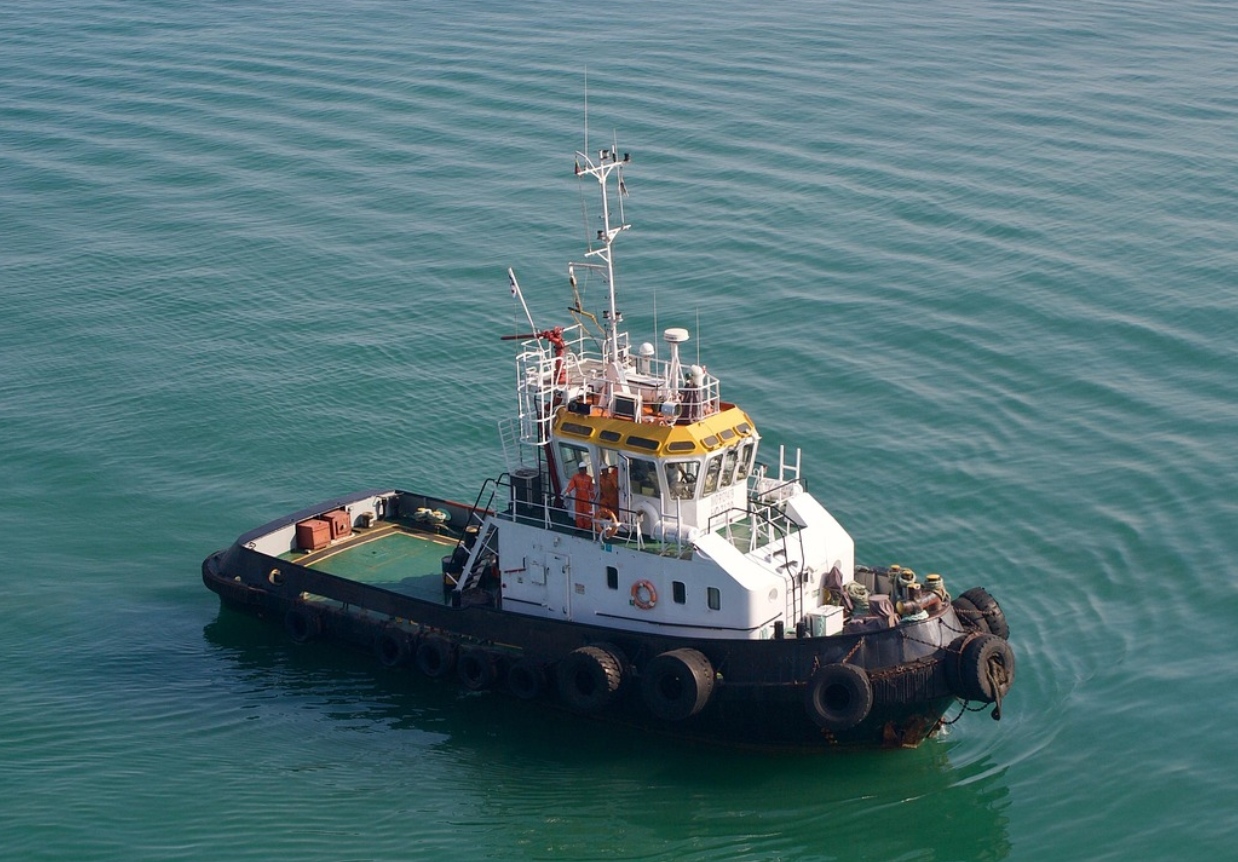
For years, autonomous tugboats lived in carefully controlled test basins, their maneuvers scripted and their routes fenced off from real harbor traffic. That phase is over. Port operators in Rotterdam, Singapore, and Houston have begun dispatching unmanned tugs into live berthing schedules, where they nudge 300-meter container ships alongside quays with no one on the bridge and only a remote supervisor monitoring the radar feed from a shore office.
The shift hasn't come overnight. Early deployments failed at low-speed docking because lidar and GPS alone couldn't judge the crushing forces between hull and fender. Engineers responded by fusing sonar, six-axis motion sensors, and machine-learning models trained on thousands of human pilot maneuvers. Now the tugs read current drift and wind gusts in real time, adjusting thrust before the gap narrows to centimeters. Crews once skeptical now request the autonomous mode for the riskiest stern-first entries.
Daily operations are revealing unexpected benefits beyond labor savings. Autonomous tugs log every line tension and propeller wake, feeding a database that port authorities use to redesign fairways and reduce fuel burn. A single remote operator can supervise three tugs across two terminals, stepping in only when the system flags an unusual echo or a sudden squall. For the first time, the word "routine" applies to unmanned harbor work.
The Modular Design Trick Behind China's Fast Tug Building
Walk through any Chinese shipyard turning out harbor tugs these days and you'll notice something odd: the hulls seem to grow in sections rather than from a single keel line. That's not a trick of perspective. Yards have quietly adopted a block-based modular system where the engine room, accommodation block, and bow section are built and outfitted in parallel bays before being welded together on the slipway.
The speed advantage comes from outfitting density. Instead of waiting for the hull to be watertight before installing pipes, switchboards, and crew quarters, teams fit out each module at ground level with full crane access. A 60-tonne tug that once took eight months from steel cutting to delivery can now be assembled in under four, because the heavy machinery is already bolted in before the modules even meet.
Standardization further amplifies the effect. Many builders reuse a small catalog of module dimensions across 30- to 80-tonne tug designs, so jigs, pipe spools, and cable trays don't need re-engineering for each hull. That lets small yards keep a steady rhythm: one set of modules in the paint shop, another in outfitting, and a third being joined at the dock. What looks like a rapid build is really a tightly choreographed sequence of repeatable chunks.
Real-Time Data Helps Chinese Terminals Cut Tug Wait Times
At major Chinese container ports, tugboats have long been dispatched through static schedules and radio calls, leaving vessels idling at anchorage while tugs return from other jobs. This mismatch often added two to three hours to a ship's port stay, burning fuel and clogging berth windows.
Now terminal operators are pulling live AIS feeds, berth camera analytics, and draft sensor readings into a single dashboard. The system predicts when a ship will actually finish cargo operations, then automatically reserves the nearest tug with the right bollard pull, cutting reaction time from over an hour to under ten minutes.
At one terminal in Ningbo-Zhoushan, the switch to real-time tug allocation trimmed average wait times by 37 percent over six months, and pilots report fewer last-minute speed adjustments. The same approach is spreading to bulk and LNG berths, where precise tug timing matters even more for safety and demurrage costs.
Hybrid Retrofits Give Older Tugs a Second Life in China
Along the bustling waterways of the Yangtze Delta, a fleet of aging harbour tugs has quietly traded diesel-only propulsion for hybrid drivetrains, stretching service lives by at least another decade. Shipyards in Zhoushan and Nantong are now pulling out old gearboxes and bolting in compact battery banks paired with variable-speed generators. The switch lets operators idle on electric power during standby, then engage the diesel only for full-rated bollard pull. One retrofit on a 3,200-horsepower ASD tug cut idle fuel burn by nearly forty percent, a figure that port authorities in Ningbo have begun citing in their emissions reports.
What makes these conversions stand out is the piecemeal approach: rather than stripping a vessel to bare steel, engineers preserve the original main engines and shafts, adding a shaft-mounted motor-generator plus a modest lithium-iron-phosphate pack. During towing, the motor-generator can kick in as a boost, flattening load spikes that once forced diesels to run inefficiently. A retrofit yard in Jiangsu completed three such jobs in the last year alone, each requiring under six weeks of drydock time. The resulting fuel savings and reduced soot around docks have caught the attention of smaller private terminal operators who cannot afford newbuild hybrid tugs.
Financing has proven easier than expected. Because the battery and motor-generator are modular, owners can phase the work—first the genset controls, then the energy storage, then a shore-charging connection. Some coastal cities in Shandong now offer retrofit subsidies tied to verified emission reductions, while leasing companies have begun underwriting the battery packs separately from the hull. For a 25-year-old tug that would otherwise be sold for scrap in Chittagong, the math is compelling: a hybrid retrofit costs roughly a third of a replacement vessel, and the crew needs only a two-day familiarisation course on the new power-management display. The tugs keep their names, their tow hooks, and their familiar handling quirks—but they no longer leave a black plume over the harbour at dawn.
Why China's Tug Innovators Are Betting on Hydrogen Fuel Cells
Port operations along China's busiest coastlines have long relied on diesel-powered tugs that idle for hours between jobs, burning fuel while emitting particulates and nitrogen oxides just meters from crowded terminals. The push to electrify harbor craft hit a wall with pure battery systems: a tug's intermittent high-demand maneuvers require frequent recharging, and swapping out massive battery packs eats into the tight turnaround schedules that keep ports competitive. Hydrogen fuel cells sidestep that trade-off by providing quick refueling comparable to diesel, while still eliminating tailpipe emissions entirely—a combination that appeals to port authorities under mounting pressure to slash Scope 1 emissions without sacrificing vessel availability.
Chinese tug builders and operators are also reading the industrial policy signals. Domestic electrolyzer manufacturing costs have fallen faster than most Western forecasts predicted, and coastal provinces from Shandong to Guangdong are subsidizing hydrogen refueling infrastructure as part of broader marine decarbonization plans. That local supply chain advantage matters because tugs operate within a defined radius of a home berth, meaning a single strategically placed hydrogen station can serve an entire fleet without the long-haul logistics headaches that plague fuel-cell trucks. Innovators see an opportunity to lock in early design experience—heat management, safety protocols for confined engine rooms, and crew training—before the International Maritime Organization's stricter emission rules force the global tug market to follow suit.
What often gets overlooked is how well the tug duty cycle matches fuel cell strengths. A harbor tug spends most of its life at low power, loitering or assisting with minor maneuvers, then demands full torque for a few minutes during a ship docking or emergency response. Batteries excel at short bursts but add weight and recharge downtime; fuel cells paired with a modest battery buffer handle the peaks efficiently while running at steady state the rest of the time. Chinese naval architects are already testing this hybrid architecture on newbuild tugs, using the predictable operating profile to right-size hydrogen storage and avoid the over-engineering that plagued early fuel cell passenger ferries. The bet isn't on hydrogen beating batteries everywhere—it's on hydrogen being the only zero-emission option that preserves the refueling speed and energy density a working tug can't do without.
FAQ
Many yards now pair battery packs with diesel generators, letting tugs run fully electric during standby and low-speed harbour moves. At ports like Shenzhen and Ningbo-Zhoushan, hybrid tugs have cut fuel use by roughly 20–30% on typical shifts, with shore charging integrated into berth scheduling.
Dynamic positioning and 360-degree camera arrays feed into a single bridge console, so a two-person crew can hold a container ship steady in crosswinds without constant throttle corrections. Terminals in Shanghai and Qingdao report shorter berthing times and fewer line-handling incidents after shifting to these tugs.
Chinese builders now export to Southeast Asia, the Middle East, and Africa, often undercutting European rivals on delivery time while offering customised firefighting and escort packages. Yards in Guangdong and Shandong have delivered tug series to ports like Jakarta and Dubai, with local service hubs following the sales.
Operators use live sensor feeds for engine load, fuel flow, and hull stress, with shore-based teams flagging maintenance before failures occur. In some Yangtze River fleets, this has pushed unplanned downtime down by double digits, letting smaller crews focus on navigation instead of paperwork.
Ningbo-Zhoushan, Shanghai, and Tianjin lead the shift. Ningbo-Zhoushan alone has placed multi-vessel orders for battery-hybrid tugs, using them for both harbour assist and coastal escort, while Tianjin retrofitted older tugs with energy storage to extend their service life.
New escort tugs feature deeper skegs, higher bollard pull per tonne, and enclosed bridge wings for heavy spray. Those working around the Taiwan Strait and South China Sea get reinforced bow sections and quick-release tow hooks, letting them operate in sea states that keep conventional harbour tugs tied up.
Trials include methanol-fuelled tugs for river service, autonomous docking assist using lidar and AI path planning, and tugs that act as floating charging stations for electric barges. A few yards are also testing hydrogen fuel cells for zero-emission operations inside enclosed port basins.
Conclusion
Across China's busiest ports, the turnaround picture has shifted noticeably. Electric tugboats now slip into berthing slots with far less noise and exhaust, cutting idle time while keeping pace with tight schedules. Some terminals have moved autonomous tugs from pilot docks into regular service, letting algorithms handle the repetitive push-pull work that once tied up skilled crews. Alongside these vessel changes, real-time data streams from sensors and scheduling platforms allow dispatchers to trim wait times by matching tug availability to incoming traffic more precisely—so a ship rarely sits waiting for assistance that is already on the way.
The speed behind this shift owes much to modular construction. Chinese yards can assemble standardized hull sections and swap components quickly, which shortens build cycles and makes customization less costly. For older vessels, hybrid retrofits are extending working life by pairing diesel engines with battery packs, cutting fuel burn during low-load operations. Looking further ahead, several builders are testing hydrogen fuel cell setups—still expensive and logistically tricky, but attractive for ports aiming to eliminate carbon emissions rather than merely reduce them. Together these moves are pushing tug design from a conservative support role into a faster, cleaner, and more data-driven part of maritime operations.
Contact Us
Contact Person: Benny Hu
Email: [email protected]
Tel/WhatsApp: +8618354225697
Website: https://www.allheartmarine.com/