

Chocolate Machine Factory Essentials for Scaling Premium Confectionery Production
2026-11-20
Scaling premium confectionery production is rarely just about buying bigger equipment. It hinges on the quieter engineering decisions inside a chocolate machine factory – from tempering precision to modular line layouts that grow with demand. GUSU approaches this challenge by treating every upgrade as part of a continuous production ecosystem, not a one-time purchase. In this guide, we explore the essentials that separate brands that scale smoothly from those that stall.
Rethinking Conching Timelines for Flavor Without Overprocessing
Most small-batch makers still treat conching as a fixed step: 72 hours, maybe 48 if the batch is small. But cacao origin and roast profile shift that number more than any single recipe ever will. A high-acid Madagascar lot can turn hollow and papery after two days, while a low-roast Peruvian bean might need an extended window just to shed its raw edge.
The more useful signal is not the clock but what is leaving the mass. At certain viscosity and temperature points, acetic acid and unwanted volatiles drop off quickly; push past that and you start stripping the esters that carry fruit and floral notes. Tasting every few hours after the first twenty-four reveals a curve rather than a straight line, and the best batches usually land just after the sharp angles soften but before the aroma turns flat.
Shortening a timeline can feel risky, yet overprocessing is the quieter failure. It produces chocolate that is technically smooth but forgettable. A better approach is to log sensory changes against time, then let each origin dictate its own endpoint instead of forcing every batch through the same long cycle.
Thermal Precision Beyond the Temper Curve
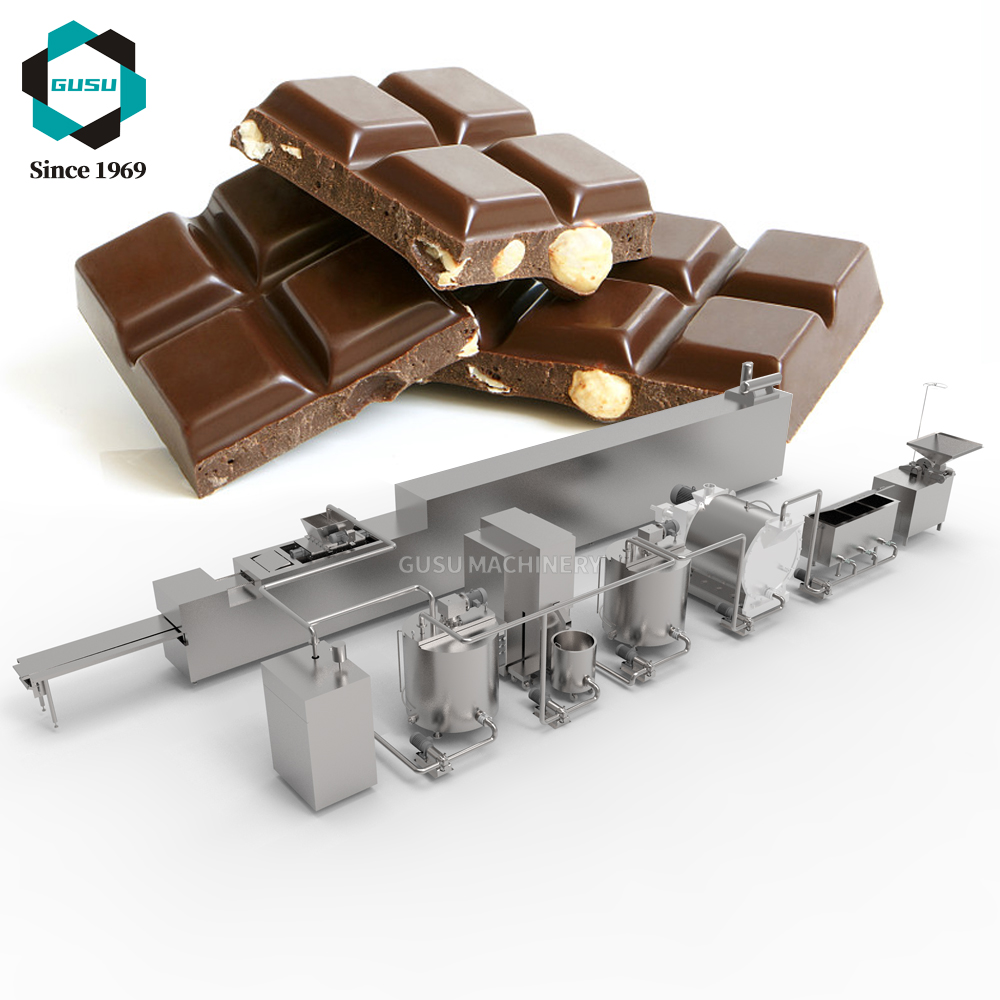
Most thermal systems chase a setpoint, but actual material behavior rarely follows the drawn temper curve. We track heat flux at the surface and adjust output before the deviation shows up in a probe reading. That means less overshoot, fewer dead zones, and a finish that stays consistent even when ambient conditions drift.
The real difference appears in repeat cycles. Instead of relying on fixed profiles saved for a specific batch size, the control loop reads viscosity, gloss, and crystallization speed as indirect thermal markers. Small corrections happen continuously, so the result holds its snap, sheen, and shelf stability without manual re-tuning between runs.
Modular Depositing Lines That Keep Craft Textures Intact
The trouble with most modular sets is that a texture looks fine until two pieces snap together, then the grain, brick pattern, or planking takes an awkward turn. These depositing lines were built to avoid exactly that. Each segment carries its own mapping in a way that lets the surface pattern continue cleanly through junctions, so the material reads as one continuous craft texture instead of a patchwork of disconnected tiles.
Instead of forcing a single long strip that stretches or repeats in obvious ways, the set breaks into corner pieces, sloped sections, and straight runs that share the same edge alignment. You can drop them into a storage hall, a workshop floor, or an outdoor loading area and the seams stay quiet. Small mounting clips and recessed joints keep the visible face clear of hardware, which also helps preserve the hand-crafted look of the surrounding blocks.
Placement stays practical as well. Because each module only connects where the texture flow matches, it is harder to create the kind of mismatch that makes a build feel rushed. When you need to change a layout, you can lift and reposition sections without stripping the surface detail or ending up with stretched edges. The result is a cleaner finish that holds up close to the camera and from a distance.
Designing Clean-in-Place Systems Around High-Fat Residues
Designing Clean-in-place circuits for high-fat residues starts with the assumption that fat will move, solidify, and hide wherever flow loses energy. Unlike protein films that build gradually, fat can detach in sheets during a wash and then re-coat cooler surfaces downstream. That means piping fall, drainability, and low-point removal are not afterthoughts. Any dead leg, protruding instrument, or recessed gasket becomes a collection point once the fat cools below its melting range. Spray devices have to cover those awkward areas deliberately, not just deliver a general wetting pattern; shadow zones behind agitators, baffles, and manway edges often survive an otherwise successful cycle because the mechanical impact never reaches them.
Chemical programming also has to resist the temptation to treat temperature as a blunt instrument. Hot caustic will saponify a portion of the fat, but if the solution temperature drops near a cooler jacket or inlet, the emulsion can break and deposit a waxy film that becomes harder to remove in later cycles. A better sequence runs a warm pre-rinse to displace loose oil, then a high-temperature caustic step with enough surfactant and chelating power to hold hydrolyzed fat in suspension, followed by an intermediate rinse that stays above the fat’s melting point until most of the cloudiness clears. Acid washes still matter, not because they attack the fat directly, but because they break down calcium soaps and mineral bridges that make the residue more tenacious.
Verification should be designed around the worst-case location, not the easiest sample point. If a spray shadow or a low-flow branch is accessible, that is where swabs and rinse-water sensors belong. Turbidity and conductivity trends can indicate a clean line, but they do not prove a vessel surface is free of grease; a visual check under oblique light or an ATP swab after the final rinse gives a more honest read. Building the system so those checks can be done quickly, without opening a manway through a fog of hot vapor, determines whether the design works in daily operation.
Sourcing Refiner Components That Adapt to Recipe Changes
Procurement teams often treat refiner components as a fixed match for the recipe running today. That approach quietly turns expensive when the formula shifts, whether because an oil supplier changes or a plant-based base replaces dairy. Components with rigid shear geometry, narrow temperature tolerances, or seals rated only for a single pH range become immediate bottlenecks. It helps to look for heads and stators that allow gap adjustment on the floor, and for materials that can handle a reasonable band of viscosity and acidity without being swapped out.
Modular construction matters more than most spec sheets suggest. A change in fat content, protein load, or emulsifier chemistry can alter back pressure, heat transfer requirements, and wear patterns. If the refiner is built around interchangeable scraping blades, quick-release shaft couplings, and standardized heating jackets, the maintenance crew can reconfigure the line during a normal shift. That avoids the usual choice between running a compromised recipe and waiting on a custom retrofit.
Before committing to a supplier, it is worth requesting trial data across two or three recipe scenarios rather than a single benchmark. Ask how the components perform with higher viscosity at lower temperature, or with mildly acidic emulsions after a pH adjustment. The goal is not a component that handles every possible formulation, but one that does not force the formulation back toward the equipment’s comfort zone. Some vendors will also include engineering support for future recipe shifts, which can be more valuable than the parts themselves.
Measuring Mold Release Consistency Before It Reaches Packaging
Mold release consistency is often noticed only after parts start sticking or showing drag marks, but by then the line has already produced a batch that needs sorting. Measuring before packaging shifts attention to the application itself: film thickness, spray pattern overlap, and whether the release layer has fully cured. A simple gloss check or a tape pull on a fixed tool face can reveal uneven coverage that would otherwise turn into ejection problems once the parts are already sealed and boxed.
The real value comes from watching drift over a shift rather than chasing a single perfect reading. Small changes in nozzle distance, dilution ratio, or ambient humidity alter how the release film settles into the mold texture. Logging pressure settings and pulling sample parts at regular intervals creates a narrow operating band. When the surface condition moves outside that band, the release agent is corrected before packaging, not after a customer reports micro-tears or inconsistent finish.
Useful measurements are tied to the tool surface rather than the mixing area. A clean test coupon or a fixed point on the mold gives a repeatable baseline for gloss, contact angle, or simple wipe resistance. Once that baseline starts shifting, it is a signal that the release layer is no longer uniform. Catching it at that stage keeps questionable parts from reaching packaging and keeps the line running without a late-stage hold.
FAQ
The real pressure point is usually the enrobing and cooling tunnel, not the melter. A tunnel with segmented temperature zones and variable belt speed lets you hold a clean snap on dark, milk, and filled centers without constantly adjusting settings. After that, look for a high-shear mixer that can handle larger masses without pulling in air, because trapped air becomes a visible defect once you are running thousands of pieces an hour.
You cannot simply scale the recipe and expect the same roast curve to hold. Larger bean loads change how heat penetrates the drum, so the roast profile needs to be re-anchored to bean surface temperature rather than time alone. Grind size and conche temperature also need revalidation, because a bigger mass holds heat longer and can mute volatile aromatics that defined the original batch.
Most premium operations end up with a continuous tempering column rather than batch wheel temperers once throughput climbs. The column gives steadier crystal formation because chocolate spends a controlled amount of time in each zone, whereas batch machines have more variation at the start and end of a cycle. The trade-off is that columns demand strict attention to seed crystal quality and pump speed.
The details that matter are sloped surfaces, fully welded seams, and quick-release covers on conveyors and depositors. Any ledge or hollow section will collect nut dust or dairy residue and then drop it into the next run. Dry cleaning tools and dedicated color-coded utensils for allergen and non-allergen lines also help more than adding extra washdown ports.
The bottleneck is usually at the depositor, not the inclusion feeder. A servo-driven depositor that can pause or adjust shot size without stopping the belt lets you place a brittle praline or caramel core cleanly. For inclusions, fix the metering point close to the enrober and use a vibratory feeder with load cells, otherwise over-topping will force constant belt speed adjustments.
Because conching is not just mixing; it is about moisture loss, acid reduction, and viscosity development. When you add more mass to a conche, the surface area exposed to air does not scale at the same rate, so the same number of hours produces a different result. Factories usually compensate by raising temperature slightly or splitting the conche cycle into dry and wet phases.
Particle size distribution and yield stress are the two numbers worth watching closely. A shift in particle size changes mouthfeel and viscosity, while yield stress drift affects how the chocolate sets in molds and how evenly it coats centers. Inline viscometers and a quick particle size check every hour give you an earlier warning than relying on final snap or gloss.
They tend to over-automate the front end, like raw material handling and melting, before fixing the precision of the depositing and cooling steps that define the product. A robotic palletizer rarely improves perceived quality, but a better tempering unit or a more controllable tunnel will. Spend on sensors and controls where the chocolate is actually changing phase.
Conclusion
Scaling premium chocolate production rarely hinges on a single machine purchase. It depends on how well the line handles subtle physical and sensory shifts as batch sizes grow. Reworking conching profiles, for instance, matters more than simply extending run times; longer agitation can flatten volatile aromas and erase the fruit or nut character a recipe was built around. The same restraint applies to thermal control. Managing heat only to satisfy a standard temper curve overlooks the narrow windows where cocoa butter crystallises evenly without dulling gloss or snap. Keeping those windows stable across shifts often separates small-batch quality from scaled output.
Equipment flexibility becomes just as important once production speeds increase. Modular depositing heads allow a factory to switch between filled shells, layered bars, and textured inclusions without sacrificing clean edges or trapped air. In parallel, clean-in-place design needs to account for cocoa fat behaviour: residues that rinse easily when warm become wax-like when cool, so spray placement and tank geometry matter. Refiner rolls and screens should be specified to tolerate shifts in particle size and fat content rather than being locked to one recipe. Finally, demolding consistency deserves attention before wrappers are involved, because micro-fractures or sticky release can go unnoticed until product reaches packaging. Tying these details together gives a factory the headroom to grow without losing the characteristics that define premium confectionery.
Contact Us
Contact Person: Zhang Wei
Email: [email protected]
Tel/WhatsApp: 8618662577837
Website: https://www.chocomachinery.com