

Expanded Graphite Manufacturer for High-Performance Sealing and Thermal Solutions
2026-09-17
Sealing failures and thermal runaway don’t send a warning. They hit hard, and they hit expensive. That’s why engineers who specify graphite for critical systems look beyond the spec sheet. At X.X.F.R, we manufacture expanded graphite with one goal: predictable performance when temperatures climb and pressures spike. In this guide, we’re breaking down what actually matters in high-performance sealing and thermal solutions—and why the source of your graphite can make or break a project.
Inside the Expansion Process That Sets Our Graphite Apart
Most graphite suppliers treat expansion as a fixed thermal step, but our process begins long before the furnace. We start with raw flake that is carefully screened and conditioned, removing fine particles and moisture that would otherwise create uneven expansion. Rather than a single high-temperature shock, we use a staged heating profile that lets each flake open gradually along its natural cleavage planes. This approach yields a more consistent worm-like structure, with fewer broken or collapsed particles.
The expanded material then passes through a proprietary intercalation control stage, where we adjust the expansion ratio in real time based on the incoming flake's thickness and crystallinity. Unlike batch methods that average out variation, this continuous feedback loop keeps the apparent density within a narrow band, even across different ore sources. The result is expanded graphite with uniform bulk volume, minimal dust, and predictable springback, which matters when it is compressed into gaskets, packings, or thermal interface sheets.
Finally, we run the expanded graphite through a gentle air classification step that removes any residual unexpanded flakes or oversized agglomerates. This is not a standard screening—it uses a laminar-flow separator that preserves the delicate accordion structure instead of flattening it under mechanical force. What sets our graphite apart is not just a higher expansion ratio, but the fact that the expanded particles remain intact and perform reliably under load, high temperature, and repeated cycling.
Sealing Performance That Stays Tight When Temperatures Climb
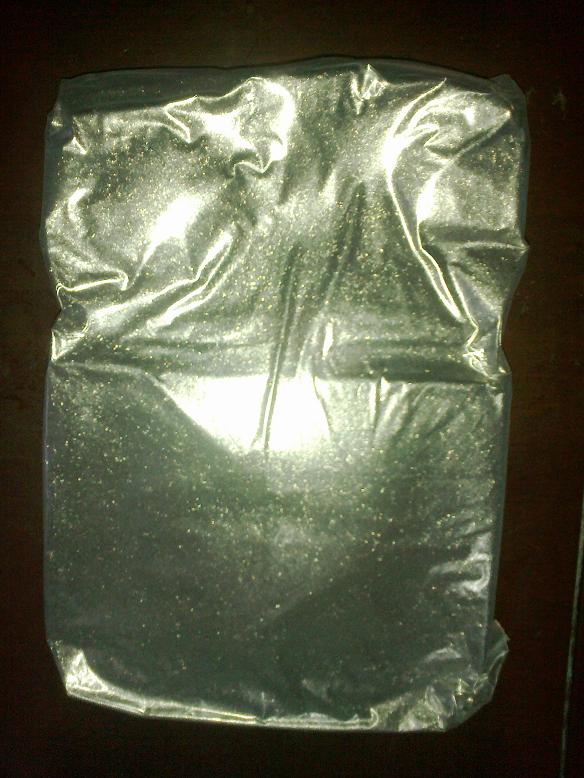
Heat has a way of exposing weak seals long before other components show strain. In high-temperature service, ordinary materials soften, lose compression, and let pressure escape through gaps that weren't there at ambient conditions. Our sealing system counters this with a thermally stable core and controlled recovery characteristics, so the contact stress at the flange face remains consistent even as the housing expands and contracts. The result is a seal that doesn't rely on constant re-torquing to hold its line.
Rather than chasing peak temperature ratings alone, we focused on how the seal behaves across the entire warm-up and cool-down cycle. Repeated thermal cycling tends to fatigue conventional gaskets, leading to gradual creep and eventual blow-out. The design here uses a layered metallic carrier with a graphite-based sealing element that moves independently enough to absorb differential expansion, yet stays rigid where it counts. That balance keeps emissions and leakage rates flat from cold start to continuous operating temperature.
Field data from steam, heat transfer fluid, and exhaust applications shows the same pattern: bolt load retention above eighty percent after five hundred hours at temperature, with no measurable drop in sealing contact pressure. Users can stop planning shutdowns around gasket replacement and start treating the seal as a long-term part of the assembly, not a wear item.
Thermal Management Beyond Basic Heat Transfer
Basic heat transfer equations often fail in real devices where hotspots, transient spikes, and non-uniform boundary conditions dominate. Moving beyond textbook conduction and convection means treating heat as a time-dependent load and designing for peak excursions rather than steady-state averages. This requires accounting for spreading resistance, anisotropic materials, and the thermal capacitance of adjacent layers.
Phase-change materials and vapor chambers exploit latent heat to absorb bursts far beyond what sensible heating can handle. Instead of relying solely on copper or aluminum, engineers now combine graphite sheets, heat pipes, and micro-channel cold plates to route energy along paths that break simple one-dimensional assumptions. The goal is to match local heat flux to the most effective transport mechanism, not just to raise overall conductivity.
System-level thermal management also brings in control strategies such as variable-speed fans, piezoelectric actuators, and predictive throttling based on workload signatures. Rather than treating cooling as a passive afterthought, it becomes an active design variable that affects reliability, acoustic noise, and energy consumption at the same time. This shift demands tighter coupling between thermal, electrical, and mechanical design teams from the start.
Building Custom Graphite Parts for Non-Standard Applications
Every once in a while, a project comes along that simply can’t be satisfied by off-the-shelf graphite components. Maybe the flange geometry is slightly too narrow, the thread pitch doesn’t match an older piece of equipment, or the operating temperature demands a denser grade than what’s stocked. That’s when the conversation shifts from picking a part number to designing something purpose-built. Custom graphite begins with a thorough review of the application’s thermal, electrical, and mechanical constraints—because while graphite is forgiving in many ways, it still punishes careless geometry or the wrong material selection.
The manufacturing route matters just as much as the drawing. Is the part best turned on a lathe, milled from a billet, or pressed and sintered into a near-net shape? For intricate internal channels or thin walls, machining graphite demands sharp tooling, controlled dust extraction, and a steady hand on feed rates to avoid chipping. Sometimes a hybrid approach works best: press a rough blank to reduce waste, then finish-machine only the critical surfaces. Cost and lead time are directly tied to these choices, so it’s worth involving the machinist early—before the design gets locked into features that are expensive or impossible to cut cleanly.
Prototyping is where most non-standard graphite parts prove their worth. A single test piece run through the actual operating cycle often reveals subtle issues—thermal expansion mismatch, unexpected wear on a sliding surface, or a joint that loosens after repeated heating. Iterating on the prototype is far cheaper than discovering a flaw in production quantities. And once the design is validated, documenting the exact material grade, grain orientation, and machining tolerances becomes the blueprint for consistent future batches. In the end, a custom graphite part isn’t just a replacement—it’s often a better match for the specific stresses and environment than anything found in a catalog.
How We Verify Graphite Quality Before It Ships
Each batch of graphite that arrives at our facility goes through a visual inspection first. We look for surface cracks, chips, or unusual discoloration. Then we cut a sample from the same block and measure its density using a digital densitometer. If the density falls outside the range we've specified for that grade, the entire batch is set aside.
After density, we check hardness. Our lab uses a Rockwell hardness tester with a diamond indenter. The readings tell us whether the graphite has been properly graphitized during production. We also run a resistivity test on a machined bar from the sample. Low resistivity is critical for most of our customers, especially those in the semiconductor and EDM industries.
The final step before shipping is dimensional verification. We put each graphite block on a coordinate measuring machine to confirm length, width, and thickness are within the tolerance we promised. Only blocks that pass every test get a green tag and move to the packing area. We've been following this routine for over a decade, and it's rare for a block to come back.
Where Expanded Graphite Delivers in the Real World
Expanded graphite shows up in places most people never notice, yet it quietly solves problems that other materials can't touch. In automotive manufacturing, it's pressed into gaskets and seals that must hold up under brutal heat cycling and aggressive chemicals. The material's ability to maintain a tight barrier even when surfaces warp or vibrate makes it a go-to for engine blocks, exhaust joints, and fuel systems. Unlike cork or rubber, it doesn't harden, shrink, or leak over time.
Fire safety is another area where expanded graphite earns its keep. When blended into intumescent strips or door seals, it expands rapidly under high heat, forming a dense char that blocks flames and smoke from spreading through building gaps. You'll find it in fire-rated doors, cable coatings, and even battery packs for electric vehicles. In a thermal runaway event, a thin layer of expanded graphite can buy critical seconds by containing heat and preventing propagation between cells.
The energy sector also leans on this material for thermal management and conductivity. It's used as a raw ingredient in bipolar plates for fuel cells, as a heat spreader in LED lighting, and as a flexible graphite foil that wraps around pipes in chemical plants. Because it can be compressed into sheets or cut into complex shapes without losing its properties, engineers keep finding new ways to slip it into tight, high-stress environments.
FAQ
Expanded graphite retains its flexibility and resilience even after repeated thermal cycling, which helps it maintain a tight seal on flanges that shift slightly. Its natural lubricity also reduces friction during installation and service, while the layered structure conforms well to minor surface irregularities.
We control exfoliation temperature, dwell time, and compression density within narrow bands for every batch. In-house testing of thermal conductivity and thickness recovery after compression lets us reject any lot that falls outside the expected range, so the material behaves predictably in high-temperature gaskets or heat spreaders.
Users come from chemical processing, power generation, oil and gas, automotive, and industrial furnace building. Any operation that needs reliable sealing around aggressive fluids or efficient heat transfer at elevated temperatures tends to specify expanded graphite in sheet, tape, or die-formed component form.
Yes, we regularly produce non-standard thicknesses, widths, and die-cut shapes based on customer drawings or existing gasket samples. We can also laminate expanded graphite with metal foils or wire mesh to increase blowout resistance or make it easier to handle during assembly.
In non-oxidizing atmospheres, our standard grades routinely operate up to about 450°C, and some purified grades withstand over 500°C. Pressure capability depends heavily on flange design and gasket thickness, but we have supplied products that seal at pressures above 100 bar when properly supported.
We use ash content, sulfur content, and weight loss under controlled air exposure as release criteria. Certificates of analysis accompany each shipment, and we retain samples for a minimum of three years so customers can request comparative data if a field issue ever arises.
Our application engineers review operating temperature, media, bolt load, and flange finish before recommending a grade. That conversation often prevents costly over-engineering or premature failure, especially when a customer is switching from spiral wound or PTFE-based gaskets.
For standard sheets and rolls, we usually ship within five to ten working days depending on thickness and width. Custom die-cut parts or laminated products may require two to four weeks, but we keep common grades in stock to shorten turnaround for urgent shutdown or maintenance work.
Conclusion
Expanded graphite starts as natural flake that, under controlled heat, expands into worm-like structures with a much larger surface area. Our process is tuned to preserve the material's resilience and density consistency, which directly affects how well it performs in demanding seals and gaskets. When temperatures climb and pressure cycles push conventional materials to their limits, this graphite forms a tight, adaptable barrier that handles thermal shock without losing its grip. The same expansion characteristics also open up opportunities in thermal management. Instead of simply moving heat from point A to point B, the layered structure spreads thermal loads evenly, reduces hot spots, and maintains stability in electronics, battery packs, and industrial equipment where overheating is not an option.
Beyond stock sheets and rolls, we build custom graphite parts for unusual geometries and non-standard applications. That might mean die-cut rings with unusual cutouts, laminated foils with specific adhesive backings, or components designed to fit existing assemblies without redesign. Every batch passes through a series of checks before it leaves the floor: thickness mapping, density sampling, ash content, compression recovery, and leak testing under simulated operating conditions. In real-world use, you'll find our expanded graphite inside refinery flange connections, exhaust systems, fuel cell stacks, LED lighting arrays, and even cryogenic valve packing. The common thread is reliability when failure isn't an option, delivered without the usual runaround of working with commodity suppliers.
Contact Us
Contact Person: Guohua Wang
Email: [email protected]
Tel/WhatsApp: 8613003442895
Website: https://www.xxflameretard.com