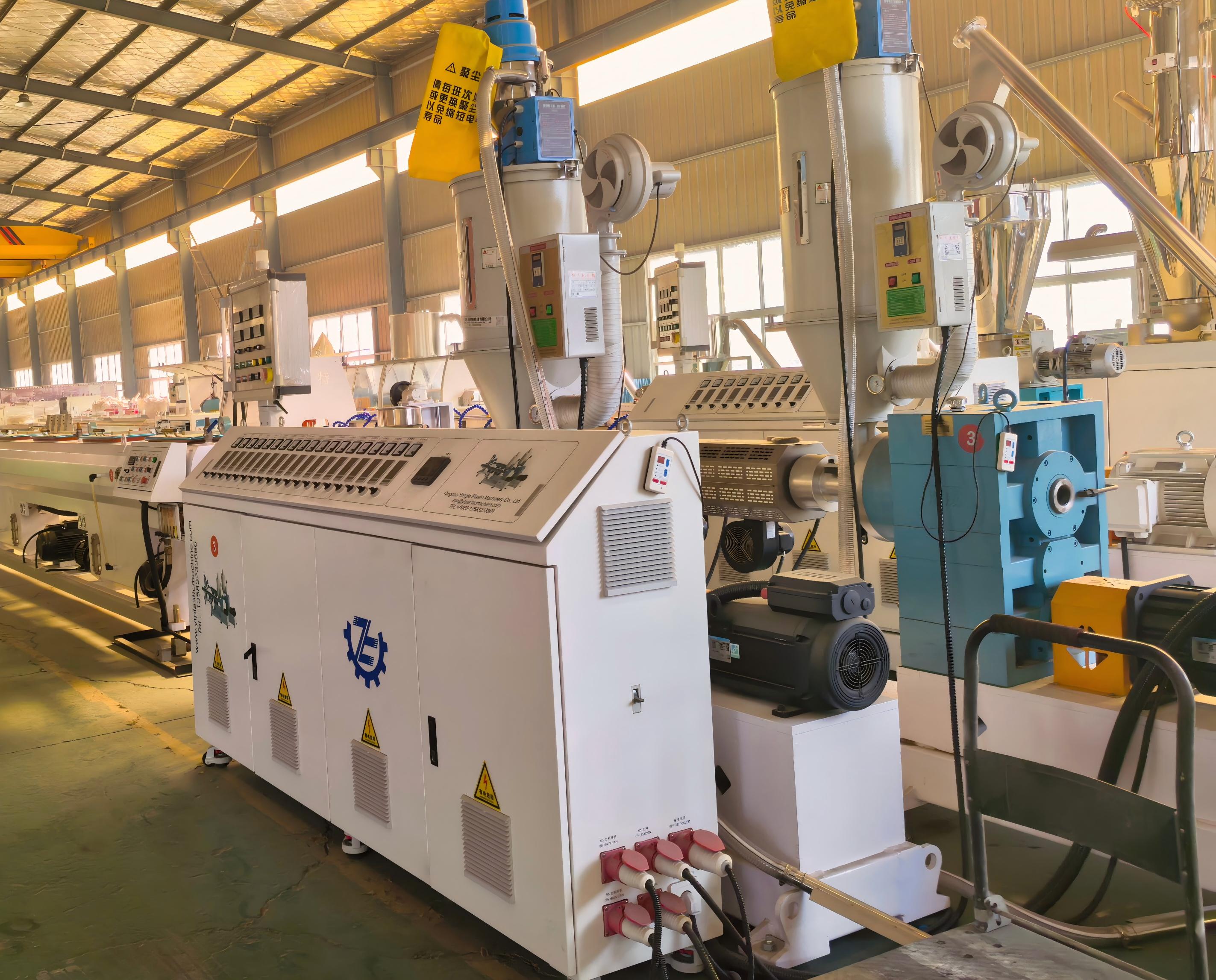

Inside a Leading Plastic Profile Machine Factory: Innovation and Manufacturing Excellence
2026-08-02
Step inside Yongte, where precision engineering meets relentless innovation. In a world demanding faster, smarter, and more sustainable plastic profile production, this factory doesn’t just keep pace—it sets the standard. From breakthrough extrusion technology to end-to-end manufacturing excellence, discover what truly powers industry-leading solutions.
Crafting Precision: The Core of Profile Production
Every profile we produce begins with meticulous measurements, taken not just with instruments but with a trained eye. It’s about understanding the material’s behavior under stress, anticipating how it will interact with adjoining components. The smallest miscalculation can lead to failure, so we obsess over each dimension, ensuring that what leaves our shop matches the design intent exactly, without compromise.
Our process relies heavily on in-house expertise, where seasoned craftspeople pair traditional techniques with advanced machinery. They know when to let the CNC run and when to stop for a manual check. This blend of old and new eliminates the usual bottlenecks, producing components that fit right the first time. There’s no room for “close enough” here; every contour, every edge must meet the strictest of tolerances.
Quality is built in during these stages, not inspected in afterward. By controlling the environment—temperature, tool wear, and even vibration—we minimize variation across runs. The result is a profile that not only performs reliably but also speeds up assembly down the line. It’s the kind of precision that keeps projects moving without rework or delays, something our clients have come to rely on.
Beyond Automation: Where Expertise Drives Innovation
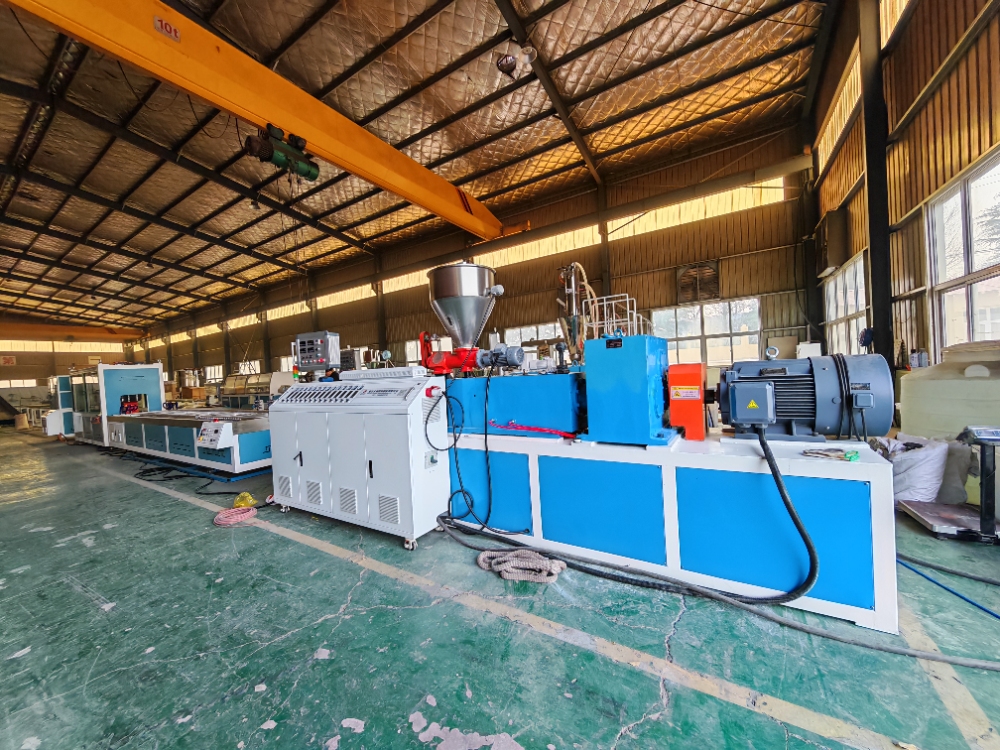
Real innovation doesn’t spring from code that simply executes predefined paths. It emerges when seasoned expertise confronts automation with questions that algorithms never think to ask. Machines can replicate patterns at scale, but they can’t sense the subtle friction in a workflow, the unspoken customer need, or the market shift that hasn’t yet formed a data point. That’s where human insight bends the arc of automation—not by discarding it, but by infusing it with intuition that no training set can capture.
When teams stop treating automation as the end goal and start wielding it as a thinking partner, the dynamic changes. The focus shifts from optimizing known tasks to exploring adjacent possibilities—those unpredictable edge cases and “what if” scenarios where true breakthroughs hide. Expertise doesn’t just supervise the machines; it provokes them, challenges their outputs, and repurposes their capabilities in ways their designers never imagined. The result isn’t faster sameness—it’s a different caliber of solution altogether.
Consider the moments that have reshaped industries: they rarely come from a linear improvement in speed or cost. They come from someone who understood the territory deeply enough to see that the automation’s blind spot was actually the opening. That kind of thinking can’t be scripted into a workflow. It’s cultivated through experience, supported by tools, but never replaced by them. In that space beyond automation, expertise becomes the catalyst—and innovation, the natural consequence.
R&D Unveiled: Turning Concepts into Reality
Every breakthrough begins as a fragile idea, a sketch on a whiteboard or a late-night hunch. At our core, we don’t just refine these sparks—we build the bridge from imagination to impact. Our R&D process strips away the clutter of over-formalized pipelines, replacing it with rapid prototyping, relentless curiosity, and the freedom to fail forward.
This isn't about following a rigid roadmap. It's about creating a space where engineers, designers, and strategists collide daily, turning half-formed visions into tangible prototypes that can be held, tested, and challenged. Whether it's a material science leap or a digital experience reimagined, we focus on velocity without velocity for its own sake—every sprint is anchored to a real human need.
The result isn't just a product; it's a resonance. What was once a concept on paper becomes a solution that fits seamlessly into lives, often before people even realize they needed it. That's the quiet thrill of R&D done right: unveiling the future not with a grand announcement, but with a simple, undeniable “it works.”
The Quality Mandate: Testing Beyond Standards
Meeting industry standards is often seen as the finish line, but true quality demands a far more rigorous journey. Standards provide a baseline—a common language of minimum expectations—yet they can lull teams into a false sense of security. Real-world usage is messy, unpredictable, and rarely aligns neatly with checklist compliance. When you test only to the standard, you risk missing edge cases, emergent behaviors, and the subtle interplay between components that only reveals itself under stress or unconventional conditions. The mandate, then, is to treat standards as a starting point, not the destination.
Adopting a mindset that goes beyond standards means embedding curiosity into your test strategy. It’s about asking “what happens if…?” rather than “does it meet requirement X?”. This approach uncovers hidden assumptions and forces the product to prove its resilience in scenarios no committee ever imagined. Teams that embrace this philosophy often build their own extended test suites, inspired by field data, customer pain points, and a deep understanding of the environments where their product will live. They simulate chaos, introduce deliberate faults, and measure not just pass/fail but graceful degradation and recovery speed.
Ultimately, testing beyond standards is a cultural commitment, not a process tweak. It requires leadership to value curiosity over conformance, and to give teams the space to explore failures without fear. When quality becomes a shared obsession rather than a checkbox exercise, products don’t just comply—they earn trust. That trust translates directly into user satisfaction, brand reputation, and long-term success. The standards may set the bar, but it’s the relentless pursuit of excellence that clears it by a mile.
Custom Engineering: Shaping Solutions for Every Need
Every challenge in engineering is unique, shaped by specific requirements, constraints, and goals. Off-the-shelf products often fall short when it comes to addressing these nuances, which is where custom engineering comes into play. Instead of forcing a square peg into a round hole, our approach revolves around listening closely, understanding the core problem, and designing a solution that aligns perfectly with the intended application. From material selection and mechanical design to software integration and prototyping, every aspect is tailored from the ground up, ensuring that the final outcome not only functions but thrives within its intended environment.
What sets our custom engineering apart is the seamless blend of creativity and discipline. We don’t just iterate on existing templates; we start with a blank canvas, guided by physics, experience, and a deep respect for practicality. Whether it’s a one-off prototype for a research lab, a specialized machine for an automated production line, or a retrofitted component that extends the life of legacy equipment, the process remains the same: rigorous analysis, collaborative refinement, and meticulous execution. The result is a solution that feels like it was always meant to be there, because it was built exactly for that purpose.
Beyond the technical merits, custom engineering is about partnership. We invest time in understanding not just the technical brief, but the bigger picture—budget constraints, timelines, future scalability, and even unwritten operational expectations. This holistic view allows us to make informed trade-offs and suggest improvements that might not have been originally considered. In the end, shaped solutions are not just about delivering a piece of hardware or software; they’re about providing peace of mind, knowing that the gap between a problem and its resolution has been bridged with precision, care, and enduring quality.
Sustainable Manufacturing: Reducing Footprint, Elevating Output
For decades, factories chased output at any cost, burning through resources and leaving behind a trail of waste. The shift toward sustainable manufacturing isn’t a rebranding exercise—it’s a fundamental rethinking of how we make things. By embedding energy recovery systems, switching to bio-based materials, and redesigning processes to cut scrap, plants are now slashing carbon emissions while boosting throughput. It turns out that waste is simply a design flaw, and fixing those flaws often uncovers ways to run lines faster and with fewer interruptions.
Digital twins and real-time sensor networks are rewriting the rules of efficiency. Instead of reacting to defects after they pile up, operators can simulate production flows and predict bottlenecks before they happen. This data-driven approach shrinks both material footprints and downtime, letting the same equipment produce more with less. Meanwhile, closed-loop water systems and on-site renewable microgrids decouple production from volatile resource markets, making operations leaner and more resilient. When sustainability becomes part of the production logic rather than an afterthought, the result is not a trade-off—it’s a competitive advantage that shows up in both margins and metrics.
FAQ
The factory distinguishes itself through a relentless focus on custom engineering and continuous improvement. Rather than offering off-the-shelf solutions, they collaborate closely with clients to design machines that precisely match specific profile geometries and production demands, integrating smart technologies and energy-efficient systems that reduce waste and downtime.
Quality is embedded at every stage, from sourcing raw materials to final testing. The factory employs a rigorous inspection protocol using advanced metrology equipment and real-time monitoring during assembly. Each machine undergoes a comprehensive trial run with actual polymer materials to verify output consistency, dimensional accuracy, and surface finish before shipment.
Innovation is a core pillar—they invest heavily in R&D, constantly exploring new materials, automation techniques, and digital integration. For example, they have recently developed a proprietary extrusion control system that uses machine learning to adapt parameters on the fly, minimizing material waste and energy consumption while maximizing throughput.
The range is extensive: from single-screw and twin-screw extruders tailored for PVC, PE, and WPC profiles, to complete downstream equipment including calibration tables, haul-offs, cutters, and stackers. They also produce specialized lines for co-extrusion, lamination, and complex hollow profiles used in construction, automotive, and furniture industries.
Support goes beyond the initial setup. They provide on-site training, remote diagnostics, and a dedicated service team available around the clock. Spare parts are kept in stock globally to ensure rapid delivery, and they frequently follow up with performance audits and optimization suggestions to keep lines running at peak efficiency.
The workforce combines decades of hands-on experience with ongoing training in emerging technologies. Engineers, technicians, and assembly staff work in cross-functional teams, fostering a culture where practical know-how meets inventive thinking. This blend allows them to solve complex manufacturing challenges quickly and maintain high standards even for customized orders.
Sustainability is integral—machines are designed to consume less energy and reduce scrap through precise control. The factory itself uses renewable energy sources and recycles cooling water and waste materials. Additionally, their equipment enables clients to process recycled plastics effectively, supporting a circular economy in plastic profile production.
They are actively shaping trends toward Industry 4.0 integration, with machines that communicate seamlessly with plant-wide management systems. Upcoming models will feature enhanced IoT connectivity, predictive maintenance alerts, and even greater flexibility to switch between profiles rapidly, allowing manufacturers to respond swiftly to market changes without sacrificing quality.
Conclusion
Walking through the doors of a leading plastic profile machine factory, you immediately sense a culture where precision engineering meets relentless innovation. At the heart of profile production, computer-controlled machining centers carve components to micron-level tolerances, ensuring every extrusion line delivers flawlessly consistent profiles. Yet technology alone isn't the differentiator—it's the seasoned engineers on the floor who interpret real-time data, tweak parameters, and troubleshoot with an instinct honed over decades. This fusion of automation and deep expertise turns complex challenges into streamlined processes, often sparking on-the-fly improvements that later become standard features.
In the R&D wing, concepts rapidly evolve into tangible prototypes, with teams simulating everything from exotic material blends to multi-hollow geometries before a single screw turns. The quality lab is equally uncompromising: machines undergo endurance tests, thermal cycling, and stress analysis far beyond international norms, guaranteeing reliability in the harshest production environments. For clients with unique requirements, the custom engineering department co-develops tailored solutions—whether for co-extrusion, high-speed packaging, or recycled-content processing. Underpinning it all is a sustainability ethos; energy-efficient drives, closed-loop cooling, and scrap reclaim systems not only shrink the factory's carbon footprint but also boost overall output, proving that environmental stewardship and manufacturing excellence can advance hand in hand.
Contact Us
Contact Person: Ms Qin
Email: [email protected]
Tel/WhatsApp: 8613583233866
Website: https://www.yongteplast.com