

Laundry Detergent Capsules Manufacturer Selection Tips for Quality Assurance
2026-11-16
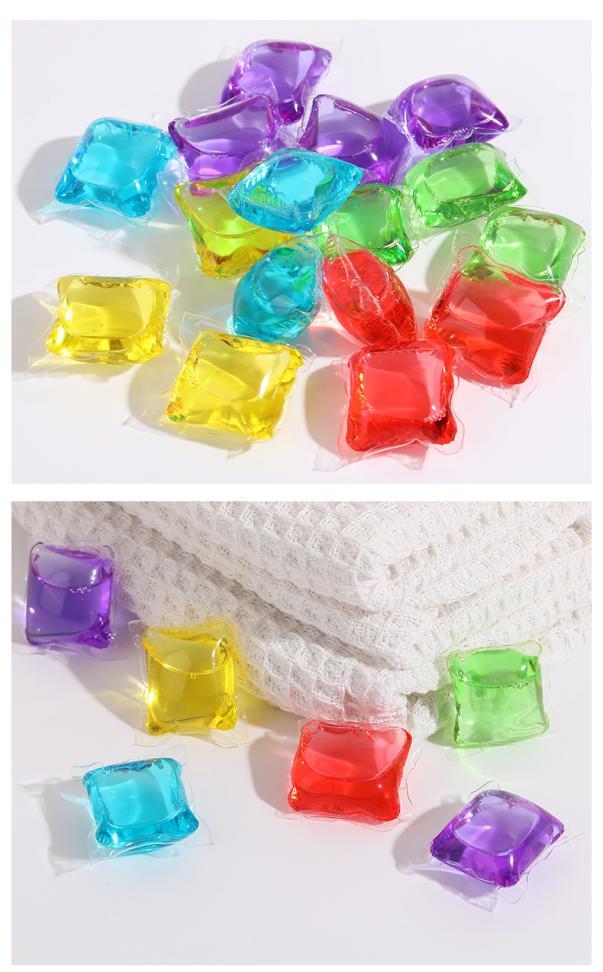
Selecting a laundry detergent capsule manufacturer isn’t a decision you want to revisit six months after launch. Leaks, weak films, or inconsistent dosing can erode trust faster than most brands can rebuild it. A few targeted quality assurance checks, though, can separate dependable production from expensive trial and error. That’s the focus here—and why LANJIEYA keeps showing up in conversations about reliable capsule manufacturing.
What Seam Strength Reveals Before You Commit
A seam rarely fails because the thread snaps on day one. What it actually exposes is how well the material was handled before the needle ever touched it: uneven feed tension, skipped stitches, or a pattern piece cut slightly off-grain all show up as puckering, grinning, or a seam that pulls tight under light pressure.
Paying attention to seam strength before committing tells you more than whether a garment will survive. It hints at how the piece will age at the stress points—shoulders, armholes, waistbands, inseams—and whether the maker adjusted stitch density or chosen reinforcement to match the fabric’s stretch and recovery instead of treating every seam the same.
The most honest test is not just tugging at a seam but watching how it behaves when the fabric is stretched slightly along different angles. If the stitching holds too rigidly while the material wants to move, that stiffness is a warning. A seam that flexes without opening up is a sign that the construction choices were made with the finished object in mind, not just to pass a quick visual check.
Why Dissolution Testing Belongs in Your Checklist
A dissolution run can expose problems that disintegration or assay alone will not catch. A tablet may pass hardness, weight, and content uniformity and still release its active ingredient too slowly or too quickly once it reaches the body. Keeping dissolution on the checklist makes release behavior a required result rather than an afterthought, which matters when a batch looks acceptable on paper but would not perform the same way in a patient.
It also gives manufacturing and formulation teams an earlier signal when something has changed. Slight shifts in granulation, compression, or coating often show up in dissolution data before they become out-of-spec results. Checking it routinely means those small drifts can be corrected while they are still manageable, not after the batch has already been packed and moved forward.
Regulatory expectations are one part of the story, but the more practical reason is internal consistency. A dissolution checklist turns release testing into a diagnostic step rather than a final gate. It links lab results to what actually happened on the production line, helping the whole team see formulation and process changes as connected events instead of isolated data points.
Retention Samples Often Say More Than Certifications
A certificate is a paper promise. A retention sample is the actual product, pulled from the line or the shipment, still carrying the marks, wear, and decisions made on a specific day. When someone wants to know whether a supplier really held tolerances, the retained unit answers questions no audit report can.
Samples also show drift. Certification documents tend to capture a clean snapshot, sometimes produced under ideal conditions. Retained items reveal the quieter shifts in raw material, tooling, or handling that build up between formal assessments. You can measure them again, cut them open, or compare one batch to another and see what changed.
That kind of evidence is harder to argue with. It does not rely on signatures or accreditation language. It sits on a shelf, ready to be checked by anyone who cares enough to look, which is why experienced buyers, engineers, and auditors keep going back to physical retention over framed credentials.
Fill Weight Drift Is an Early Warning Sign
Fill weight drift rarely shows up as a sudden failure. More often, a line that should be holding 500 grams starts slipping to 501, then 503, then hovers around 506 before anyone notices. That slow movement is the signal. It can come from a worn fill nozzle, a slight change in material density, or even a temperature shift on the production floor. By the time the drift triggers a hard out-of-spec alarm, the process has usually been unstable for a while.
What makes drift useful is that it appears before the final product becomes obviously defective. A hopper bridge in a powder line may change flow just enough to reduce the average fill, but individual containers still pass their checks. If operators track the rolling average rather than waiting for a rejected unit, they catch the problem while it is still cheap to fix. The same logic applies to liquid fills, where a slowly degrading pump seal can reduce shot size in tiny increments over a shift.
Treating drift as an early warning means responding to the trend, not just the spec limit. A line that has shifted from 500 to 504 grams may still be within tolerance, but it is telling you something about the equipment or the material. Checking load cell zero, looking at recent batch changes, or inspecting fill heads at that point can prevent a minor drift from becoming a full stoppage or a recall later in the day.
Humidity Tests Catch Packaging Weaknesses Fast
Most packaging failures don't happen on a sunny afternoon. They happen in a warehouse after three weeks of rain, or inside a shipping container crossing the equator. Humidity testing compresses that timeline into days. By cycling between high moisture and dry heat, a chamber can reveal whether a seal will hold, whether a label will peel, or whether a corrugated box will turn soft at the corners. What would take months in the real world shows up in a single afternoon of controlled condensation.
The trick isn't just dumping water vapor into a room and waiting. A good humidity test varies the dew point, sometimes rapidly, to stress adhesives, coatings, and paper fibers in different ways. A tape that survives steady 90% RH might fail when the temperature swings from 30°C to 10°C in an hour, because trapped moisture expands and contracts. Watching a test panel warp or a foil pouch blister under those conditions tells you more than a hundred pages of spec sheets.
Speed matters because production lines don't pause for thirty-day field trials. If a new film supplier or a thinner gauge of cardboard gets introduced on a Tuesday, the lab can run a humidity profile overnight and have images of cracking, delamination, or wicking by Wednesday morning. That kind of fast feedback keeps weak packaging from ever reaching a customer's doorstep, where the real cost isn't the returned product but the lost trust.
How Low Pricing Quietly Raises Defect Rates
When a sourcing team locks in a price that undercuts the previous supplier by double digits, the savings are easy to measure. What gets missed is what changes on the production floor. A supplier who agrees to an aggressive number rarely absorbs the cut; instead, they adjust the inputs and the process in ways that don't show up on the invoice. Tolerances get loosened, raw material grades are swapped for cheaper alternatives, and incoming inspection shifts from full batches to spot checks. Each change is small enough to pass a first-article review, but together they create variation.
Low pricing also erodes the less visible parts of quality control. Training hours are among the first things trimmed when margins tighten, so new operators learn on the job and repeat mistakes that experienced staff used to catch. Equipment calibration and tooling replacement get pushed further apart. Machines drift out of spec gradually, producing parts that still look acceptable but fail later under load or after temperature cycles. The defect rate doesn't spike overnight; it creeps up quarter by quarter.
The real cost of these defects rarely lands in the purchase price column. It shows up as rework, line stoppages, warranty returns, and customer complaints that absorb engineering time. By the time the pattern is visible in quality data, the purchasing team has often moved on to the next cost-down project, leaving the plant to manage the consequences. In that sense, the low price was never actually low—it just delayed the bill.
FAQ
Look at how openly they share batch records, raw material data sheets, and past quality audits. A dependable supplier tends to volunteer process details, while risky ones deflect or offer vague assurances.
Ask for dissolution rate, film integrity after temperature cycling, leakage under compression, pH stability, and fill weight consistency. These catch problems that visual checks miss.
Request retained samples from at least three recent production lots and compare them yourself. Also check whether the plant uses inline weight checks and automated vision inspection rather than relying on manual sorting.
It often decides the final product. Polyvinyl alcohol film quality, enzyme activity, fragrance stability, and surfactant purity all vary by supplier, so manufacturers with documented, stable raw material channels usually produce fewer defects.
Ask about their moisture control during filling and sealing, the sealing temperature and pressure tolerances, and whether they run accelerated aging tests. A manufacturer that understands humidity and film stress will have a clearer prevention strategy.
Watch for unlabeled chemical containers, inconsistent line speeds, poor humidity logs, and weak traceability from raw material lot to finished product. These often indicate quality drift even if the showroom is clean.
Generally yes, because in-house labs allow faster adjustments and stronger root cause analysis. However, third-party verification still matters, so ask how often they send samples to independent labs.
Include defect rate limits, line rejection thresholds, retained sample requirements, raw material change notification, and the right to audit unannounced. These make quality expectations enforceable rather than assumed.
Conclusion
Seam strength often gets treated as a minor spec, but it tells you how the capsule will survive transport, shelf stacking, and repeated handling before it ever reaches a washing machine. A manufacturer that routinely measures seal integrity and can show you batch-level data is more likely to catch weak welds before they become leaking units in the field. Pair that with dissolution testing under different water temperatures and load conditions, and you start to see whether the film actually breaks down where it should rather than leaving sticky residue on clothes. Retention samples deserve more weight than a generic certificate because they give you something concrete to pull apart, compare, and re-test when a dispute or quality drift appears.
Fill weight drift is an early warning sign that dosing equipment, raw material viscosity, or line speed is slipping, and it usually shows up in complaints about under-dosed or leaking product before lab reports flag anything. Humidity tests expose packaging weaknesses quickly, especially in high-moisture storage or coastal shipping routes where capsules can soften, clump, or burst. If a supplier quotes a price far below the range you have seen elsewhere, ask what they are giving up: cheaper film, looser seam tolerances, less frequent line checks, or thinner packaging. Those trade-offs quietly raise defect rates and erode the reliability that quality assurance is supposed to protect.
Contact Us
Contact Person: Zhao Yanlong
Email: [email protected]
Tel/WhatsApp: 8615832007309
Website: https://www.gzlanjieya.com