

Leading China Road Shot Blasting Machine Supplier Delivers High-Performance Surface Cleaning Solutions
2026-11-16
When surface preparation demands both precision and power, the right equipment makes all the difference. Behind many of the world’s toughest road and infrastructure projects stands PuHua, a leading Chinese manufacturer whose shot blasting machines consistently deliver high-performance cleaning solutions. In this piece, we uncover what sets their technology apart and why contractors across the globe are taking notice.
Why Surface Prep Still Slows Down Your Road Projects (And the Fix)
Most crews still treat surface preparation as the unavoidable bottleneck before paving or sealing. You see the same sequence on job after job: grind off the old markings, shot blast to strip away years of rubber and oil, then sweep and vacuum until the surface meets spec. Each step eats up hours, and the heavy equipment often uncovers unexpected cracks or delamination that turn a half-day prep into a full-day delay.
Part of the reason prep lags isn't the lack of better tools—it's the way contracts are written. Time and again, the specification demands a certain texture depth or cleanliness level that only slower, traditional methods can hit on paper, even if a modern dustless blasting unit or high-speed scarifier could get the same result in half the time. When nobody wants to risk a rejection, teams default to what the inspector expects, not what the timeline needs.
The fix starts with switching to multi-function surface processors that combine milling, sweeping, and vacuum collection in a single pass. These rigs cut prep time by up to 40% on typical asphalt overlays because you're not staging three different machines and waiting for each to work its zone. Pair that with a moisture-tolerant primer you can apply immediately after cleaning—skipping the traditional wait for bone-dry conditions—and you remove the weather gamble that parks crews on too many mornings. The technology is already on the market; the hold-up is just inertia.
What Happens When a Shot Blaster Meets a Dust Collector Mid-Air
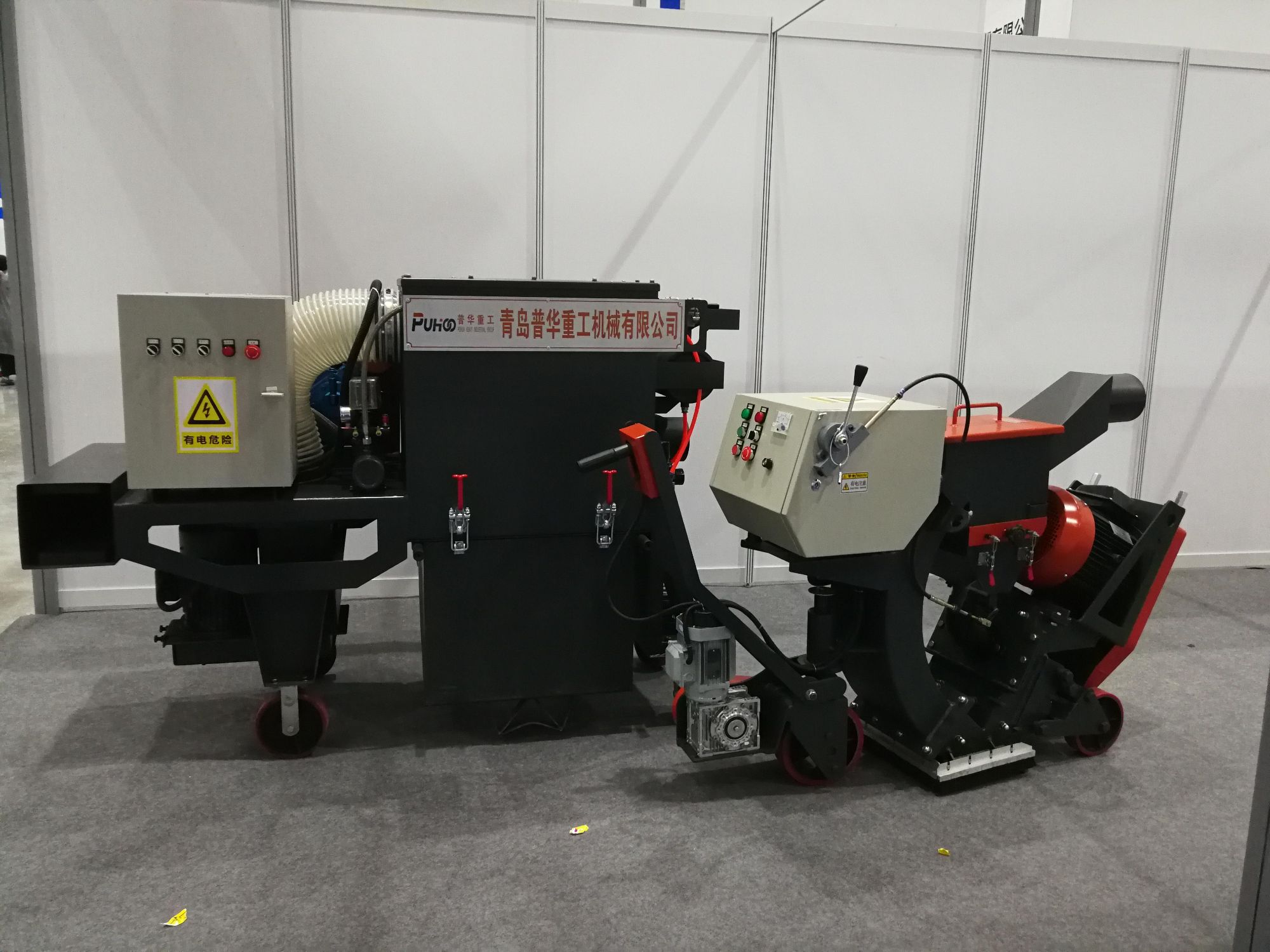
When a shot blaster and a dust collector collide in mid-air, the result is a violent intersection of high-velocity abrasive and powerful suction. The shot blaster propels steel grit or sand at intense speeds to strip surfaces, while the dust collector pulls airborne contaminants into its filtration system. If their paths cross unexpectedly—say, from equipment misalignment or an operational error—the abrasive stream can tear through filter media, damage ductwork, and create a dangerous burst of debris. It’s not just about hardware; it’s an immediate safety hazard, with ricocheting particles and a sudden loss of containment in the workspace.
The physics of the collision depend heavily on the distance and angle. A direct hit at close range sends shockwaves through both machines. The blaster’s nozzle can kick back from the recoil, while the collector’s internal baffles and cartridge filters get shredded, instantly clogging the system. Airflow reverses or chokes, pulling dust back into the breathing zone. In industrial settings, this often triggers emergency shutoffs, but not before a plume of fine dust escapes. The cleanup is messy: layers of abrasive grit fused with captured waste, requiring manual removal while wearing full respiratory protection.
Beyond the immediate chaos, there’s an engineering lesson. Modern systems use physical guards, sequenced startups, and pressure sensors to prevent such meetings. Yet when they do happen, the aftermath forces a rethink of layout and safety protocols. Overlapping operational zones, poorly placed extraction arms, or relying solely on one operator’s vigilance are common culprits. The mid-air crash is a blunt reminder that abrasive blasting and dust collection must be choreographed, not just connected—they breathe the same air, and one mistake turns that shared atmosphere against everyone on the floor.
The Untold Cost of Skipping Texture Depth Before Resurfacing
Jumping straight into resurfacing without mapping the actual texture depth is like painting over rot. You don’t see the problem until the new layer begins to telegraph every ripple, groove, and uneven patch that was hiding beneath. What gets written off as “surface imperfection” later is almost always a depth issue that could have been caught in minutes. The real cost isn’t just a redo—it’s the slow creep of micro-debonding, where thin spots lift and moisture gets a backdoor invitation. By then, you’re not just resurfacing again; you’re grinding back to solid substrate and eating the downtime twice.
On polished concrete or terrazzo, skipping a quick depth check before diamond grinding can cost you the floor’s entire wear layer. A sixty-second scratch test or a depth gauge reading tells you if there’s enough stone to cut without exposing aggregate you meant to keep hidden. The alternative is that gut-punch moment when the first pass reveals bald patches and the client asks why the pattern isn’t uniform. Patching those after the fact never blends seamlessly—you’ll always see the ghost of the repair under certain light, and your crew loses half a shift chasing a problem that didn’t need to exist.
Even on overlay systems, the depth story matters. A profile that’s too shallow won’t give the new material enough mechanical lock, and a profile that’s too deep just wastes product and creates unnecessary shrinkage stress. The missing step is dead simple: run a surface profile comparator or even a coin test before you commit. It’s five minutes of work that saves gallons of primer, keeps warranty-voiding delamination off the table, and stops that 3 a.m. call from a contractor who expected the floor to hold up for years—not weeks.
How China’s Road Builders Are Quietly Reducing Carbon Footprints
Across sprawling highway networks and dusty rural lanes, engineers have started swapping carbon-intensive materials for low-emission alternatives at a pace that rarely makes international headlines. Warm-mix asphalt, which is produced and laid at significantly lower temperatures than conventional hot mix, has moved from niche trials to widespread adoption, cutting fuel consumption and fume emissions directly on the job site. In parallel, recycled concrete aggregate reclaimed from demolished urban structures is being blended into new road bases, diverting waste from landfills while reducing the need for virgin crushed stone that would otherwise require energy-hungry quarrying and transport.
A less visible but equally potent shift is unfolding in logistics and equipment fleets. Construction companies are gradually retiring older diesel generators and pavers in favor of hybrid and fully electric machinery for compaction, milling, and on-site power supply, often paired with temporary solar arrays that run site offices and lighting. These moves are driven not only by tightening domestic environmental regulations but also by a quiet cost calculus: fuel savings and extended equipment life are becoming impossible to ignore. At the same time, route optimization software now calculates earthmoving paths that minimize idle time and redundant haul distances, turning operational efficiency into a straightforward emissions lever.
Perhaps the most forward-looking developments are taking root in material science labs and pilot roads. Researchers are experimenting with bio-based binders derived from agricultural residues and waste cooking oil to partially replace petroleum-based bitumen, locking carbon that would otherwise be released back into the atmosphere. On a handful of rural demonstration projects, pervious concrete designs allow rainwater to recharge groundwater while the natural carbonation process slowly absorbs CO2 over the pavement’s lifespan. These experiments do not come with grand announcements. They are stitched into the ordinary rhythm of planning and pavement renewal, reshaping the industry’s footprint from the ground up.
A Contractor’s Late Night Realization About Portable Blast Systems
It was close to midnight when the shop lights finally went out, leaving just the glow of a phone screen. I’d been staring at job specs for hours, trying to figure out how to prep a series of structural beams without hauling the entire crew and a massive dust collector across three counties. That’s when I scrolled past an old photo of a compact blast rig someone had left in the back of a pickup, and it hit me—why was I still renting space, scheduling around fixed booths, and burning fuel moving material back and forth? A decent portable system could let me work where the steel actually sat, cutting down handling and giving me back whole days I’d been losing to logistics.
What really kept me up, though, wasn’t just the convenience. It was the control. With an enclosed loop system that recovers abrasive right where you stand, you aren’t waiting on weather windows or hoping the breeze doesn’t shift and rain grit on someone’s car three houses down. I started running the numbers on my next bid—trenching bucket rebuilds, bridge bearing seats, even marine cleats that couldn’t be moved—and realized I could shave a full day off each job just by letting the tool travel instead of the workpiece. The math wasn’t complicated, but somehow I’d let the “big shop” mindset blind me to it for years.
The real revelation came when I thought about my guys. Instead of rushing to finish inside someone else’s schedule, they could work at a steady pace, pack up, and be home earlier. No more renting a loader to flip heavy assemblies onto a trailer just to blast them clean. A portable unit meant the dust stayed contained, the mess stayed small, and the whole operation stopped feeling like a logistical circus. I shut off my phone that night knowing I wasn’t just adding a tool—I was finally shedding a ton of wasted motion.
When Customization Actually Means Smarter Runtime, Not Higher Price
Real customization isn’t about piling on expensive features you’ll never use. It’s about runtime intelligence that adapts to what your application actually needs in the moment—shifting resources, refining logic, and trimming overhead without human intervention.
Instead of a bloated one-size-fits-all plan that charges you for idle capacity, smarter runtimes read usage patterns and reconfigure themselves. Think of dynamic scaling that doesn’t just add servers but reshapes how work gets distributed, or auto-tuned caching that warms up before traffic spikes you didn’t predict.
The result is a leaner, faster system that feels tailor-made—without the custom-built price tag. You’re not paying for options you don’t tap; you’re investing in a runtime that continuously optimizes itself, so your bill reflects true efficiency rather than a static feature list.
FAQ
Our range covers road surface profiling, paint and coating removal, airport runway texturing, and concrete scarifying. We also have configurations for steel plate descaling and bridge deck waterproofing preparation.
Shot blasting leaves a uniform anchor profile that improves coating adhesion without causing micro-fractures in the substrate. The process is dust-free, much faster, and eliminates the need for chemicals or extensive cleanup typically associated with grinding or scarifying.
Yes, we have compact, self-propelled blasters with zero turning radius and adjustable blast width. These units are designed to navigate tight corners, manhole covers, and around street furniture without damaging curbs or adjacent surfaces.
Our machines feature automatic speed and blast intensity controls that react to surface variations in real time. We also provide on-site calibration and training to help operators match the abrasive size and travel speed to the specific substrate hardness and desired texture depth.
We supply detailed maintenance guides, video troubleshooting, and remote diagnostics. Spare parts are stocked in regional hubs, and our engineers can travel for major installations. We also offer extended warranties that cover abrasive consumption metrics if you follow our recommended operational parameters.
Each unit has a sealed blast chamber that can be re-configured to change the blast width and pattern overlap. You can achieve everything from a light etch for skid resistance improvement to deep grooving for heavy-duty industrial floors by swapping the control cage and adjusting the abrasive valve.
All our road shot blasters include high-efficiency cartridge filter systems that meet PM10 and PM2.5 standards. The rebound abrasive and dust are instantly recovered, separated, and recycled inside the machine, so there is virtually no airborne debris. This makes them safe for use in sensitive areas like hospitals and schools.
We use Japanese and German CNC components in critical assemblies, each machine undergoes a 72-hour endurance run before shipping, and the blast wheel is dynamically balanced to grade 2.5. Our engineering team constantly refines the seal geometry to keep lifetime operating costs 18-22% lower than the industry average for comparable models.
Conclusion
Road construction delays often come down to one overlooked step: surface preparation. When grooves aren't cleaned, or old markings and contaminants remain, new overlays fail prematurely. That's where advanced shot blasting technology steps in. China's leading supplier of road shot blasting machines has reengineered the process, combining high-velocity abrasive blasting with instant dust collection. The result is a dry, texture-ready surface without the slurry mess of water blasting. By marrying a shot blaster directly to a dust collector in a unified system, crews can strip and clean in a single pass, eliminating the downtime that comes with switching between tools. The payback is immediate: projects move faster, and the risk of debonding drops sharply.
But the story doesn't end with speed. Many contractors are waking up to the hidden cost of skipping texture depth. Without proper roughness, microcracks and peeling become inevitable. The supplier's machines let you dial in the exact profile, preserving asphalt integrity while ensuring the next layer locks on securely. Interestingly, this precision also chips away at the environmental footprint. No chemicals, no water waste, and recyclable abrasive media mean Chinese road builders are quietly hitting sustainability targets with every square meter treated. Late at night, when a contractor stares at a deadline, the realization lands: a portable, customizable blast system isn't about paying for extra features. It's about smarter runtime that adapts to tight job sites and odd-shaped patches, turning a potential headache into a controlled, repeatable outcome. That's the new baseline for high-performance surface cleaning.
Contact Us
Contact Person: Bruce
Email: [email protected]
Tel/WhatsApp: +86 15166629468
Website: https://www.povalchina.com/