

Lightning Strike Current Sensor Supplier: Ensuring Accurate Lightning Detection
2026-08-24
When it comes to lightning detection, accuracy isn’t a luxury—it’s a necessity. From safeguarding wind turbines to protecting power grids, every millisecond counts. Yet, many systems still rely on sensors that miss subtle strike currents or generate false alarms. That’s where a proven Xiasen lightning strike current sensor changes the game. As a supplier dedicated to precision engineering, Xiasen delivers real-time, high-fidelity current measurement that helps you distinguish a genuine threat from background noise. In this post, we’ll explore what makes these sensors indispensable and how you can choose the right partner for your detection infrastructure.
Why Most Current Sensors Can't Track a Real Lightning Strike
A real lightning strike delivers a current pulse with a rise time measured in microseconds, and the peak can exceed tens of kiloamperes. Most conventional current sensors, such as Hall-effect or fluxgate devices, are designed for power-frequency or slowly varying currents. Their bandwidth is typically limited to a few kilohertz, which means they cannot follow the steep leading edge of a lightning waveform. The sensor output gets heavily smoothed, and the recorded peak is often an order of magnitude lower than the actual current.
Beyond bandwidth limits, the magnetic core inside many sensors saturates almost instantly under the extreme magnetic field produced by a lightning channel. Once the core enters saturation, the relationship between primary current and output voltage collapses, producing a clipped and distorted waveform. Even if the data acquisition system captures something, it is not a faithful representation of the original current. Laboratory calibrations with small impulse currents do not reflect this real-world saturation behavior, so field measurements often look nothing like the true strike.
Another overlooked issue is electromagnetic interference. The intense electromagnetic pulse from a nearby or direct strike couples into sensor leads and signal conditioning circuits, injecting noise that can swamp the actual measurement. Combined with insufficient sampling rates in many data loggers—sometimes just a few samples during the critical microseconds—the recorded data misses the nanosecond-scale details of the wavefront. In practice, the problem isn't just a slight inaccuracy; it's that the sensor's design boundaries are fundamentally mismatched to the physics of lightning.
Selecting a Supplier Who Treats Lightning Accuracy as an Engineering Problem
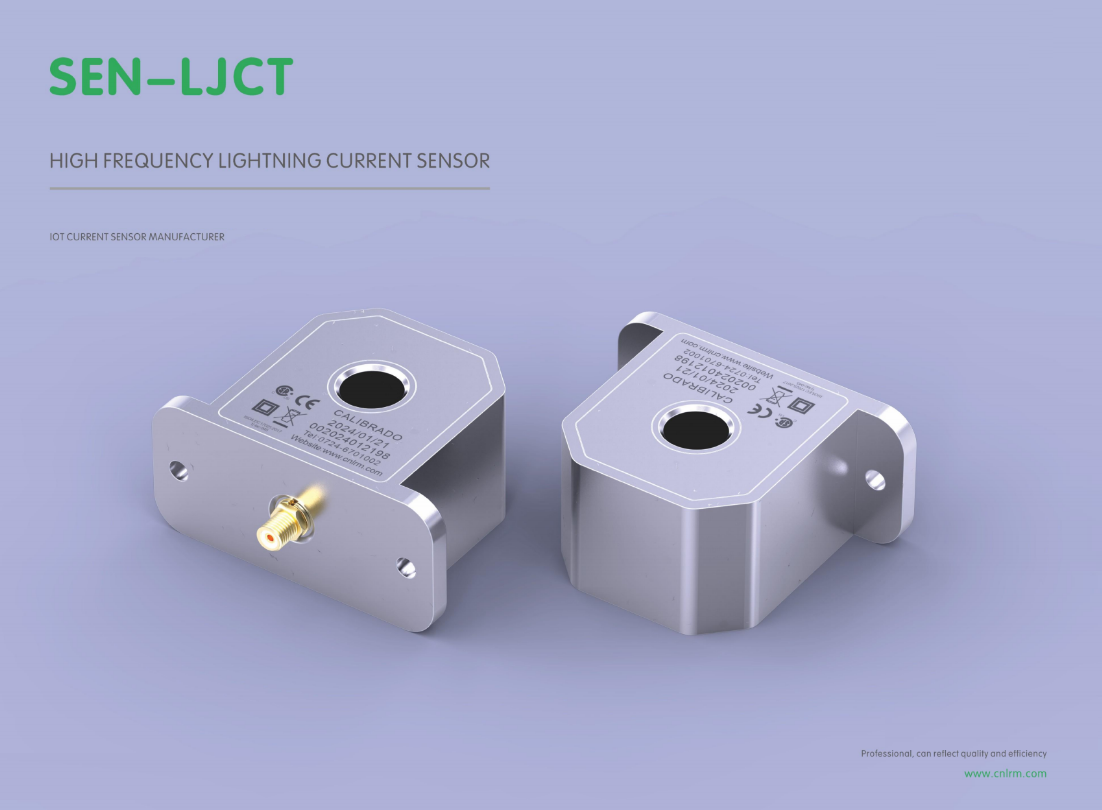
Most suppliers will tell you their lightning data is accurate. Few can actually show you the math behind that claim. When you start digging into how a vendor handles detection efficiency, location error, and stroke classification, the differences become obvious. Some treat accuracy as a marketing bullet point; others treat it as a measurable, improvable system. That distinction matters more than a slick dashboard or a big logo.
The real test comes when you ask how they validate their sensor network across different terrains and storm types. A supplier who sees accuracy as an engineering problem will talk about calibration baselines, blind spot reduction, and continuous sensor health monitoring. They won't hide behind vague percentages. Instead, they'll walk you through failure modes, seasonal variability, and how they handle cloud-to-cloud versus cloud-to-ground confusion. That level of transparency is rare, and it tells you they've actually solved the hard problems rather than just repackaged data from a third party.
So before you sign a contract, push past the sales pitch. Ask for a side-by-side comparison against ground truth measurements in regions similar to yours. Request documentation on their error distribution, not just an average number. A supplier who treats lightning accuracy as an engineering problem will welcome this scrutiny because their infrastructure was built to prove itself, not to impress at a demo.
What Sensor Specifications Actually Determine Detection Reliability
Sensitivity is often framed as the headline number, but detection reliability hinges far more on signal-to-noise ratio and the consistency of the sensing threshold. A sensor that claims extreme sensitivity while picking up stray reflections or electrical noise becomes less dependable than a modestly rated unit with a clean, stable baseline. The threshold also needs to hold across operating temperatures and voltage fluctuations, otherwise false triggers or missed events start appearing in routine use.
Field of view and response time work together in ways that static spec sheets rarely show. A wide detection zone sounds useful until you realize that off-axis targets may register with lower intensity, and the sensor's reaction window can shift depending on object speed and surface finish. For moving machinery or unpredictable human interaction, a tight, repeatable response curve within the intended field matters more than the widest possible coverage.
Finally, the less glamorous specs—temperature drift, EMI immunity, and component aging—determine how long that initial reliability lasts. A unit that performs well on a bench test but drifts after a few thermal cycles will produce intermittent faults that are hard to diagnose. Paying attention to tolerance stacking and long-term stability data, rather than peak performance figures, gives a much better picture of what will actually work in the field.
Installation Realities That Make or Break Lightning Current Measurements
Field installers quickly learn that a lightning current sensor is only as reliable as its mounting. Grounding the sensor housing at both ends might seem like overkill, but a single-point bond with a corroded lug can introduce enough impedance to distort the fast rise time of a strike. I've seen crews mount shunts directly to weathered down conductors, ignoring the oxide layer that acts like a series resistor under surge conditions. The difference between a clean measurement and a garbage waveform often comes down to whether someone took a wire brush to the contact surface.
Cable routing is another silent killer. Loops in the signal wiring create inductive coupling that injects common-mode noise, especially when the routing runs parallel to heavy current paths for more than a meter. Shielded twisted pair is not optional; neither is keeping the sensor cable away from structural steel that can carry partial lightning current. A common mistake is using the same conduit for power and signal lines, then wondering why the data acquisition system resets every time there's a nearby discharge.
Thermal expansion and vibration often get ignored during planning, but they determine long-term stability. A rigidly clamped Rogowski coil may look secure on day one, yet repeated thermal cycling can loosen joints and create micro-gaps that change the coupling factor. In wind turbine nacelles, where lightning strikes are frequent and motion is constant, flexible sensor loops with strain relief outperform rigid bars. The installers who last in this niche are the ones who treat every bolt torque and bend radius as part of the measurement system, not just the mechanical support.
Moving Beyond Datasheet Values to Field Proven Impulse Response
Datasheets offer a neat summary of performance under controlled lab conditions, but they rarely capture how a component behaves once installed in a real system. The impulse response in particular is often presented as a single idealized curve, with little indication of how mounting, wiring, or environmental stress will reshape it. Field tests reveal that resonance peaks shift, damping characteristics change, and unexpected delays appear that simply aren't visible in a spec table.
When engineers build prototypes and validate them on actual structures or in operating machinery, the measured impulse response becomes a fingerprint of the whole assembly rather than just the sensor or actuator alone. Small variations in bolt torque, cable routing, or even temperature gradients can introduce artifacts that no simulation based on datasheet numbers would predict. Recording these field-proven responses and feeding them back into design revisions closes a loop that pure theoretical modeling cannot.
The shift from trusting printed values to demanding verified waveforms isn't about distrusting manufacturers; it's about accepting that every installation is unique. Teams that collect impulse data from early field trials gain the ability to spot degradation before it becomes a failure, tune control loops with confidence, and avoid costly redesigns driven by assumptions that only held true on paper.
Turning Raw Sensor Output into Trustworthy Lightning Alerts
Raw sensor readings from lightning detection networks are often noisy, fragmented, and full of false positives caused by radio interference or distant storm activity. Turning that stream of pulses and timestamped events into a trustworthy alert requires more than just thresholding a voltage spike. It demands a multi-stage pipeline that validates each candidate stroke against coincident signals, checks waveform characteristics, and compares the event against recent activity patterns before it ever reaches a notification system.
The core challenge is balancing speed with confidence. A single sensor can trigger on a nearby switch or a passing truck, so meaningful alerts come from cross-referencing multiple stations and applying temporal clustering. When three or more independent sensors report a stroke within a tight time window and the inferred location sits inside a monitored region, the system can start treating it as a real cloud-to-ground discharge instead of a stray bit of noise. From there, the alert logic adds yet another layer of filtering: reject strokes that appear to be intracloud, check whether the storm cell is actually moving toward the protected area, and only then generate a message that a human or automated system can act on.
The final step is about trust in the output. An alert that cries wolf too often gets ignored, while one that waits for perfect certainty arrives too late. Good systems therefore expose their reasoning through confidence scores, estimated strike distance, and a short history of the storm track. Operators can then tune the threshold to their own risk tolerance, whether that means shutting down a crane at the first sign of overhead lightning or only reacting when the storm is within five kilometers. That transparency turns raw electromagnetic noise into something genuinely useful: a warning that feels less like a guess and more like a reliable reading of the sky.
FAQ
They capture the actual current waveform at the strike point instead of relying on remote electromagnetic field estimates. This direct measurement reduces false positives caused by cloud-to-cloud flashes and gives operators a clear picture of peak current, polarity, and specific energy.
Focus on current range, frequency bandwidth, and isolation voltage. A sensor that saturates at 50 kA will miss severe strikes, while one with poor high-frequency response will distort fast pulses. Also check the sensor's noise floor and whether it can operate reliably in high-humidity or salt-spray environments.
Wind turbine operators use them to monitor blade and nacelle strikes, substation engineers track surge arrester stress, and telecom tower owners verify whether direct strikes caused equipment failures. Aviation ground support and oil and gas facilities also install them for safety and maintenance planning.
Many suppliers offer custom cable lengths, split-core designs, or extended temperature ratings. If you're installing on a moving structure like a wind turbine hub, ask about vibration tolerance and connector strain relief. A supplier with in-house engineering can usually adapt the housing or output signal to match your data logger.
Compare sensor data against independent references, such as lightning location system reports or high-speed camera recordings during storms. Run controlled current injection tests with a calibrated surge generator. Over several months, check whether detected strikes align with maintenance damage reports and other physical evidence.
Look for remote diagnostics help, firmware updates for signal conditioning, and guidance on interpreting unusual waveforms. A good supplier will help you set alarm thresholds and integrate sensor data into SCADA or monitoring software without charging for every minor consultation.
Lightning pulses rise from zero to tens of kiloamperes in a few microseconds. If the sensor's response is too slow, it underestimates peak current and misses the fast components that cause most damage. Fast sensors preserve the waveform shape, which is essential for damage correlation and insurance claims.
Conclusion
When lightning strikes, the difference between a false alarm and a life-saving alert often comes down to one component: the current sensor. Most standard sensors are designed for sinusoidal waveforms, not the sub-microsecond rise times and tens-of-kiloamp peaks of a real return stroke. They saturate, ring, or simply miss the fast front. A supplier who treats lightning accuracy as an engineering problem will validate sensors against actual 8/20 µs and 10/350 µs impulses, not just steady-state lab conditions. This means looking beyond catalog specs to how the sensor behaves when mounted on a down conductor, with proximity effects, ground loops, and harsh weather in play.
The specifications that truly determine detection reliability include transfer impedance flatness, low-frequency cutoff, and shielding effectiveness against induced noise. But even a perfect datasheet is meaningless if the installation introduces ferrous metal interference or if the signal conditioning chain fails to preserve the impulse shape. The best suppliers provide field-proven impulse response data, not just theoretical curves. They also help integrate the raw analog output into a trustworthy alert system, with adaptive thresholding and waveform signature analysis to distinguish a nearby strike from a distant one. Ultimately, accurate lightning detection is a system-level challenge, and the right sensor partner brings both measurement physics and hard-won installation insight.
Contact Us
Contact Person: Liu Mengyang
Email: [email protected]
Tel/WhatsApp: 8618727589233
Website: https://www.cnlrm.com/en/