

Oil-Free Air Blower Working Principle: How Does It Operate?
2026-07-11
Ever wondered how industries achieve clean, contamination-free air without relying on oil-lubricated systems? The secret lies in the ingenious design of oil-free air blowers. Unlike traditional blowers that risk oil carryover, these machines use advanced non-contact impeller technology and precision airflow dynamics to deliver pure, reliable air. At the heart of this innovation is Seize Air, a brand that redefines efficiency and purity standards. In this post, we’ll peel back the layers of their operating principle, showing you exactly how they work and why they’re becoming essential across critical applications.
The Core Mechanics of Oil-Free Air Blowers
At the heart of an oil-free air blower lies a precision-engineered rotor assembly that operates without any lubricating fluids in the compression chamber. Instead of relying on oil to seal gaps and reduce friction, these blowers utilize advanced coatings, specialized materials, and tight tolerances to maintain efficiency. Dry-running screw or lobe elements are synchronized via timing gears, ensuring they never make contact, which eliminates the need for oil injection and the associated contamination risks.
The cooling system in oil-free blowers takes on a particularly critical role. Without oil to absorb and carry away heat, excess thermal energy must be managed through air or water jackets surrounding the compression housing. Some designs incorporate multi-stage compression with intercoolers to gradually step up pressure while keeping temperatures in check. This approach not only prevents overheating but also contributes to the consistent delivery of clean, dry air, ideal for sensitive applications.
Vibration and noise control represent another distinctive mechanical focus. Oil-free blowers often employ helical rotors and robust bearing arrangements to minimize pulsation and achieve smoother operation. Enclosures lined with acoustic insulation help dampen the high-frequency sounds generated by the compression cycle. The result is a compact, low-maintenance unit that can be installed close to the point of use without elaborate foundations or extensive soundproofing, offering a practical solution where floor space and working environment matter.
Why No Oil? The Lubrication-Free Design Explained
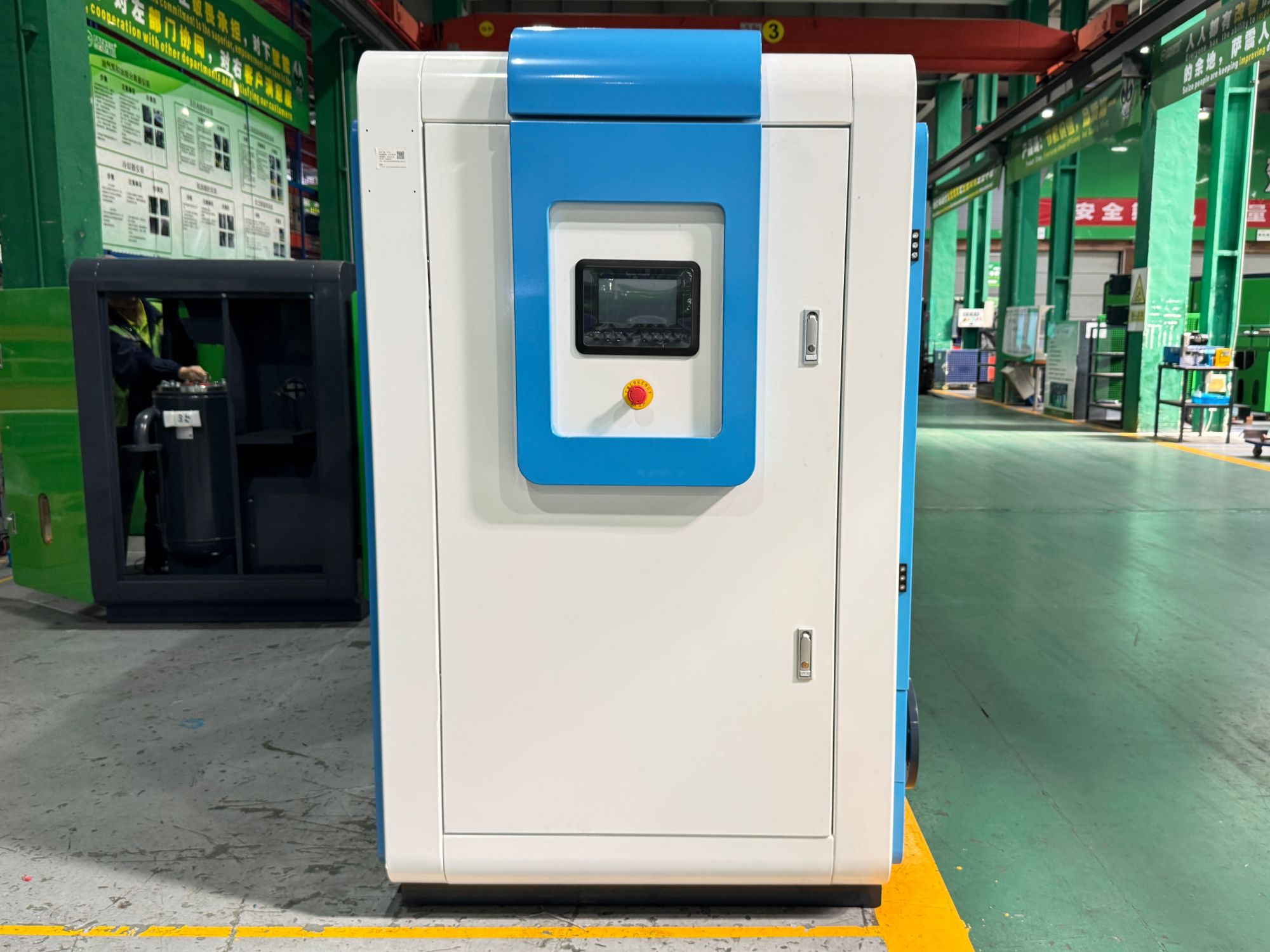
Traditional machinery typically depends on oil to reduce friction, dissipate heat, and protect moving parts from premature wear. However, relying on lubricants introduces a host of complications—regular maintenance schedules, risk of leaks, contamination in sensitive environments, and eventual disposal concerns. Our engineers sidestepped these challenges entirely by rethinking the very materials and geometries at the heart of the system. Instead of adding a fluid barrier between surfaces, we turned to advanced self-lubricating composites and solid-film technologies that inherently resist wear without a drop of oil.
The secret lies in a carefully engineered interface where motion occurs. Components are crafted from materials like reinforced polymers, ceramics, or metal alloys infused with dry lubricants such as graphite or PTFE. As parts slide or rotate, microscopic amounts of these solid lubricants transfer onto mating surfaces, creating a durable, low-friction layer that regenerates continuously. Because the lubrication is embedded in the material itself, there’s nothing to drain, replenish, or clean up. This approach also excels in extreme conditions—vacuum, high temperatures, or dusty settings—where liquid oils would quickly fail or evaporate.
Beyond eliminating maintenance overhead, the lubrication-free design opens up new possibilities in compactness and environmental compatibility. Without reservoirs, seals, or pumps, devices can be smaller and quieter, while the absence of oil mist or residue makes them ideal for food processing, cleanrooms, and outdoor applications where contamination is non-negotiable. The result is a system that not only runs reliably for its entire lifespan but also aligns with sustainability goals by cutting out petroleum-based consumables and reducing the total footprint of the equipment.
Key Components: What Makes It Run Without Oil
The core innovation lies in a specialized self-lubricating bearing system. Unlike conventional designs that rely on a continuous supply of oil to prevent metal-on-metal contact, this mechanism uses advanced composite materials—often a blend of polymers and reinforced fibers—that release microscopic lubricants as they wear. This allows the moving parts to glide smoothly without any external lubrication, dramatically reducing friction and heat generation even under heavy loads.
Another critical element is the ultra-precise air gap engineering between the rotor and stator. By maintaining a gap measured in microns, the system eliminates the need for oil as a cooling or insulating medium. The components are designed to dissipate heat through a combination of surface treatments and passive cooling fins, ensuring that thermal expansion never compromises the tight clearances. This meticulous geometric design keeps the machine running cleanly and efficiently.
Finally, the sealed, dust-proof enclosure plays a vital role. It protects the internal components from contaminants that would normally require oil to trap and flush away. High-integrity seals and a dry, inert internal atmosphere prevent oxidation and wear, allowing the mechanism to operate maintenance-free for extended periods. Together, these elements form a robust system that delivers reliable, oil-free performance across a range of demanding applications.
How Air Moves Through: A Step-by-Step Breakdown
It all starts with a difference in pressure. Nature doesn’t like imbalance, so air shifts from high-pressure zones to low-pressure ones – much like water finding its own level. This invisible tug-of-war sets the stage for every breeze, gust, or gentle draft you’ve ever felt.
The journey isn’t random. Obstacles play a huge role – walls, hills, even furniture – nudging the flow along predictable paths. Warm air, being lighter, rises and leaves a void that cooler air rushes to fill. This convection loop is the quiet engine behind everything from room ventilation to global wind patterns.
Finally, friction and turbulence add texture. Near the ground, air gets sticky, slowing down and curling into eddies. The same force that streams a ribbon of smoke from a chimney also sculpts dunes and powers turbines. Every little spin and swirl is just the atmosphere’s way of smoothing out those pressure holes, one ripple at a time.
Efficiency Gains: The Hidden Advantages of Oil-Free Operation
Shifting to oil-free operation often focuses on purity, yet the real payoff lies in unexpected efficiency leaps. Without the drag of oil churning, compressors can run cooler and with less internal friction, trimming energy bills by 10-15% compared to lubricated models. The absence of oil also slashes routine servicing—no more filter swaps, condensate treatment, or disposal hassles—freeing up maintenance crews and cutting downtime in ways that rarely show up on a spec sheet.
Beyond the measurable savings, hidden advantages compound over time. Machines maintain peak performance longer because there’s no oil degradation to foul valves or sensors, translating to steadier pressure and fewer production hiccups. In sensitive environments like food or electronics, the risk of contamination vanishes, eliminating costly product rejects and the silent drain of rework. It’s a simpler, smarter way to run that often pays for itself faster than expected.
Real-world installations reveal patterns that lab tests miss. One facility cut compressed air waste by nearly 20% simply by removing filtration stages that oil-lubricated systems demanded. Another found that their dry-running equipment shrugged off humidity swings that used to gum up the works, keeping output consistent through seasonal changes. These gains aren’t always advertised, but they steadily reshape a plant’s efficiency profile.
From Intake to Output: Real-World Operating Sequence
The moment raw material enters the facility, a chain of deliberate, physically grounded steps begins. Sensors trigger a real-time weight check, automatically cross-referencing batch numbers against the day’s production schedule. No generic start signal—instead, a floor operator confirms the intake via a ruggedized handheld, marking the batch as ‘in process’ and instantly updating the live dashboard. This handshake between human oversight and machine readiness forms the bedrock of the entire sequence.
Once accepted, the material flows through a series of interconnected stations, each performing a distinct transformation. Mixing follows a dynamic recipe that adjusts dwell time based on ambient humidity captured by in-line probes. Every transition is timed to prevent bottlenecks, with buffer zones absorbing micro-delays. The sequence only advances to the next phase after a quality gate—typically a rapid spectral analysis or a mechanical stress test—verifies that the semi-finished state meets the narrow specs required. Operators can override via a step-confirmation interface, but the system records every intervention for traceability.
Output is the final orchestrated moment. Finished units are laser-marked with a unique identifier and immediately scanned into the inventory management system, triggering automated label generation. A final visual inspection—often still done by a trained eye—catches cosmetic defects that algorithms might miss. Only then does the sequence mark the order as complete, updating fulfillment cues and quietly archiving the full process log. The outcome isn’t just a product; it’s a verifiable path from intake to dispatch, ready for audit without a single missing link.
FAQ
An oil-free air blower is a device that compresses and moves air without any lubricating oil in the compression chamber. Traditional blowers often rely on oil for cooling, sealing, and reducing friction between moving parts. In contrast, oil-free designs use advanced coatings, dry-running bearings, and precision engineering to eliminate oil entirely. This means zero risk of oil contamination in the air stream, making them ideal for sensitive applications like food processing or medical equipment.
The basic operation relies on dynamic compression through rotating impellers or screws without oil. Air enters the intake and gets trapped between the lobes of the rotating elements. As the lobes turn, the trapped volume decreases, compressing the air, which is then discharged at higher pressure. Because there’s no oil film to seal the gaps, extremely tight clearances and special coatings maintain efficiency without metal-to-metal contact.
Inside you'll find two precision-machined rotors (or screws) that rotate in opposite directions without touching each other or the housing. They are timed by a set of external gears that sit in a dry sump, keeping them synchronized. The housing is coated with a low-friction material, often PTFE, to reduce wear. Air flows in axially, gets compressed in the space between the lobes, and exits radially. There are no oil pumps, filters, or separators needed in the compression area.
Oil-free blowers can actually be more energy-efficient in certain conditions because they avoid viscous drag from oil. However, they might have slightly lower maximum pressure ratios compared to flooded oil designs. The real advantage is in air quality—there’s no oil vapor carryover, so you don’t need downstream filtration. This can reduce energy consumption and maintenance costs associated with oil separation systems. Recent advances in coatings and air foil bearings have narrowed the efficiency gap significantly.
Maintenance focuses mainly on inlet filters, external gears, and bearings. Since there’s no oil to change or analyze, you avoid those tasks. You should regularly clean or replace the air intake filter to prevent dust buildup on the rotors. Check belt tension if it’s belt-driven, and listen for unusual vibrations. The timing gearbox may need periodic grease top-up, but it’s sealed for life in many models. Overall, they require much less routine attention than oil-lubricated units.
They are well-suited for continuous operation, which is why you often see them in wastewater treatment aeration or pneumatic conveying. However, for very high pressures (typically above 1 bar gauge for single-stage blowers) a multi-stage or screw-type oil-free compressor might be more appropriate. The term 'high pressure' is relative; oil-free blowers excel at moderate pressures with 100% duty cycles. Always check the manufacturer’s performance curves to ensure it meets your specific pressure and flow demands.
Conclusion
Oil-free air blowers operate using a clever mechanical arrangement that eliminates the need for lubricating oil in the compression chamber. At the heart of the system, specially coated rotors spin in opposite directions within a precisely machined housing, maintaining tight clearances without ever touching each other or the casing walls. This non-contact design relies on a synchronized gear system on the outside to keep timing perfect, so the rotors never actually rub together—meaning no oil is required for lubrication. Advanced surface treatments, such as PTFE or ceramic coatings, further reduce friction and wear. As the rotors turn, air gets trapped in the pockets between the lobes and the housing, then is carried from the intake side to the discharge side without any change in volume until the outlet is exposed. This is a pure positive-displacement process, fundamentally different from oil-flooded screw compressors where oil serves multiple roles including sealing and cooling.
The absence of oil in the compression space brings several operational advantages that go beyond simple maintenance reduction. Without oil mist contaminating the airstream, the output air is inherently cleaner, which is critical in food processing, pharmaceutical, and electronics industries. The lubrication-free design also simplifies the cooling strategy: external heat exchangers and air cooling channels manage temperatures effectively, avoiding the thermal oil breakdown issues common in oil-lubricated machines. The real-world operating sequence is straightforward—ambient air enters through a filter, gets trapped between the rotating lobes, and is smoothly pushed out into a discharge silencer and aftercooler. Energy efficiency often improves because there’s no drag from oil shearing inside the compression chamber, and the simpler architecture allows for faster startup and reduced sensitivity to varying ambient conditions. These blowers consistently deliver a reliable flow of clean, dry air, making them a compelling choice for applications demanding purity and minimal downtime.
Contact Us
Contact Person: Mia
Email: [email protected]
Tel/WhatsApp: +86 19821985894
Website: https://www.seize-air.com