

Premier Purification Panel Production Line Wholesaler: Elevating Cleanroom Manufacturing Standards
2026-11-16
In cleanroom manufacturing, every micron matters—especially when it comes to the equipment that powers your processes. But not all purification panel production lines are created equal. Enter YI ZHOU TECHNOLOGY, a premier wholesaler that’s quietly reshaping industry benchmarks with engineered precision and unshakeable quality control. What sets their approach apart, and why are top-tier manufacturers making the switch? This exploration unpacks the innovation behind the line, revealing how the right partnership can transform contamination control from a constant challenge into a seamless advantage.
Redefining Cleanroom Precision with Every Panel
Precision in cleanroom environments has always been measured by tolerances, but the real shift happens when structural panels stop being passive barriers and start contributing to process integrity. Each panel now integrates micro‑level flatness with thermal stability, ensuring that surface variations and temperature drift no longer compromise sensitive workflows. This focus on panel‑level control transforms how facilities manage particle shedding and airflow consistency, making the enclosure itself a calibrated instrument rather than a simple partition.
Moving beyond generic modularity, the design philosophy treats every joint and interlocking edge as an opportunity to eliminate contamination traps. Seamless interfaces and non‑shedding coatings are paired with pressure‑equalization channels that maintain laminar flow without additional equipment. The result is a room that breathes predictably, adapting to shifts in internal load while keeping recovery times minimal. Installations feel less like sterile boxes and more like tuned environments where the architecture actively preserves product integrity.
Validation no longer relies on routine wipe tests alone because the panels themselves provide embedded feedback. By sensing micro‑vibrations and local electrostatic changes, they reveal trouble spots before they trigger alarms. Operators gain a continuous dialogue with their cleanroom, replacing scheduled checks with real‑time awareness. This quiet intelligence redefines what precision means—moving from static specifications to adaptive performance that evolves with every production cycle.
Where Modular Design Meets Uncompromising Purity
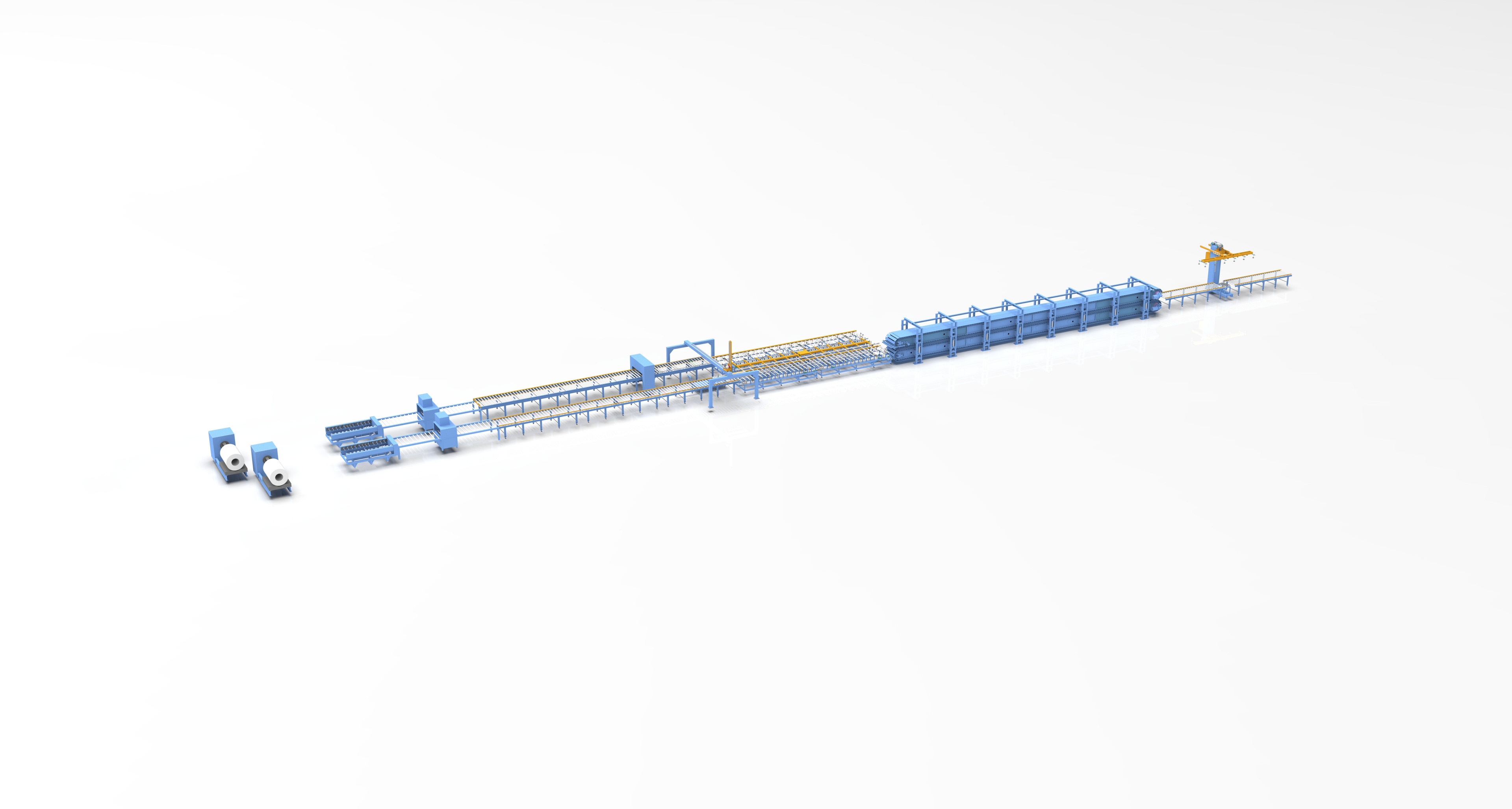
There’s a quiet confidence in a system that doesn’t need to shout. Every component fits with a precision that feels inevitable, as if the pieces were always meant to find each other. The modularity here isn't about adding clutter or chasing endless configurations—it’s about stripping back until only what matters remains, then letting those elements connect in ways that feel both intuitive and permanent.
Purity emerges from this discipline. Without unnecessary seams or visual noise, the design breathes. Materials are left to speak in their own voice—cool metals, warm textiles, honest finishes that age gracefully. You don’t notice the joins because they were never meant to be the point. Instead, the eye reads the whole object as a single, calm thought, uninterrupted by the mechanics of how it was built.
What makes it uncommon is the refusal to compromise. Often, modularity brings a certain looseness, a tolerance stack that accumulates until things rattle or drift. Here, the opposite is true. Each module locks into place with such exacting tolerance that the assembly becomes monolithic. The result is a living space that adapts without ever looking temporary, a quiet alliance between flexibility and permanence that feels more like craft than engineering.
From Raw Material to Seamless Integration
Every successful digital experience starts long before the first line of code is written. It begins with raw material — the scattered data, unshaped ideas, and rough user insights that hold potential but lack form. Rather than forcing these elements into rigid templates, we treat them as malleable ingredients, carefully examining their nature, inconsistencies, and hidden connections. This exploratory phase is not about rushing to a solution; it's about uncovering what truly matters beneath the surface, so the foundation we build upon is authentic and resilient.
Shaping that raw material into something functional requires more than technical skill — it demands a deep understanding of how the pieces will ultimately live together. We approach integration as a narrative thread, weaving components, platforms, and services into a single coherent flow that feels inevitable rather than engineered. Each handoff point is designed with empathy, anticipating friction before it occurs and smoothing transitions until the boundaries between systems disappear. The goal is to make the complexity invisible, so users experience unity without ever noticing the seams.
The final leap from collection of parts to living ecosystem happens when the design breathes on its own. We nurture the integration through real-world testing and attentive iteration, adjusting tempo, connections, and interactions until the entire construct moves with purpose. The result isn't a patchwork of assembled pieces, but an environment where every element belongs — responsive, adaptive, and unmistakably whole.
Inside the Production Line That Industry Leaders Trust
Walk through the doors and the first thing you notice isn’t noise—it’s rhythm. Every station moves with a quiet purpose, from raw material intake to final inspection. Components glide along guided tracks while operators make subtle adjustments, their hands guided by years of muscle memory and real-time feedback displays. There’s no frantic pace here, just a deeply ingrained system where precision is treated as a baseline, not a target. The floor itself tells a story: worn pathways show where trusted processes have been repeated millions of times, yet the equipment is constantly refreshed without disrupting the flow. It’s the kind of environment where a first-time visitor realizes that reliability isn’t a promise made in a brochure—it’s something you can actually see being assembled, bolt by bolt.
Quality checkpoints aren’t obstacles here—they’re woven into the natural cadence. Instead of catching errors at the end, each cell has embedded verification that halts progress the instant a spec drifts. Technicians talk about “building in certainty,” a phrase you hear murmured near the laser measurement bays. They’ll show you how a single component gets tracked from its birth as a raw casting until it becomes part of a finished assembly, the lineage data attached to it never breaking. This obsession with traceability isn’t about impressing auditors; it’s about making sure nobody downstream ever has to second-guess what’s in their hands. You’ll spot senior engineers crouched beside apprentices, discussing the grain structure of a gear rather than just its dimensions—a conversation that would seem academic if it didn’t directly impact how many millions of cycles a part will survive.
What sticks with you after you leave isn’t a single machine or a clever automation trick. It’s the sense that the line itself has a memory. Shift change logs get read, not ignored. Small improvements proposed by a third-shift operator show up on the main board the next morning. There’s an invisible thread connecting the people who design the process, those who run it, and those who depend on the output. When industry leaders keep coming back, they’re not buying access to equipment you can find in a catalog. They’re tapping into a culture where every repeat order feels less like a transaction and more like a handshake renewed—one that says, “We know this works, because we’ve seen how it’s made.”
Tailored Solutions for Sensitive Manufacturing Environments
No two cleanrooms share the exact same pressure cascade, particle load, or operator workflow. That’s why off-the-shelf enclosures rarely fit without compromise. We start by mapping your actual process flow – from material ingress to waste removal – and design modular hardwall and softwall systems that slot into existing layouts without forcing a layout redesign. Fan filter units are positioned based on computational fluid dynamics modeling specific to your equipment heat loads and operator positions, not just a generic ceiling grid. The result is a controlled environment that works with how your team actually moves and produces, rather than one that imposes a rigid ideal.
Sensitive manufacturing often means balancing multiple contamination threats at once: sub-micron particulates, electrostatic discharge, outgassing from materials, and even microbial ingress in life science settings. A standard ISO 5 enclosure won’t address all of these without careful material selection. We’ve built solutions that pair non-outgassing polymer panels with copper-foil grounding grids for electret-sensitive MEMS fabrication, and integrated UV-C pass-through chambers for cell therapy isolators where aseptic technique must meet rapid material transfer. Each project becomes a library of material-compatibility and operational data that informs the next – meaning your facility gets a solution that has real-world history baked in, not just a spec sheet.
The timeline sensitivity in manufacturing moves fast: a delayed enclosure can idle a multi-million dollar production line for weeks. Our approach cuts both design and installation time by using pre-validated subassemblies – HEPA housings, pass-throughs, and control panels that have already been cycle-tested together in similar environments. When we deployed for a lithium-ion dry room, the whole system was up and validating inside twelve days because the electrical, filtration, and dehumidification modules arrived as plug-and-play skids. That kind of speed doesn’t come from shortcuts; it comes from having solved variations of the same problem enough times to know where standardization helps and where clever adaptation is non-negotiable.
Driving Tomorrow’s Standards Through Advanced Fabrication
Advanced fabrication is no longer just about faster machines or tighter tolerances—it’s becoming the blueprint for how industries define quality itself. From autonomous welding cells that adapt in real time to layer-by-layer additive processes crafting geometries once deemed impossible, the tools we build today are quietly writing the rulebooks of tomorrow. Every micro-scale adjustment and material breakthrough pushes the boundaries of what engineers consider standard practice, turning experimental methods into baseline expectations.
This shift is visible in the way factories reimagine their workflows. Instead of treating precision as a final inspection step, it’s now baked into every stage—raw material handling, in-situ monitoring, and even post-processing are all recalibrated around data-driven fabrication. The result isn’t just a better product, but a ripple effect: supply chains tighten, waste shrinks, and repeatability reaches levels that make yesterday’s benchmarks look like rough drafts.
What makes this moment unique is the convergence of craftsmanship with computational power. Veteran machinists collaborate with AI-driven simulation tools, not to replace instinct but to amplify it. That partnership is setting new thresholds for what’s achievable, and in doing so, it’s not only delivering components that outperform their predecessors—it’s reshaping the very language industries use to talk about reliability, endurance, and innovation.
FAQ
We've moved beyond conventional panel fabrication by integrating automated precision bonding and a controlled curing environment directly into our line. Every PUR sandwich panel is produced under ISO Class 5 conditions, not just assembled in a cleanroom afterward. Our closed-loop resin dispensing system ensures consistent structural integrity and eliminates voids, while in-line X-ray scanning verifies core placement before the panel ever leaves the conveyor. This means you receive panels with documented uniformity, not just a promise of it.
The secret lies in our edge-sealing technique and material pairing. Rather than traditional gasketed joints, we apply a co-extruded, non-outgassing thermoplastic seal that fuses to the aluminum honeycomb core during production. This creates a monolithic barrier against moisture ingress and microbial growth. The return-air chase is integrated into the panel frame, eliminating secondary fabrication that often introduces leak paths. We also track each panel’s batch through a digital twin system, so replacements decades later will have identical dimensional and thermal properties.
Absolutely. Our line is designed for rapid changeover with servo-driven width-adjustable molds and a tool-less clamping system. Because we stock a range of standardized aluminum honeycomb and gypsum-facing materials in a just-in-time buffer, switching from a 1200x3000mm wall panel to a 900x2100mm ceiling panel takes under eight minutes. The digital twin mentioned earlier lets us simulate the layup for your exact drawings before production begins, so first-off approval is nearly immediate.
We’re effectively turning panels into pre-validated building blocks. Each panel coming off our line is pre-wired for sensors, has conduit channels, and includes embedded RFID tags containing its full manufacturing record. This allows an assembly team to scan and verify the panel’s position within a BIM model in real time, cutting on-site classification time by up to 60%. Rather than treating panels as dumb partitions, we supply a documented sub-assembly that carries its own GMP qualification data.
We’ve aligned our entire quality documentation package with ISPE Baseline Guide and EU GMP Annex 1 expectations. The production line is configured to generate a paperless validation package: raw material traceability reports, surface roughness scans, DOP-test video logs from factory acceptance, and coating thickness certificates are all compiled into a single digital binder per batch. We also perform routine extractables and leachables testing on our facing materials in collaboration with an accredited lab, sharing those results openly with project teams.
Think of us as your production extension. We offer annual preventive maintenance for the panels we sell—checking seal integrity, recertifying mating surfaces, and refreshing the protective film if needed. We’ve also built a retrieval program where decommissioned panels are returned, the aluminum core is melted and recast, and the facing is reprocessed into our own manufacturing aids, essentially closing the material loop. For projects over 5,000 square meters, we second a factory process engineer to your site during initial installation to ensure the design intent carries through to the final as-built cleanroom.
Conclusion
Every panel emerging from this premier purification panel production line reflects a fundamental rethinking of cleanroom construction. Precision begins well before assembly, with raw materials chosen for their innate stability and resistance to particulate shedding. The modular design philosophy ensures that components fit together with near-zero tolerances, eliminating gaps where contaminants could accumulate. Crucially, this approach does not sacrifice purity for adaptability—each module, from wall panels to ceiling grids, undergoes surface treatments and edge-sealing processes that lock out microbial and chemical intrusion. The result is a system where cleanroom integrity is built into the geometry itself, rather than retroactively enforced, allowing facilities to maintain ISO-class environments with less energy and fewer corrective measures.
Behind this consistency lies a production line trusted by semiconductor, biopharmaceutical, and aerospace leaders precisely because it refuses to treat cleanroom components as generic commodities. Rather than offering a fixed catalog, the engineering team evaluates each client's operational stressors—be it electrostatic discharge, corrosive fumes, or vibration—and translates those into panel compositions, reinforcement strategies, and integrated utility pathways that arrive at the site ready for seamless installation. The fabrication floor itself operates as a controlled environment, using automated welding, laser-cutting, and clean assembly zones to prevent contamination from being introduced before the panels ever reach the customer. This end-to-end discipline, from metallurgy to final inspection, is quietly driving tomorrow's manufacturing standards, making the production line not just a supplier but a partner in elevating what controlled environments can achieve.
Contact Us
Contact Person: Sophia Jiang
Email: [email protected]
Tel/WhatsApp: +86 17367381818
Website: https://yzwelding.com/