

PVDF PPGI Supplier Insights for Better Coated Steel Purchases
2026-10-17
PVDF coatings promise decades of color retention, but not all PPGI suppliers deliver the same steel behind that promise. Chalk fade, uneven film thickness, or poor adhesion often trace back to choices made long before the coil reaches your line. LANYUN takes a different route—focusing on resin quality, precise curing, and honest technical support. This post breaks down the supplier insights that can turn a routine coated steel purchase into a long-term advantage.
Beyond the spec sheet: what PVDF suppliers won't volunteer
Ask for a PVDF datasheet and you'll get the usual numbers: melt flow, tensile strength, dielectric constant. What you won't see is how those numbers drift between lots, or how the resin behaves after three months in a hot warehouse. Suppliers quietly blend off-spec material into "premium" grades when demand spikes, and the only way to catch it is to run your own incoming QC—something most converters skip until a batch of battery separators fails adhesion testing.
The details that actually matter surface after a few failed trials. A seasoned rep might reveal that the "high-purity" grade still leaches trace fluoride ions in warm acid, or that the drying profile assumes your equipment is spotless—which it never is on a Thursday afternoon. Those are the notes that decide whether your line runs for a week or clogs every shift.
Then there's the supply chain game. PVDF supply tightens whenever lithium-ion demand spikes, and suddenly your supplier's "long-term commitment" means allocation meetings and unexplained lead time extensions. The spec sheet won't tell you who gets priority when inventory is short, but your order history and the size of your annual contract will.
Why two PVDF coils with the same grade can perform differently
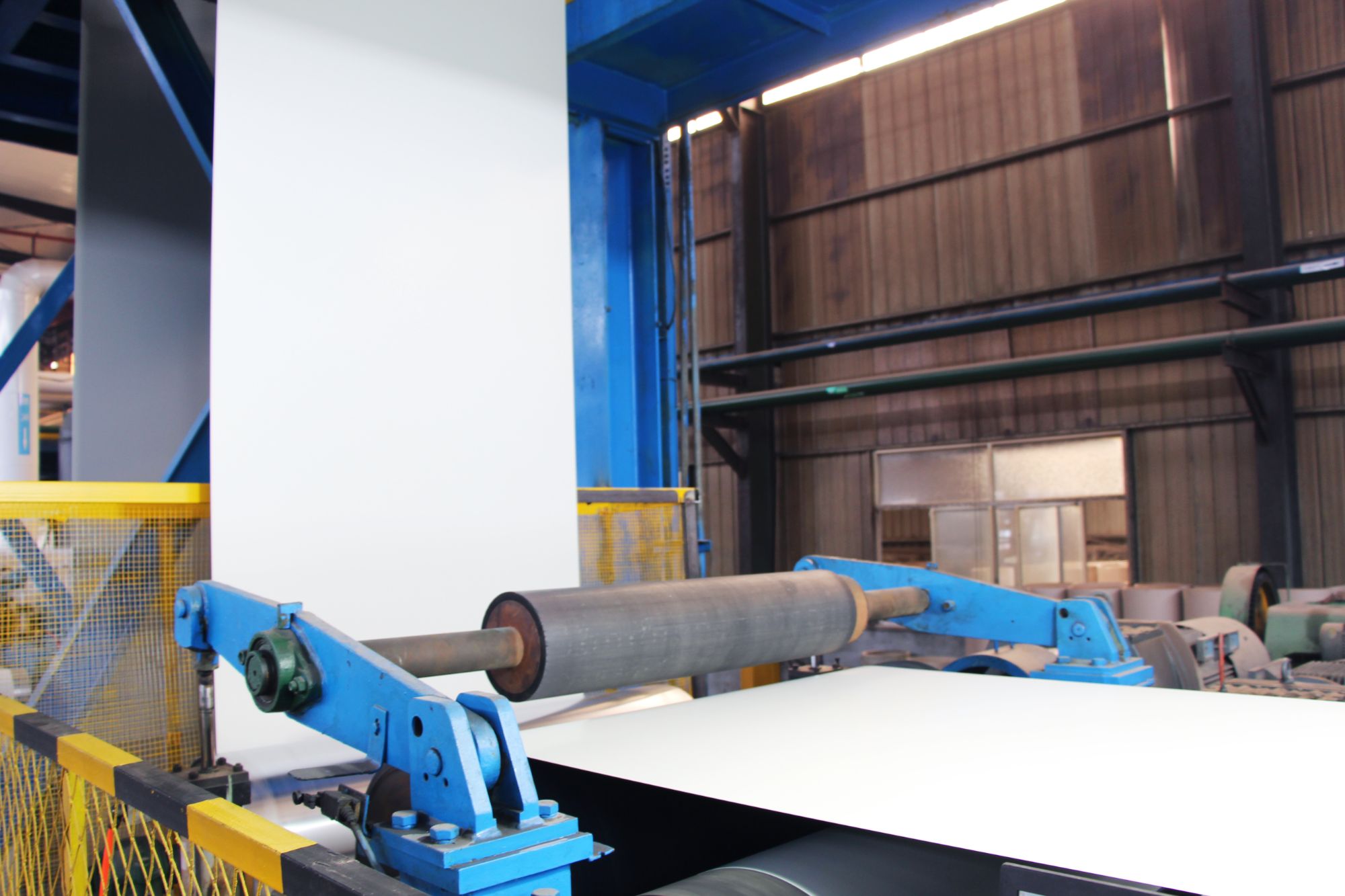
PVDF coils carrying the identical grade designation can still vary because grade classification focuses on resin chemistry, not the full finished system. Paint makers blend the same PVDF resin with different acrylic modifiers, pigments, and solvents—small shifts in these components alter flexibility, gloss retention, and resistance to filiform corrosion. Even a two-percent change in acrylic content or a switch in pigment dispersion method can change how the cured film weathers over a decade.
Beyond formulation, the coil coating line itself introduces variation. Oven temperature profiles, dwell time, quench rate, and film thickness control all influence final crystallinity and adhesion. A coil that cures slightly under peak metal temperature may look identical on day one but chalk sooner or lose adhesion after thermal cycling. Substrate cleaning and pretreatment also play an outsized role; residual oils or uneven chromate conversion coating undermine the same PVDF topcoat's long-term durability.
How coating thickness claims get stretched—and how to verify them
Coating thickness claims often get stretched by manufacturers who report dry film thickness based on ideal laboratory conditions rather than real-world application. They may measure the single thickest spot on a test panel, ignore surface profile and roughness, or calculate theoretical coverage from volume solids while assuming zero overspray and no thinning. The result is a datasheet number that looks impressive but rarely matches what a contractor achieves on an actual structure.
To verify a coating thickness claim, start by using a calibrated dry film thickness gauge and take multiple readings per square meter following a recognized standard such as SSPC-PA2 or ISO 19840. Collect a statistical spread, record the average and minimum values, and compare them against the specified thickness range. Also track real consumption: if a five-gallon pail supposedly covers four hundred square feet at six mils theoretical thickness, but your measured average is only four mils, the original claim has clearly been stretched by application losses or optimistic math.
For disputes or high-stakes projects, cross-check with a destructive method like a Tooke gauge or a microscopic cross-section of the cured film. Ask the supplier for full test reports that include measurement locations, gauge calibration certificates, and standard deviation, not just a single maximum reading or an “up to” thickness figure. If the only evidence is a datasheet calculation with no field verification, treat the thickness claim as marketing rather than engineering data. Real verification requires statistical sampling, witnessed application, and honest accounting of transfer efficiency.
The right way to compare supplier test reports, not just prices
Price sheets rarely tell you what actually matters when two suppliers submit similar-looking test reports. Start by pulling out the test conditions buried in the fine print: which standard was used, how many samples were pulled from the batch, and whether the lab holds an active accreditation. A cheaper quote often comes from a supplier testing three units instead of thirty, or running tests at room temperature when your application sees 70°C. If those details are missing or vague, that price difference is already meaningless.
Next, look beyond the average value on the report. Two suppliers can both claim a tensile strength of 420 MPa, but one shows a tight range across samples while the other swings between 380 and 460. That spread tells you how predictable the material will be in production. Ask for raw data or at least min-max values and standard deviation. Suppliers that refuse to share this usually have something to hide, and no per-unit savings will cover a batch that fails on your line.
Finally, match the report to the failure modes you actually care about. A supplier may excel at hardness but have poor impact test results, and that trade-off gets lost when procurement only sees a pass/fail checkbox. Build a simple comparison table that scores consistency, documentation quality, and the lab's reputation, not just quoted unit cost. After a few rounds, you'll find the “expensive” supplier is often the one that costs less when rejects, line stops, and rework are added up.
Hidden trade-offs in low-temperature curing PVDF systems
Lowering the cure temperature for PVDF-based coatings and binders seems like a straightforward win: less energy consumption, compatibility with heat-sensitive substrates, and faster line speeds. But the material pays for this convenience in ways that rarely appear on a datasheet. The fluoropolymer's semicrystalline structure depends on adequate thermal energy to organize into the dense, ordered domains that give PVDF its signature toughness and chemical resistance. When cure temperatures drop, that crystallization is cut short, leaving a higher fraction of amorphous phase that weakens the film's mechanical integrity and opens pathways for solvent ingress.
Another hidden cost sits at the interface. Low-temperature curing formulations often rely on more aggressive catalysts or reactive diluents to achieve crosslinking without heat. These additives can linger in the cured matrix or alter surface energy, reducing adhesion to metals and other layers. Over time, that manifests as delamination under thermal cycling or humidity exposure—failures that are easy to blame on the substrate but often trace back to the compromised cure.
The long-term aging behavior changes as well. PVDF is prized for its UV stability and resistance to chalking, but those properties emerge from a well-developed crystalline network. A partially cured or low-crystallinity film may show acceptable initial gloss and hardness, yet after a few years outdoors it can develop microcracks and lose gloss faster than a conventionally cured counterpart. The hidden cost is thus not in the curing oven, but in the warranty period.
Signs a supplier is cutting corners before the first shipment
When a supplier quietly switches from a trusted raw material to a cheaper substitute without telling you, that’s often the first red flag. You might notice the sample feels lighter, smells different, or lacks the crispness of the original spec. A supplier cutting corners will hope you don’t ask for a detailed bill of materials, so always request one and cross-check each component against the approved sample.
Another sign shows up in production timelines that seem too good to be true. If the supplier promises a lead time much shorter than industry norm, they may be skipping quality control steps, rushing curing or cooling processes, or bypassing mandatory inspections. Ask for a day-by-day production schedule and evidence of in-process checks; hesitation to share these details often means corners are being cut where it matters most.
Packaging is a common place to hide cost savings. Watch for thinner cartons, fewer inner supports, or a shift from moisture-proof bags to plain poly wrap. A supplier that trims packaging rarely does it for sustainability—they do it to protect their margin. Before the first shipment, request a full packaging specification, including drop-test results and humidity indicators, and insist on seeing the actual packed carton, not just a mock-up.
FAQ
Look beyond price per ton. A dependable supplier will share coating adhesion test results, film thickness measurements across the sheet width, and accelerated weathering data without being asked. They also track batch-to-batch color consistency using spectrophotometers and can explain how their PVDF resin system performs in coastal versus industrial environments.
Focus on total dry film thickness (typically 25–35 microns for exterior use), primer type (polyurethane or epoxy), and PVDF resin content—not all "PVDF" coatings contain the same fluoropolymer ratio. Ask for the coating system's pencil hardness, flexibility (T-bend), and impact resistance values, as these predict how the sheet will handle roll forming and installation.
Request a cross-section micrograph or coating thickness gauge reading from at least five points across the strip. Wide variation—say, a 30% drop at the edges—often signals poor roll coating control. Also check the gloss range: PVDF exterior coatings usually sit between 25 and 40 gloss units at 60°. A much higher gloss can mean excessive acrylic blending or a different resin chemistry.
Ask for QUV or xenon arc test results per ASTM G154 or G155, with color change (Delta E) and chalking ratings after 2,000 hours or more. Real outdoor exposure data from Florida or Arizona for at least 5–10 years is even better. Beware suppliers who only mention "weather resistant" without specifying test duration, substrate, or coating system.
Usually it comes down to pigment selection and resin quality. Inorganic pigments like ceramic or metal-oxide blends hold color far better than organic ones. A cheaper PVDF system may reduce fluoropolymer content and increase acrylic, which causes faster chalking and gloss loss. So the initial shade can match perfectly, but the weathering path diverges.
Check the price gap—true PVDF systems typically cost 30–70% more than SMP or polyester. If the price is only slightly above standard polyester, request the coating formulation certificate or resin supplier documentation. Also peel-test the coating: PVDF has a distinct harder, less rubbery feel compared to polyester. A lab FTIR analysis can confirm the fluoropolymer presence.
It is critical. A five-layer PVDF system on poorly pretreated galvanized steel will still blister or delaminate. The supplier should use a minimum zinc coating mass of Z120–Z275 g/m², proper chromate or chrome-free pretreatment, and a tightly controlled primer cure. Ask for salt spray test results (ASTM B117) on the full system, not just the topcoat.
Request a written warranty that covers film integrity, color retention (Delta E not exceeding 5 units), and chalking resistance for 15–20 years on exterior vertical applications. The warranty should name the specific project, substrate, and coating system—not generic marketing language. Also clarify what is excluded, such as cut-edge corrosion or damage from fabrication, to avoid future disputes.
Conclusion
When buying PVDF coated steel, the spec sheet only tells part of the story. Suppliers rarely volunteer that two coils with the same grade can behave quite differently in the field, because subtle variations in resin source, primer adhesion, or cure temperature directly affect weathering and gloss retention. Coating thickness claims are also easy to stretch, and you often need a calibrated gauge or cross-section analysis to catch under-delivery. Instead of comparing prices alone, dig into the test reports: look at xenon arc results, impact resistance, and flexibility after accelerated aging. A cheap quote may hide weaker pretreatment or thinner backside coats that only show up months later.
Low-temperature curing PVDF systems sound appealing for energy savings, but they often trade away crosslink density, leaving the finish more prone to chalking and fading under UV. Some suppliers quietly cut corners before the first shipment by switching to reclaimed solvents, reducing rinse stages, or substituting a less stable pigment. To spot this early, ask for batch consistency data, request the actual oven temperature logs, and be skeptical of bids that are dramatically below market. Insightful buyers treat supplier evaluation as an ongoing process, not a one-time purchase decision, because the real performance of coated steel is decided long before it leaves the mill.
Contact Us
Contact Person: Nia
Email: [email protected]
Tel/WhatsApp: +86 18954360337
Website: https://www.sdppgi.com