

Reach Trucks for Sale: Where to Find Trusted Dealers and Suppliers
2026-09-03
Searching for reach trucks for sale often leads down a rabbit hole of unverified listings and pushy resellers. If you want equipment that won’t let you down, the real challenge isn’t just finding a truck—it’s finding a supplier you can trust. That’s where HANGCHA changes the conversation. In this guide, we’ll cut through the noise and show you exactly where reliable dealers operate, what questions to ask, and how to avoid costly mistakes.
What to Know Before You Start Looking for Reach Trucks
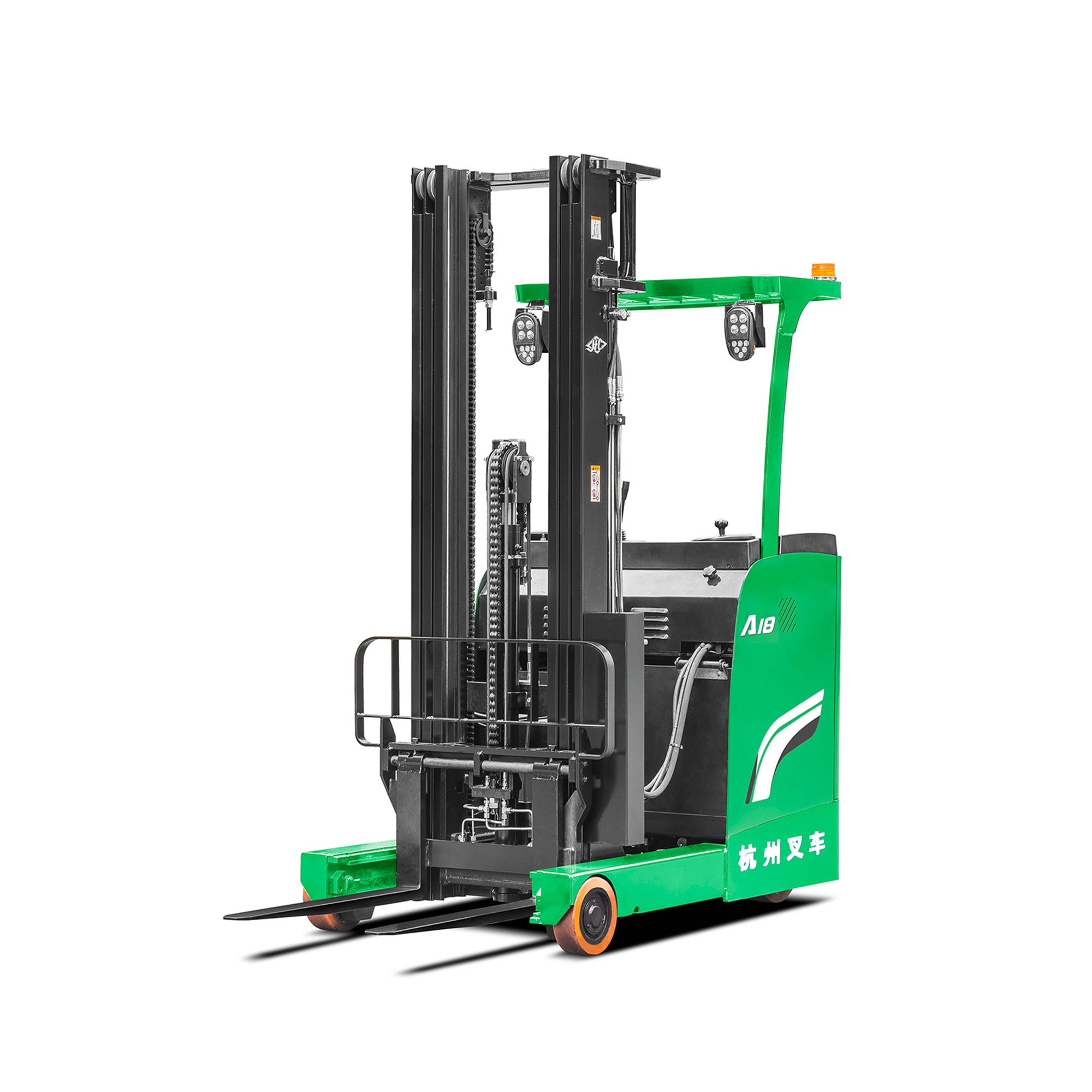
Reach trucks are built for narrow aisles and high stacking, but many buyers jump in without mapping their actual racking layout and lift height. Measure your highest beam level plus pallet overhang, and note whether you need double-deep reach or a standard single-reach mast. Also check your aisle width against the truck's right-angle stacking figure: a difference of just a few inches can force you into a costly guide rail retrofit or a completely different model.
Battery choice often gets ignored until the first full shift ends early. Think about your run time, charging schedule, and whether an opportunity-charging setup or lithium-ion batteries make sense. A lead-acid battery can be swapped in minutes, but it demands a dedicated charging room and watering routine. Lithium costs more upfront, yet it holds a charge longer, charges faster during breaks, and eliminates acid spills in food or pharmaceutical zones.
Operator comfort and visibility matter more than spec sheets suggest. Reach trucks involve hours of seated or stand-up work with constant head movement, so test the seat adjustability, mast visibility through the overhead guard, and control layout. A smooth proportional hydraulic system and a clear view of the fork tips will reduce product damage and keep experienced operators from leaving for a competitor that bothered to demo the truck in a real shift.
Signs of a Dealer Worth Your Time
A dealer worth your time won't rush you into a decision. They'll hand you the keys for a solo test drive, point out the nearest route with a mix of hills and highway, and ask what you noticed rather than pushing the highest trim level. If they remember your budget and don't circle back to add-ons you already declined, that's a good sign.
Look at how they handle questions. A solid dealer will answer the tricky ones directly—fuel economy in cold weather, real-world towing limits, what's not covered by the warranty—instead of deflecting to horsepower or monthly payments. When they admit they'd need to check a spec rather than inventing an answer, you've found someone who respects accuracy over a quick sale.
Finally, watch what happens after the sale. Worthwhile dealers tend to have a straightforward process for recalls, a service desk that answers the phone, and no surprise fees on the final paperwork. If they ask for a follow-up call at 500 miles just to see how things are going, that's not a gimmick; it's the kind of attention that keeps you coming back.
Where Independent Sellers List Quality Used Machines
Most independent sellers skip the giant generalist marketplaces and instead list on equipment-specific platforms where buyers actually understand what they are looking at. These sites usually require sellers to upload maintenance logs, serial numbers, and detailed photos, which weeds out junk listings and keeps the quality bar higher than average.
A growing number of independent sellers also maintain their own customer lists and send out a short email or message when a low-hour machine comes in from a trade-in or a shop upgrade. Because these machines are offered to known buyers first, they rarely make it to public listings, and the seller can share the full service history without dealing with anonymous inquiries.
Regional equipment auctions and local dealer-to-dealer networks remain another solid route, especially for heavier machinery. Independent sellers often consign well-maintained units to a local remarketer who handles inspections and provides a condition report, which gives buyers a clearer picture than a generic online ad ever could.
Reading Between the Lines of a Reach Truck Listing
When browsing reach truck listings, the most telling details are often the ones left out. If a seller doesn't mention battery age, charger condition, or recent hydraulic service, assume those items are due for attention. Vague phrases like "well maintained" without supporting dates or records rarely hold up under a closer look.
Photos reveal more than descriptions. A listing that avoids close-ups of the mast, fork heels, or data plate is usually hiding wear. Uneven tire wear can point to alignment issues or rough operating conditions, and a truck photographed from only one side may have damage on the other. Check for signs of leakage around the tilt cylinders and lift chains in every image.
Hour meters don't always tell the truth. Compare the hours to the truck's age; unusually low hours on an older machine might mean long idle periods, which can degrade seals, hoses, and battery cells. Request maintenance logs and, if possible, ask about the original application—cold storage or dusty environments leave different marks on the equipment.
How to Compare Offers Without Getting Overwhelmed
When several offers land at once, the excitement can quickly turn into a knot in your stomach. Instead of trying to hold every detail in your head, grab a blank sheet of paper and list the three or four things that would actually change your day-to-day life, think commute length, growth opportunities, team vibe, or base pay. Once those are clear, you can ignore the rest of the shiny extras that don't move the needle for you.
A simple side-by-side table works better than any fancy scoring system. Put your shortlisted factors across the top and each offer down the side, then fill in honest gut-level ratings from 1 to 5. Don't overthink the numbers, this is just a way to surface which option consistently matches what you said you wanted. If one column keeps pulling your eye, that's useful information, not a glitch.
Finally, give yourself a firm deadline, like I will decide by Thursday lunch, because open-ended comparison is where anxiety breeds. After you've done the rational work, take a quiet moment and notice how you feel when you imagine saying yes to each offer. The one that leaves you feeling relieved rather than restless is usually the one to pick, even if it didn't score perfectly.
After the Sale: Support, Parts, and Keeping Your Truck Running
Once the keys are in your hand, the relationship doesn't end—it shifts into a different gear. A reliable dealer or manufacturer should offer a clear path to genuine parts, whether that's through an online portal with exploded diagrams, a local parts counter with staff who know torque specs by heart, or a mobile service van that meets your fleet at the yard. The best support plans treat your VIN as a file that never closes, flagging wear items before they strand you on the shoulder of I-80.
Warranty terms matter less than the people who honor them. Ask who answers the phone on a Sunday night, how long a rebuild typically takes, and whether loaner units or rental credits are part of the deal. Smart owners build their own maintenance calendar—tracking brake replacements, DPF regens, and coolant flushes—so the truck tells you what it needs rather than waiting for a dashboard light to make the decision.
Finally, treat downtime as a design flaw, not an inevitability. The trucks that stay running longest belong to owners who stock critical spares, build relationships with independent shops when dealer networks run thin, and document every repair with photos and part numbers. Support isn't a department; it's a habit that starts the first time you turn the key and keeps paying off at every mile marker.
FAQ
Look for a dealer that has been around at least five years, keeps parts in stock, and offers service technicians who are certified for your truck's brand. Ask for two or three recent customer references and actually call them.
A well-maintained used truck can save you a lot of money. Focus on battery health, mast condition, and the number of hours on the meter. Request a load test and recent service records before making an offer.
Ask for a written service agreement with response times, confirm they stock common wear parts locally, and request one or two current customer contacts. A quick walk through their parts department can tell you a lot.
Crown, Raymond, and Toyota models usually have dependable parts networks. Hyster, Yale, and Clark also build solid machines, but the quality of nearby service support often matters more than the brand name.
For a standard capacity unit with normal lift height, plan on $15,000 to $35,000. High-lift or late-model, low-hour machines can go over $40,000, while older units needing battery work may dip below $12,000.
A dedicated dealer is usually safer because they inspect and stand behind the truck. If an online listing catches your eye, hire an independent forklift technician to inspect it before you hand over any money.
Request proof of ownership, a bill of sale, maintenance records, and a written warranty statement. For used trucks, also ask for a recent inspection report and any battery capacity test results.
Conclusion
Before you start comparing reach trucks, get clear on your own warehouse constraints: aisle width, maximum lift height, whether you need cold storage conditioning, and how many shifts the truck will run. That baseline makes conversations with dealers far more productive. A dealer worth your time won't rush you into a purchase; they'll ask about your racking layout, offer maintenance records without being prompted, and let you inspect the mast, tires, and battery in person. Some of the best used machines never hit big dealership lots—they surface through independent sellers on industrial auction platforms, local forklift forums, and regional equipment brokers. Just expect to do a bit more legwork verifying hours and service history.
When you read a listing, treat vague lines like "runs great" as an invitation to probe deeper. Ask for specific details: recent hydraulic work, battery age and cycle count, tire wear, and any fault codes. Comparing offers gets easier if you ignore the sticker price and calculate delivered cost plus likely repairs within the first year. Then look at what happens after payment. A trustworthy supplier keeps common parts in stock, can send a technician if something fails, and doesn't disappear once the invoice clears. That long-term backup matters more than a slightly lower upfront number, especially for a machine you'll rely on daily.
Contact Us
Contact Person: Liuxue
Email: [email protected]
Tel/WhatsApp: +86-19084200370
Website: https://www.hf-ec.com/