

Shunt Resistor Factory Precision: Crafting the Core of Current Sensing
2026-07-13
When current flows unseen through a circuit, capturing its true magnitude rests on one unsung hero: the shunt resistor. But not all shunts are created equal—factory precision separates a reliable sensor from a noisy guess. Inside the production floors of Milliohm, raw metal transforms into the beating heart of current sensing, where micron-level tolerances and obsessive calibration unlock performance that off-the-shelf alternatives simply can’t match. This is the story of how exacting craftsmanship shapes the core of modern power electronics, and why the difference starts long before the first measurement is taken.
Engineering Resistors That Redefine Current Measurement
Traditional current measurement leans on shunt resistors, but accuracy often suffers from thermal drift and parasitic inductance. New generations of engineered resistors bond metal foil to composite substrates at a molecular level, pushing the temperature coefficient of resistance down to near-zero levels. As a result, the measured value stays remarkably stable across wide temperature ranges without needing complex compensation circuits.
Structural innovations make Kelvin connections a default feature, eliminating lead‑wire resistance from the sensed signal. Furthermore, three‑dimensional folded conductor paths cancel inherent inductance, reducing phase errors at high frequencies by an order of magnitude. This yields a cleaner feedback signal for power analyzers and precision supplies, where every millivolt counts.
From battery management in electric vehicles to microampere monitoring in medical devices, these reimagined resistors let engineers avoid trade‑offs between accuracy, size, and cost. They are no longer passive bystanders but active shapers of how current is perceived, delivering clarity in circuits that was once thought unattainable.
The Invisible Art of High-Precision Shunt Fabrication
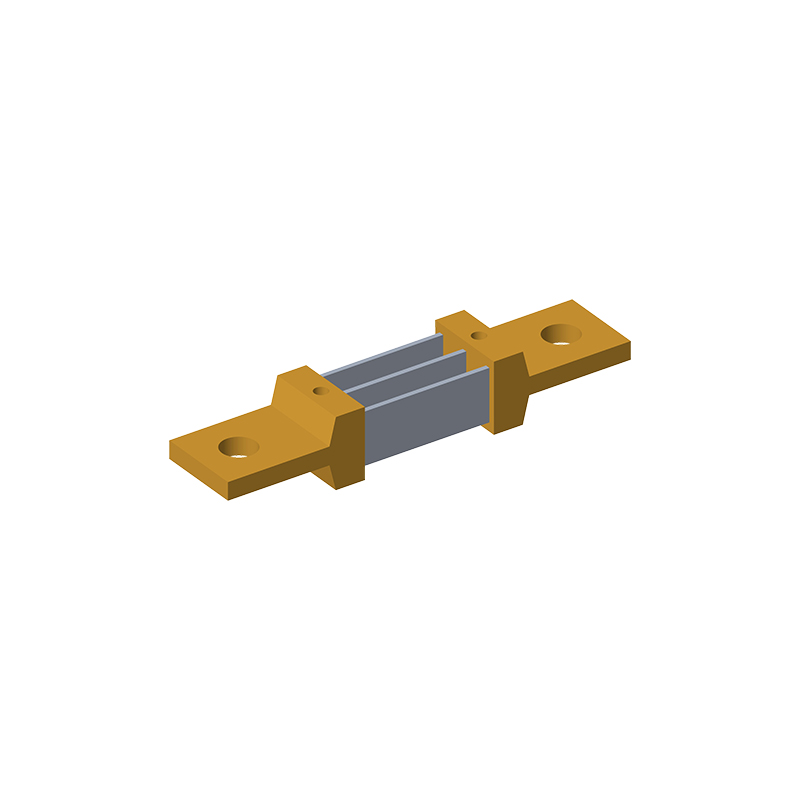
Precision shunt fabrication is a discipline where tolerances are measured in millionths of an ohm, yet the work itself leaves almost no visible trace. Each resistive element emerges from a subtle interplay of alloy selection, thermal stabilization, and electron-beam welding—processes that demand intuition as much as measurement. The raw materials arrive with inherent crystalline irregularities; it's the fabricator's task to coax them into a state of near-perfect stability. This isn't mass production. It's more like tuning a musical instrument, where the final note rings true only when every variable aligns.
The real challenge isn't hitting a target resistance—it's making that resistance stay put when the world around it changes. Temperature fluctuations, mechanical strain, even the gravitational pull of nearby equipment can nudge a shunt's value by a few parts per million. Skilled technicians learn to read these invisible forces, often adjusting the manganin foil's geometry by hand under a microscope while current pulses anneal stress right out of the lattice. There's a quiet drama in watching a null detector drift and settle—a sign that the piece has finally surrendered its internal tensions.
What separates a competent shunt from an extraordinary one lies in the undocumented details: the way a lead wire is dressed to avoid stray thermals, the exact duration of post-weld bake-out, the precise sequence of power cycling during burn-in. These are the tacit gestures of an art form that resists codification. No drawing captures the moment when a craftsman decides that a particular resistive path requires a whisper of silver solder—not for conductivity alone, but to shift the inductance profile just enough. In high-precision shunts, perfection is a moving target, and the hands that build them must remain sensitive to variables that only years of experience can reveal.
Where Tolerance Meets Temperature: Our Shunt Design Philosophy
Precision in current sensing often falters when the environment gets demanding. A shunt that performs flawlessly on paper can drift into uncertainty once thermal cycles begin. We learned early on that tolerance isn't just a number on a datasheet—it's a promise that has to hold steady as temperatures swing. Our design philosophy flips the typical approach: instead of treating thermal drift as an afterthought, we embed it into the very material choices and structural geometry from day one.
Take the interplay between resistance alloys and their mounting structures. Most designers chase low temperature coefficients of resistance, but ignore how mechanical stress at terminations distorts that number under real loads. We model the complete current path as a thermodynamic system, where every interface becomes an opportunity to either control or surrender to temperature rise. By aligning the shunt's internal current distribution with its heat dissipation symmetry, we turn what's usually a source of error into a self-stabilizing mechanism.
The result isn't just a rugged component that survives harsh conditions. It's a shunt that actively preserves accuracy because its tolerance is defined at temperature, not in isolation. This thinking guides every aspect of our manufacturing—from bonding techniques to final calibration—ensuring that when you push our shunts to their limits, they don't just endure, they remain exactly as precise as you need them to be.
From Raw Alloy to Reliable Current Sensing
The journey begins with a carefully formulated metal alloy, chosen for its predictable electrical behavior. This isn't just any metal—it's a blend designed to resist corrosion and drift, so the sensor remains stable over years of use. The raw material is melted and cast into billets, then gradually rolled down to a precise thickness. Every pass through the rolling mill refines the grain structure, enhancing the alloy's strength and reducing internal stresses that could distort resistance later on.
Once the metal foil reaches its target gauge, it's etched into a serpentine grid using photolithography. This pattern isn't arbitrary; the long, narrow traces increase the effective path length, amplifying the voltage drop for a given current without adding bulk. A laser then trims each resistor to its exact nominal value, accounting for subtle variations in foil thickness and width. This step is where the sensor's accuracy is really defined—off by a micron and the whole system could misread a critical load.
After trimming, the resistor is laminated between insulating layers and mounted onto a substrate that can handle the expected thermal expansion. Terminations are welded or soldered to create a four‑terminal Kelvin connection, which separates the current path from the voltage‑sensing leads. This eliminates the influence of lead resistance, so what you measure truly represents the current flowing through the alloy. The finished device might look simple, but it's the product of dozens of material and process decisions, each one made to ensure that a millivolt signal corresponds reliably to an amp of current, year after year.
Calibrating the Unseen: The Science Behind Every Resistor
Resistors appear straightforward—tiny bands of color promising a fixed opposition to current. Yet beneath their humble exterior lies a world of precise calibration. Every resistor that rolls off a production line carries a nominal value, but achieving that value with absolute fidelity is a battle against materials, temperature, and manufacturing variance. The science of calibration ensures that what you see marked on the component is what you actually get, down to the last milliohm.
The process often starts with laser trimming, where a focused beam delicately carves away resistive material to nudge the component toward its target. It’s a ballet of feedback: a measurement bridge continuously monitors the resistance, comparing it against a traceable standard, while algorithms decide in microseconds where to cut next. This isn't merely about hitting a number—it's about compensating for the thermal noise and parasitic inductance that creep in when you least expect them.
But calibration doesn't end on the factory floor. In precision circuits, engineers often employ software-driven autocalibration, using onboard references to correct drift over time. Temperature coefficients are mapped, aging effects are modeled, and the humble resistor becomes a stable anchor in a sea of electrical chaos. It’s a quiet, ongoing negotiation between physics and design, ensuring that every unseen component performs its role without fanfare.
Tailored Shunt Solutions for Demanding Applications
Designing current sensing for extreme environments requires more than off-the-shelf parts. Demanding applications—from electric vehicle powertrains to industrial motor drives—push resistors to thermal and mechanical limits. Our shunts are engineered with proprietary alloy blends and laser-welded joints that maintain stability under rapid temperature swings and continuous vibration, ensuring the precision your controls demand without derating surprises.
We address the hidden failure modes that generic shunts ignore. By optimizing current density distribution through finite element analysis, we eliminate hot spots that lead to drift. The low-inductance geometries are co-designed with your busbar layout, cutting noise in high-frequency switching environments. Whether you need Kelvin connections integrated into a custom footprint or a fully potted assembly for wet conditions, each design is validated with real-world load cycles, not just datasheet math.
FAQ
Precision in manufacturing ensures that the resistance value stays within tight tolerances, which directly determines the accuracy of current measurement. Even tiny deviations can lead to significant errors in high-stakes applications like electric vehicles or medical devices.
Tighter tolerances mean the actual resistance is closer to the nominal value, reducing calibration needs and improving the reliability of the sensing system. In precision circuits, a 0.1% tolerance resistor provides far more consistent readings than a 1% one.
Manganin and constantan are common choices because of their low temperature coefficient and stable resistance over time. These alloys help maintain accuracy across a wide temperature range, which is vital for dynamic environments.
A low temperature coefficient minimizes resistance drift as temperatures change, ensuring that the current reading remains accurate even under thermal stress. This is especially important in power systems where heat buildup is unavoidable.
The resistance value dictates the voltage drop for a given current, so selecting it involves balancing signal readability against power loss. A shunt with too high a value may dissipate excessive heat, while one too low may produce a signal below the noise floor.
Automated laser trimming, rigorous temperature cycling tests, and 100% final inspection are standard. These steps catch outliers and guarantee each resistor meets the specified tolerance before it reaches the customer.
At high frequencies, parasitic elements can distort the voltage signal, causing phase shifts and amplitude errors. Designers combat this with careful layout and by choosing shunt geometries that minimize these unwanted effects.
Managing heat dissipation is the biggest challenge—high currents generate significant Joule heating, requiring robust materials and sometimes active cooling. Also, the physical size must accommodate the current density without compromising precision.
Conclusion
In the realm of current sensing, precision shunt resistors stand as unassuming yet pivotal components, and our factory’s dedication to this craft redefines what’s possible in measurement accuracy. The journey begins with meticulously sourced alloys, each selected for its thermal stability and low temperature coefficient. We engineer every resistor to balance tolerance and temperature drift, ensuring that even under fluctuating loads, the voltage drop remains a true mirror of the current. This design philosophy—where material science meets practical application—enables shunts that excel in both high-precision instrumentation and harsh industrial environments.
Behind each compact component lies an invisible art: laser trimming, electron-beam welding, and stress-relieving treatments that eliminate microstructural inconsistencies. Calibration is more than a final step; it’s a rigorous dialogue between theory and reality, employing guarded Kelvin connections and traceable references to secure ppm-level accuracy. From raw alloy to finished resistor, every stage is a testament to reliability. And because no two applications are identical, we craft tailored solutions—whether it’s a low-inductance shunt for fast switching or a high-power design for battery management. In this factory, precision isn’t just a specification; it’s the core of current sensing, delivered in every resistor we produce.
Contact Us
Contact Person: Yuying Gao
Email: [email protected]
Tel/WhatsApp: +86 18926013721
Website: https://en.milliohm.net/