

Stainless Steel Hex Nuts Distributor Selection Made Simple
2026-11-18
Finding a reliable stainless steel hex nuts distributor doesn’t have to mean juggling spreadsheets, lead times, and vague spec sheets. Whether you’re buying for OEM production or a demanding job site, the real challenge is knowing which supplier will actually keep tolerances tight and shipments on schedule. Wanluo understands that the wrong choice shows up later as rust, rework, or a delayed line. Here’s how to narrow the field without guesswork.
Warehouse First, Website Second
Most founders start with the website because it feels like progress. The real bottleneck is almost always the warehouse. If stock counts are off, returns pile up, or pickers waste time hunting for items, a polished checkout page just exposes those flaws faster.
Getting the warehouse right means boring work first: standardizing locations, barcode scanning every movement, and making inventory counts match what's physically on the shelf. Once that foundation is stable, the website can show accurate stock levels and delivery promises without needing constant manual fixes.
A site should reflect what the warehouse can actually do, not the other way around. When operations lead and the website follows, you avoid selling products you don't have or promising delivery windows your team can't hit. That's the real difference between a store that survives scale and one that collapses after a spike in orders.
The 304 vs 316 Question Without the Upsell
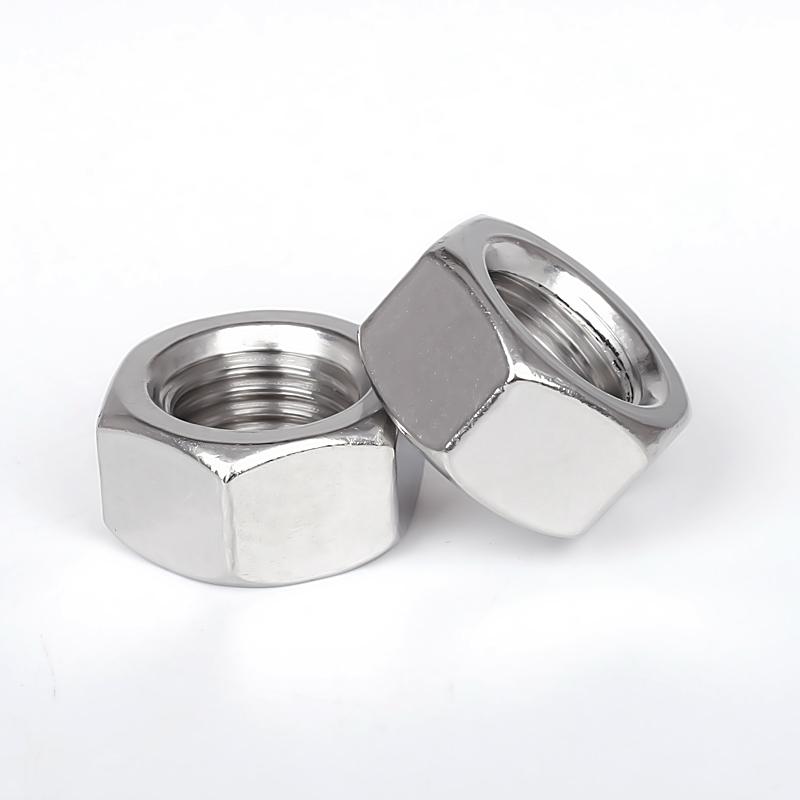
Most of the time, the real question isn't which alloy is tougher but what the metal will actually touch. 304 handles ordinary indoor air, food contact, and mild cleaning agents without much drama. 316 earns its cost only when chlorides enter the picture—think salt spray near the coast, pool chemicals, or winter de-icing salts that get walked indoors. If none of those conditions show up, the difference stays mostly on paper.
The price gap between the two is real, but it doesn't automatically buy better performance. Paying extra for 316 in a dry, inland kitchen can be like buying a raincoat for a desert. A better move is to list the specific exposures: standing saltwater, repeated bleach cleaning, or humid coastal air push toward 316. Tap water, occasional splashes, and normal wear won't justify the jump.
It's also worth remembering that 316 is not a magic shield. Strong acids, certain high-heat situations, or poor surface finish can still cause trouble. Focusing on how the part is cleaned, how often it's inspected, and what happens if it fails usually matters more than chasing a higher grade by default.
Mill Certs in Plain English
A mill cert is the paperwork that arrives with a batch of metal, and it tells you exactly what you are working with. It lists the chemical makeup, the mechanical properties, and the standard the material was produced to. In everyday terms, it is a record of the metal's identity and performance, not just a receipt for the order.
The heat number is the part worth paying attention to. That number connects a piece of steel or aluminum back to the specific melt it came from, along with the exact test results for that melt. When a part fails or a weld acts strangely, the heat number is what lets you trace the problem to its source instead of pointing fingers at the whole shipment.
Reading the test values gets easier when you stop treating the cert like a wall of jargon. Yield strength, tensile strength, and elongation simply describe how the material reacts to being pulled, bent, or stressed. The useful move is to compare those numbers with what your job actually requires, rather than assuming a longer list of figures means a better material.
Backorders Are Usually a Choice
Backorders don't happen by accident in most supply chains. They're the result of deliberate decisions about how much inventory to hold, how aggressively to promise delivery dates, and whether to accept orders for products that aren't physically on the shelf. A company that routinely runs out of popular items while still taking customer money has usually chosen to operate that way, accepting the risk of delays in exchange for lower carrying costs or a wider catalog.
The choice becomes clearer when you look at what's not being done. Some businesses avoid backorders by cutting off sales the moment stock hits zero, or by displaying real-time availability before checkout. Others maintain safety stock or reorder points that trigger replenishment long before shelves empty. When a store lets you place an order it cannot fulfill, it has decided that capturing the sale now matters more than shipping quickly—a trade-off that may or may not be explained to the buyer.
This framing matters because it shifts responsibility from "unforeseen demand" to management policy. Sure, unexpected spikes happen, but chronic backorders point to forecasting models tuned too lean, supplier lead times accepted without buffers, or marketing campaigns launched without warehouse coordination. The backorder itself is a symptom, but the decision to keep selling into a stockout is a choice, and customers eventually figure out who keeps making it.
Prototype Orders Deserve Honest Pricing
Most prototype quotes look cheap until the first change order lands. The tooling line item was missing, the setup time got buried in a vague engineering fee, and suddenly a simple test part costs twice the original figure. Honest pricing means putting those non-recurring costs on the table from the start: fixture work, CAM programming, material waste, and the reality that a one-off part will never have the efficiency of a production run.
There is a quiet advantage to this approach that rarely gets mentioned. When a shop refuses to hide costs, it gets better inquiries. Buyers who only want a loss-leader quote disappear, while engineers who need accurate budgets stay and share more useful design context. That back-and-forth is faster, less adversarial, and usually produces a prototype that actually matches the drawing.
The practical fix is simpler than most people expect. Break the quote into two lines: the part itself and the one-time preparation work. If the later production order reaches an agreed volume, part or all of that preparation cost can be credited back. That keeps the prototype price real without punishing a customer who is serious about scaling up.
Lead Time Promises You Can Actually Test
Most lead time claims fall apart the moment you ask how they were measured. A promise like “ships in 24 hours” means little unless you can trace it back to concrete order data, warehouse timestamps, and carrier scans. Instead of repeating marketing copy, build a small internal test: pick a recent batch of orders, note the exact time each one was placed, then track when it actually left the dock. If the median gap matches the advertised window, the promise holds. If not, you have a much more interesting conversation to start with your operations team.
The trick is to make the test repeatable and boring. Grab the same three or four data points every week—order confirmation time, pick completion, label generation, and first carrier scan. Plot them on a simple run chart. Patterns emerge quickly: a supplier consistently late on Tuesdays, a packing step that slows down after lunch, or a delivery zone where the promised two-day window quietly stretches to four. None of this shows up in a glossy service-level agreement, but it is exactly what your customers feel.
You do not need a data science team to run this. A spreadsheet and a bit of discipline will get you further than any dashboard demo. The goal is not perfection; it is honesty about what you can actually commit to. When you narrow the promise to something your own shipment history supports, customer service calls drop, refund requests ease, and the phrase “as fast as possible” gets replaced with a number people can hold you to.
FAQ
Start with the actual material grade on the paperwork. A distributor that cannot tell you whether a batch is 304 or 316, or that mixes stock without clear labeling, will create more work downstream. Also ask how they separate stainless from carbon steel in the warehouse to avoid contamination.
If the nuts end up in a marine or chemical environment, you need proof they are the grade you specified. Traceability paperwork helps you defend the choice later and narrows down the problem if a fastener fails. Without it, a lower-grade substitute can slip in and nobody notices until corrosion shows up.
Many do, but depth varies. A distributor focused on industrial maintenance may carry a wide inch range, while one serving equipment builders may lean metric. Always ask about actual shelf stock rather than relying on a catalog, because mixed inventory can mean more split shipments.
It depends on their supplier network. Some distributors only resell standard parts, while others work with machine shops and plating vendors for modifications like longer threads, locking features, or passivation. If you need something non-standard, ask whether the work is done in-house or subcontracted, and how quality is checked.
Vague answers about grade, no documentation available, frequent stock substitutions without approval, and pricing that seems far below the market are all worth digging into. Also watch for packaging that does not separate stainless from carbon steel, since that raises contamination risk.
Common sizes may ship same day or next day if they are in stock. For large volumes or odd sizes, expect the distributor to confirm a production or transfer window. A good distributor will tell you which items are truly available now and which ones require waiting, rather than promising a blanket date.
A specialist often makes sense for critical jobs because they understand corrosion requirements and can guide you toward the right grade and finish. A general distributor can be fine for common sizes when the application is straightforward. The key is whether they ask about the environment where the nuts will be used, not just the part number.
Ask about crevice corrosion, passivation, and the difference between 304 and 316 in chloride exposure. If they can explain why a stainless hex nut might gall or seize, that usually signals practical experience. If the conversation stays at price and quantity, you may be talking to a broker rather than a technical distributor.
Conclusion
A distributor's website can look polished while the actual operation runs out of a spare room. Before comparing prices, ask for a warehouse address and whether you can walk the aisles. If they hesitate, that tells you more than any catalog. Once you know the stock is real, the conversation around grade becomes simpler. Most general service corrosion concerns are handled by 304, and a good supplier will say so instead of pushing 316 as if it were mandatory. If your environment involves chlorides, salt exposure, or chemical washdowns, 316 earns its cost. Either way, ask for mill certifications and make the supplier explain what the document actually covers. Heat numbers, composition limits, and country of melt should be readable, not hidden behind jargon.
Backorders often reveal how a distributor manages risk. Some keep shallow inventory by design and blame the mill when a size disappears. Others maintain depth and can tell you before you order whether a line item will ship today or in three weeks. Prototype work makes this honesty more critical. A small batch of hex nuts should not carry inflated setup charges dressed up as custom pricing, and reasonable minimums should not punish you for testing a design. Finally, test lead time promises on a small order before committing to production volumes. A distributor that hits the promised date on a box of nuts is far more likely to hit it on a pallet.
Contact Us
Contact Person: Shane
Email: [email protected]
Tel/WhatsApp: 8613357785029
Website: https://www.wanluohardware.com