
Telescopic Mast Manufacturer Insights on Custom Design and Material Choices
2026-11-16
A telescopic mast looks simple—until you start specifying one. Custom height, payload, mounting conditions, and material selection all interact in ways that can make or break a deployment. Homall Industry Limited has spent years refining these decisions for clients across demanding sectors. Here, they offer a no-nonsense look at what really matters when customizing a telescopic mast, from aluminum alloys to composite options and the hidden costs behind each choice.
Start With the Site, Not the Spec
Most projects begin with a requirements document that reads like a wish list. But a site isn't a blank canvas; it's a specific place with existing traffic patterns, legacy code, and user habits. Starting from the spec means solving imagined problems. Starting from the site means uncovering the real ones. Once you understand how pages actually load, where people linger, and what breaks under real conditions, the work becomes obvious.
A redesign that ignores current URL structure, analytics quirks, or the way content editors actually work will fail no matter how elegant the spec. The site already has opinions—about performance budgets, about navigation, about which features get used and which get ignored. The spec should be written after you've listened to those opinions, not before. Otherwise you'll end up with a beautiful document that describes a website nobody visits.
That doesn't mean specs are useless. It means they should be living notes that follow the site's evidence. When a new feature is proposed, test it against current behavior first. See what the site already does well and where it quietly struggles. The goal isn't to implement a document; it's to make the existing site better in ways that matter to the people using it.
Material Pairings That Extend Mast Life
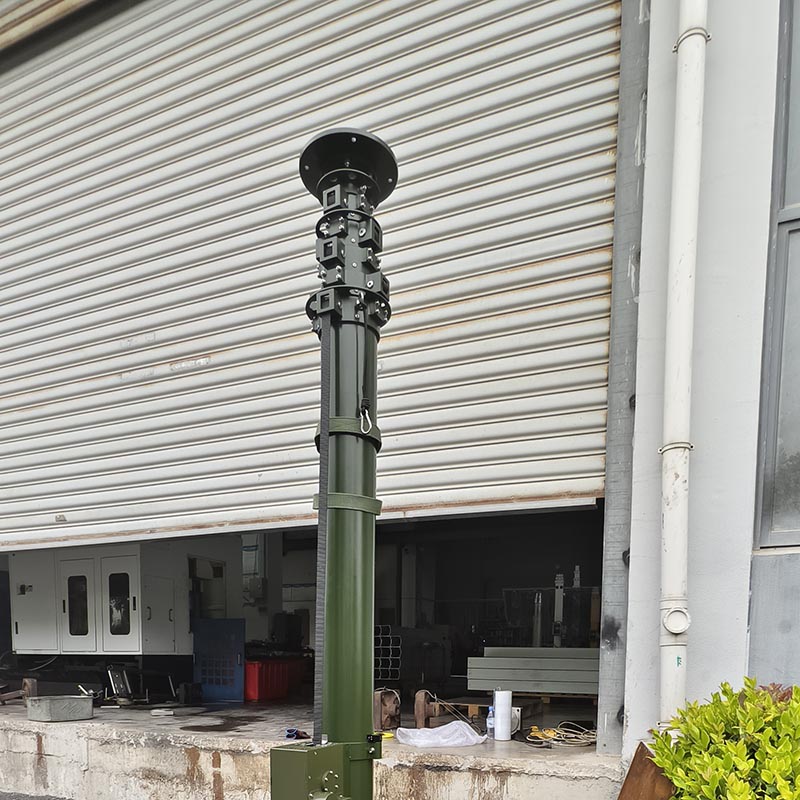
Mast longevity often hinges less on the primary spar material and more on the small components that separate dissimilar metals. Pairing an aluminum mast with stainless steel tangs or cleats invites galvanic corrosion the moment saltwater bridges the two. A thin mylar or PTFE isolation film, along with nylon washers and Tef-Gel on fastener threads, breaks that circuit and prevents the white powder bloom that eats away at extrusion walls. For carbon spars, titanium hardware works better than stainless because the galvanic potential is closer, but even then a fiberglass or G10 backing plate spreads the load and keeps the bolt holes from ovaling under cyclic rig tension.
In high-chafe zones like the spreader tips or the gooseneck, pairing a hard anodized aluminum surface with a renewable UHMWPE wear strip gives you a sacrificial layer that slides rather than grinds. Wood masts, particularly on classic boats, last far longer when bronze sheaves and stainless fasteners are bedded in a flexible sealant and inspected annually; the wood itself remains sound if water is kept out of the grain. Similarly, a keel-stepped aluminum spar survives longer with a dense rubber or EPDM boot at the partners and a drip pan below, because standing water at the base is a bigger killer than UV exposure aloft.
The Hidden Cost of Overbuilding
Overbuilding feels like progress until the bills start arriving. A new office park or a widened highway might look impressive at the ribbon-cutting, but the real price shows up years later in empty hallways, cracked pavement, and maintenance budgets that never stop growing.
Cities often chase construction as a sign of vitality, yet every square foot of unused space drains money that could have gone toward repairing existing schools or improving public transit. The hidden cost is not just financial; it is the opportunity lost when resources get locked into projects that do not match actual demand.
Developers and planners rarely talk about the long-term carrying costs: cleaning, heating, security, and eventual demolition. Those expenses quietly accumulate while the initial excitement fades, leaving communities with structures that cost more to maintain than they ever returned in value.
Custom Doesn't Mean Complicated
The word "custom" often triggers images of endless code, confusing menus, and a steep learning curve. But that's an outdated assumption. Modern customization thrives on simplicity, guiding users through clear choices rather than overwhelming them with technical decisions. The goal isn't to strip away flexibility—it's to present it in a way that feels natural.
Think of it like arranging furniture in a room: you move pieces around until it feels right, with no instruction manual needed. Good custom tools offer drag-and-drop blocks, color pickers that show live previews, and preset templates you can tweak instead of starting from scratch. Complexity hides behind the scenes, while the front end stays calm and approachable.
Ultimately, customization should empower, not intimidate. When the process respects your time and intuition, you get a result that feels uniquely yours without the headache. That's the sweet spot: deep personalization wrapped in a deceptively simple package.
When Aluminum Isn't Enough
Aluminum earns its reputation through light weight and corrosion resistance, but those advantages come with clear compromises. Once temperatures climb past a few hundred degrees, strength drops quickly; in engine bays, exhaust zones, or braking systems, the metal can soften, warp, or fail without warning. Cyclic loading tells a similar story: aluminum has no true fatigue limit, meaning even modest repeated stress can eventually start microscopic cracks. For parts that must survive millions of load cycles, that uncertainty often rules it out.
Stiffness is another quiet limitation. Aluminum's modulus of elasticity is roughly one-third that of steel, so a structure designed to resist bending or twisting must either grow thicker or rely on clever geometry. When packaging space is tight or deflection tolerances are razor thin, adding aluminum volume defeats the original weight-saving goal. That's when engineers shift to steel, titanium, or carbon composites, accepting extra cost or manufacturing complexity for the required rigidity.
Corrosion resistance also varies with the environment. While aluminum forms a protective oxide layer in clean air, contact with chlorides, strong alkalis, or galvanic coupling with carbon fiber can trigger pitting and crevice attack. In marine hardware, chemical processing, or mixed-material assemblies, a passive aluminum part may degrade faster than a properly coated steel or a purpose-chosen alloy. The lesson is simple: aluminum works beautifully within a defined envelope, but pushing beyond that envelope demands a different material philosophy.
Field Failures That Shape Better Designs
Every cracked bracket or overheated motor tells a story that no simulation ever predicted. Field failures force design teams to confront the messy gap between lab assumptions and real-world stress, whether it's a mounting boss snapping from vibration harmonics or a seal degrading under unexpected chemical exposure. These moments aren't just setbacks; they're raw data with dirt on it, pushing engineers to re-examine material choices, tolerances, and the very load paths they took for granted.
When a pump fails in a dusty mining site two months after installation, the post-mortem reveals more than a worn bearing. It uncovers how abrasive particles bypassed a filter, how shaft misalignment crept in during rushed assembly, and how the original design never accounted for operator habit of running equipment past rated duty cycles. Each failure pattern becomes a design constraint that no textbook chapter covers. The next iteration gains a thicker housing, a relocated grease fitting, or a redundant sealing surface—changes born directly from the field, not from the CAD screen.
Some of the best design improvements emerge from failures that embarrassed the team at first. A snapped handle on a garden tiller led to a hidden rib structure that doubled fatigue life. An intermittent connector fault in humid climates drove the switch to gold-plated contacts and conformal coating. These are not glamorous fixes, but they are durable ones. Designers who treat field failures as early prototypes in harsh conditions—rather than as evidence of incompetence—build products that quietly outlast their competitors, earning trust one recovered failure at a time.
FAQ
Start with the deployed height, collapsed length, and weight budget, then narrow down by payload and wind load. Real-world mounting conditions like vehicle roof racks or trailer beds often dictate the max tube diameter more than the height does. We usually ask about cable routing early, since integrated feedlines can add internal complexity that's easier to design in from the start.
Aluminum handles dents and rough handling better, and it's easier to anodize or paint for corrosion resistance. Carbon fiber is stiffer and lighter, but it's less forgiving when a section gets side-loaded or dropped. We recommend carbon for weight-critical, low-impact setups, and aluminum for anything that may get knocked around in transit or deployed repeatedly on uneven ground.
Friction locks have fewer moving parts and can be faster to operate one-handed, but they need more user attention to avoid overtightening. Locking collars give a firmer mechanical stop and tend to hold better under torsional loads, like when a directional antenna or camera swings in wind. For most industrial customers, a hybrid with collars on the lower sections and friction locks near the top works well.
Yes, but the mast wall thickness and section overlap have to be recalculated around the bending moment, not just the vertical weight. Off-center loads create torque that can bind the telescoping action if the guides aren't reinforced. We usually add thicker upper sections or a short truss adapter to move the center of gravity back over the mast axis.
Hard anodizing is the baseline for aluminum in salt air, but we also recommend a sealed epoxy primer under any topcoat. Bare stainless hardware should be swapped for titanium or coated stainless wherever it contacts the mast body. If the mast is frequently wet, adding drain holes in the base collar prevents saltwater from pooling inside the tubes.
It depends on whether the new payload changes the top tube geometry or just the mounting plate. A heavier camera pod might only need a redrawn top cap, which is low-cost. But if the cable bundle grows, the internal bore may need to increase, which cascades into new tube sizes and section guides. We try to keep the lower sections unchanged to avoid retooling the whole line.
They forget to account for the mast base, quick-release plate, and any top accessory that doesn't collapse. The published collapsed length often refers to just the nested tubes, but the actual height on a vehicle mount can be several inches taller. Leaving clearance for garage doors or aircraft cargo pallets matters as much as the deployed height.
We run a cycling rig that extends and retracts the mast under load while logging the torque needed at each lock. After a few hundred cycles, we measure section slop and check for wear on the guide rings. For customer-specific designs, we'll use a representative payload and simulate wind gusts with a side-load actuator to catch any binding before it leaves the shop.
Conclusion
A telescopic mast that thrives in the field begins with a frank look at the deployment site, not a checklist of specs. Wind loads, salt spray, temperature swings, and the way crews actually handle the mast day after day dictate the design far more than a generic datasheet ever could. Smart manufacturers push customers to share photos, failure notes, and even video from previous setups. That real-world context shapes everything from locking collar geometry to the choice of seal materials, preventing the kind of mismatch that looks fine on paper but buckles under a coastal gust.
Material pairing is where longer service life is won or lost. Anodized aluminum sections mated with stainless steel hardware resist galvanic corrosion, while composite bearings eliminate the wear points that plague all-metal designs. Overbuilding, though tempting, adds weight and cost without real benefit—a thicker wall can actually worsen fatigue by concentrating stress at joints. Custom work doesn't have to mean a six-month engineering project; often it's a simple change to a collar profile or a switch to a more UV-stable polymer. When aluminum alone can't handle a high-vibration or chemical-heavy environment, hybrid masts with carbon fiber or coated steel sections step in. Ultimately, every field failure report becomes a design input, so the next mast ships with fewer weak links and a longer, quieter life on the truck or tower.
Contact Us
Contact Person: Ryan
Email: [email protected]
Tel/WhatsApp: +85259582726
Website: https://www.robomast.com/