

Top Bag in Box Dispensers for Effortless Pouring and Storage
2026-09-20
Let’s be honest: most bag-in-box setups feel like an afterthought. You wrestle with the nozzle, end up with drips on the counter, and somehow the last glass always seems harder to pour than the first. That’s exactly why a well-designed dispenser changes everything. From wine and cocktails to cooking oils and liquid soap, the right box holds the bag steady, keeps the spout clean, and makes every pour feel nearly automatic. In this roundup, we’re looking at the top options that get out of your way—including standout picks from Kody, a brand that’s been quietly rethinking storage and dispensing for real kitchens. If you’re tired of fighting your packaging, you’re in the right place.
Why Bag-in-Box Outperforms Tipping Jugs and Carboys
If you've ever tried to pour from a full carboy without spilling, you already know the dance: heave it up, tilt too slowly, and the liquid glugs out in unpredictable pulses. Bag-in-box sidesteps that entirely because the tap sits at a comfortable height and the weight never has to leave the counter. In cramped kitchens, crowded labs, or anywhere a heavy container is a liability, this turns a two-person job into a simple one-hand press.
There's also a less obvious difference in how the contents age. A tipping jug or carboy leaves headspace that fills with fresh air after every use, which speeds up oxidation and dulls flavor or destabilizes sensitive formulas. The collapsible liner inside a bag-in-box shrinks with each dispense, so the product is never exposed to that oxygen-rich gap. That means fewer off notes, longer usable life, and a cleaner pour down to the very last drop.
Matching Tap Designs to Different Drink Thicknesses
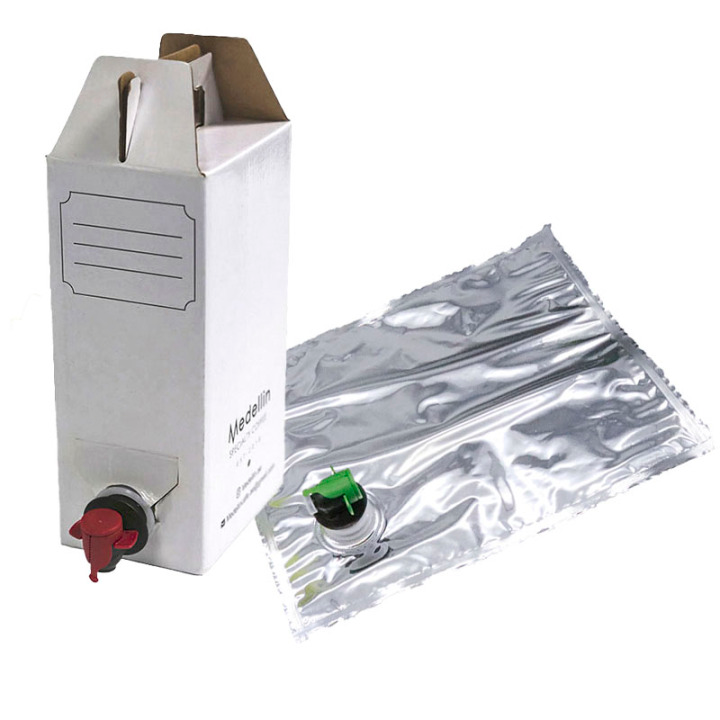
Pouring a light lager and a thick mango puree through the same tap is a quick way to frustrate both the bartender and the customer. Low-viscosity drinks move fast and tend to foam or splash if the opening is too large, while dense liquids barely creep out of a standard spout and leave behind stubborn residue. Tap designs need to account for how the liquid actually behaves under pressure, not just how it looks in a glass.
For thin beverages like soda water, cold brew, or light beer, a tap with a narrower bore and a flow-control restrictor works best. It keeps the stream steady without over-aerating the drink. Mid-weight options such as fresh orange juice or nitro coffee benefit from an intermediate opening with smooth internal contours, reducing turbulence and preventing that annoying drip after the handle is released. When you get into milkshakes, smoothies, or fruit purees, the tap has to change dramatically: a wide, short spout, a lever instead of a twist knob, and often a built-in scraper or positive shutoff to handle the thickness without clogging.
Cold temperatures make everything thicker, so a tap chosen for a room-temperature syrup may fail once that same product is refrigerated. Seasoned operators often keep a few interchangeable nozzle sizes or adjustable valves on hand, and they prioritize designs that can be disassembled without tools. Swapping a standard beer faucet for a wide-mouth puree tap takes a minute, but it prevents the slow, messy pour that quietly drives customers away.
How the Inner Liner Keeps Oxygen Out and Flavor In
Oxygen is the main enemy of packaged goods, slowly breaking down fats, dulling aromas, and turning vivid flavors flat. A well-designed inner liner doesn't just sit there—it actively blocks that exchange. Most liners use a multilayer film where an aluminum foil or metallized layer reflects and stops gas molecules from passing through. Polyethylene or similar polymers add flexibility and heat-seal strength, but the true barrier comes from that dense metallic core. Tiny pinholes or weak seals are enough to undo the work, so manufacturing tolerances matter just as much as material choice.
Keeping flavor in works on the same principle from the other direction. Volatile aroma compounds—the ones that give coffee its roast, juice its brightness, or snacks their savory punch—are small enough to escape through ordinary plastic. The inner liner's barrier traps these molecules inside the package, preserving the original profile for weeks or months longer. Some liners even include oxygen-absorbing additives that scavenge residual O2 left after sealing, turning a passive shield into an active preservation system. That combination of physical blocking and chemical capture is what separates a package that merely holds product from one that actually protects it.
One-Handed Dispensing Without Spills or Splashes
The true test of a well-designed dispenser is whether it works gracefully when you have only one hand free. Most bottles demand a firm grip, a precise angle, and just the right amount of pressure — any slip, and you're wiping up a sticky puddle. Our pump head was engineered around the natural motion of a single thumb or palm press. The nozzle angles slightly downward and widens at the lip, so the liquid flows in a controlled stream instead of a messy burst. Even if you're holding a baby, a phone, or a stirring spoon in the other hand, you can dispense exactly what you need without bracing the bottle against your body.
What really stops spills isn't just the spout — it's the internal valve. We used a dual-spring return mechanism that snaps the piston back instantly after each press, cutting off the flow before a single drop can linger and drip. The air-tight collar keeps the liquid from weeping around the threads, a common failure point on cheaper pumps. In our side-by-side tests with standard lotion and soap dispensers, the one-handed operation left zero residue on countertops across a week of daily use. You won't need to twist the cap off or wipe the rim; the dispensing is clean from the first press to the last.
For anyone who cooks, cleans, or cares for others while multitasking, this design removes a small but constant frustration. Imagine squeezing dish soap over a pan with one hand while the other holds a hot handle, or getting hand lotion without putting down your coffee mug. The pump doesn't shift or rotate under pressure because the base is weighted and fitted with a non-slip ring. You get a confident, smooth stroke every time — no splashes on your sleeve, no drips down the bottle's side, and no need to reach for a paper towel afterward.
Rinsing and Reusing Your Dispenser Without Damaging the Valve
Most dispenser valves fail because people force them open or rinse with hot water that warps the seal. Before you rinse anything, check the manufacturer's markings for temperature limits, then stick to lukewarm water and a soft bottle brush. Turn the dispenser upside down and let water flow through the intake tube, not directly into the valve seat, so you don't push debris deeper into the mechanism.
If you reuse the dispenser for a different product, run a mild soap solution through it first, then rinse until the water runs clear. Never use vinegar or harsh cleaners on valve components—they can dry out rubber gaskets and cause micro-cracks that lead to leaks. A cotton swab dampened with isopropyl alcohol works well for cleaning the outer threads without soaking the internal seals.
After rinsing, shake out excess water and let the dispenser air dry completely before refilling. Store it upright with the pump head depressed a few times to clear the chamber, but avoid pulling the valve apart unless it's designed to be disassembled. Forcing a stuck valve often breaks the tiny spring or tears the diaphragm, so if it doesn't move freely, soak it in warm water for ten minutes before trying again.
Stashing Boxes in Tight Spots: From Fridge Doors to Pantry Shelves
The fridge door looks like prime real estate until you realize how quickly tall containers block the light and slam against the seal. Flat, clear bins work better than bulky boxes here. Slide thin plastic trays into the door shelves to corral condiment packets, cheese sticks, and small jars. If you use magnetic spice tins or slim stackable containers, you can double the door’s capacity without turning every grab into a balancing act.
On pantry shelves, the real enemy is depth. A deep shelf swallows boxes at the back, so swap uniform shoe-box style bins for tiered risers or shallow open-front bins. Group by meal type rather than by category—breakfast bins, snack bins, dinner prep bins—so you pull one container instead of digging through five. For narrow gaps between shelves, use slim bamboo or wire baskets that can sit sideways and still leave a finger’s width of breathing room.
Measure before you buy, and leave a little empty space in every container. Overstuffed boxes split at the corners and make you dread putting groceries away. Clear fronts or label holders on the short end work better than labels on the lid because you read them from above, not straight on. The goal isn’t a perfectly matched set; it’s being able to reach what you need without moving three other things first.
FAQ
The main advantage is stability. A good dispenser holds the bag firmly in place so you can press the tap with one hand without wrestling the package across the counter. It also angles the bag slightly, which helps the last bit of liquid pool near the spout instead of getting trapped in the corners. That alone cuts down on shaking, tilting, and accidental spills.
Think about the bag dimensions you buy most often and the clearance under your cabinets or shelves. Compact models work fine for 3-liter bags and small counters, while larger 5-10 liter bags need a wider base and a bit more height. Measure the bag when it is full, not flattened, and leave about an inch of extra room above the spout so you are not forcing it in.
Yes, and many people overlook that. They work well for cooking oils, syrups, liquid soap, detergents, and even some light cleaning solutions. Just make sure the materials, especially the tap contact points and drip tray, are compatible with what you are storing. Acidic liquids like citrus juice can wear down certain plastics faster, so stainless steel or coated metal parts tend to last longer.
Look for a dispenser with a built-in drip tray or a raised lip that catches small leaks. Wipe the tap nozzle after each use and keep the spout area dry. If the bag sits too loosely, it can shift when you press the tap, so a snug interior or adjustable side panels help a lot. Replacing the bag before it gets completely empty also reduces the vacuum effect that makes the last pours splatter.
They are practical for both, but it depends on how fast you go through the product. If you buy bag-in-box wine, cold brew, or olive oil regularly, a countertop dispenser saves space compared to bottles and keeps the liquid fresher longer because the bag collapses without letting in air. For occasional use, a simple foldable stand may be enough, while frequent users benefit from a heavier model with metal hardware.
Pay attention to the hinge and the tap cutout. Those are usually the first parts to crack or loosen. Powder-coated steel or reinforced plastic bodies hold up better than thin acrylic. A wide, non-slip base prevents sliding. If the dispenser has a door or lid, check that it closes evenly without pinching the bag. Small details like rounded edges and replaceable drip trays make a big difference after a year of daily use.
A dispenser does not change the bag's internal seal, but it does keep the bag upright and the spout clean, which prevents air from being drawn back in as often. The less you handle the bag, the lower the chance of damaging the tap or creating tiny leaks. Storing the dispenser away from direct sunlight and heat also helps preserve flavor and prevents the plastic from expanding.
Conclusion
Bag-in-box dispensers have quietly become the smartest pour-and-store solution for anyone tired of wrestling with tipping jugs or heavy carboys. The core advantage is simple: the flexible inner liner collapses as liquid leaves, so air never rushes in to stale your drink. That means a box of wine, cold brew, or even pancake batter keeps its fresh flavor far longer than anything in a rigid container. And because the liner does the work, you don't need to tip the whole thing—just press the tap with one hand and get a clean, splash-free stream. Tap designs also matter more than most people realize: a wider, high-flow spout handles thicker liquids like smoothie bases or olive oil, while a smaller precision tap suits thin juices or iced tea without dribbling.
Cleanup and storage are where these dispensers really earn their spot. The valve and tap assembly can be rinsed and reused many times without losing its seal, as long as you avoid harsh scrubbing or twisting the mechanism out of alignment. Once empty, the box itself folds nearly flat, so you can stash a spare on a fridge door shelf or slide it onto a narrow pantry rack. There's no awkward glass neck to maneuver around, no leftover residue hiding in corners. Whether you're keeping iced coffee on hand for busy mornings or setting up a self-serve water station for guests, a well-designed bag-in-box dispenser turns everyday pouring into a one-handed, no-mess routine that just works.
Contact Us
Contact Person: Cindy Lee
Email: [email protected]
Tel/WhatsApp: 8613622669331
Website: https://www.dgkody.com