

Top Dredging Machinery Manufacturer Qualities That Drive Project Success
2026-11-16
Most dredging project failures share a hidden culprit: machinery that underdelivers when conditions turn tough. Choosing the right manufacturer isn't about the flashiest spec sheet—it's about the engineering, support, and adaptability behind the equipment. As a partner focused on long-term performance, YaKai Dredger has learned that a few specific qualities separate reliable contractors from constant headaches. Here's what to prioritize before your next project breaks ground.
Matching the Cutter to the Sediment, Not the Other Way Around
The instinct on a dredge project is often to run whatever cutter head already sits on the ladder and push through variance as it comes. That habit quietly caps production. A rock bucket with worn picks will smear through stiff clay rather than bite, while a smooth-edge clay cutter dropped onto fractured limestone loses hours to chatter and broken teeth. Matching the cutter to the sediment starts before the first swing: pull cores, log the transition zones, and accept that a single head rarely works across the full cut.
At the face, sediment behavior should drive teeth spacing, tooth angle, and the number of intermediate rings. Sandy silt with occasional gravel asks for wider spacing and faster rotation, letting the slurry do more of the transport work. A dense glacial till with cobbles needs different armor and more frequent pick changes. The goal is not to make the sediment adapt to the cutter's limitations but to choose a configuration that fails less often at the point where tooth meets ground.
Crews that switch heads at the right depth—even when it costs a shift—usually make up the time in sustained cutting rates and fewer unplanned repairs. The sediment tells you what it wants within the first few passes if you watch swing speed, suction vacuum, and tooth breakage patterns. Ignore those signals and you end up reshaping the cut to fit the tool. That is the slower, more expensive way to run a dredge.
Wear Parts That Don't Quit Before the Project Does
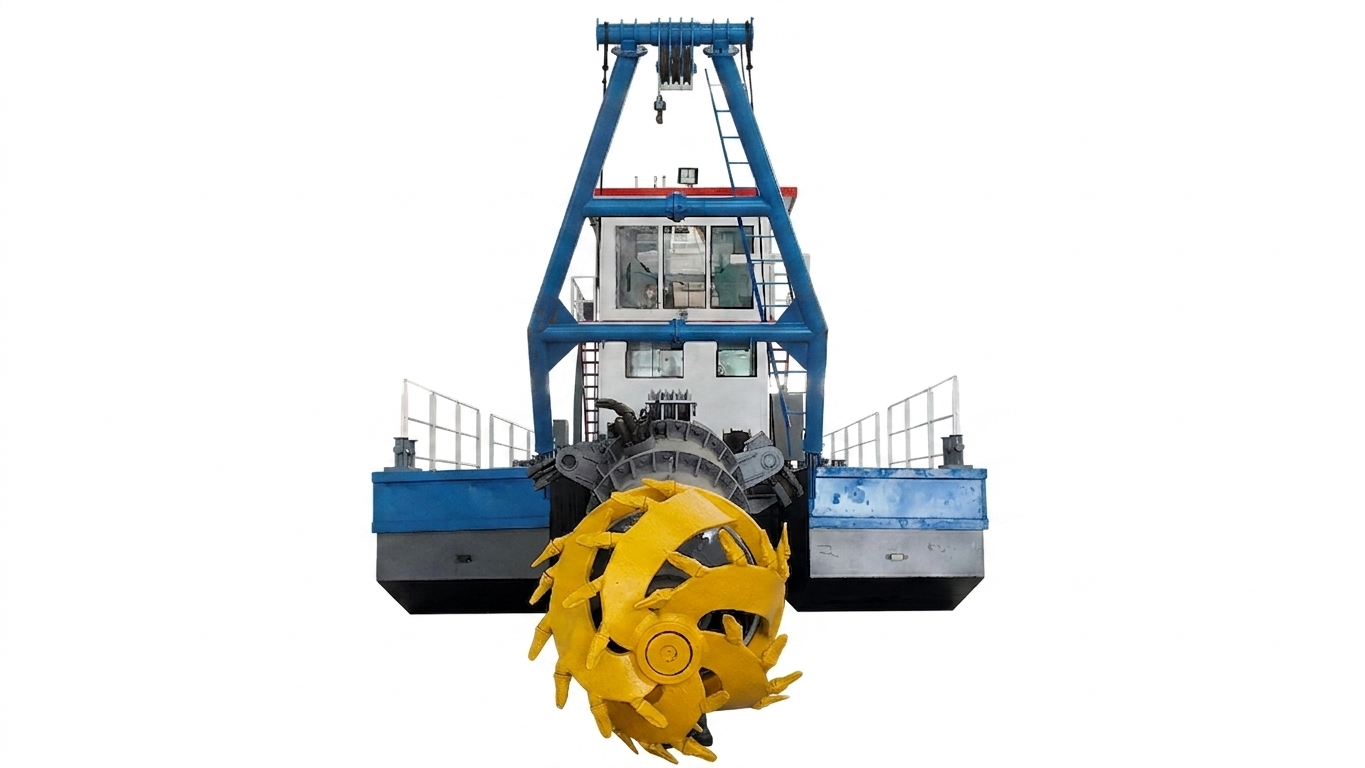
You know the feeling. You're halfway through a big job, the crew is humming along, and then a wear part gives out. A cutting edge cracks, a bucket tooth snaps, or a liner wears through way too soon. Suddenly the machine is down, the schedule slips, and everyone's standing around waiting for a replacement. It's not just frustrating—it's expensive. That's why the parts on this list are engineered to absorb abuse long after the competition has called it a day.
The difference comes down to material science and heat treatment. Most off-the-shelf wear parts use basic steel alloys that harden only on the surface. But the ones we're talking about go deeper. Through-hardened cores, carbide overlays in high-abrasion zones, and geometry tuned for how material actually flows across the edge. The result is a wear pattern that stays predictable, not catastrophic. You can plan your maintenance windows instead of reacting to breakdowns.
And here's the part nobody talks about: downtime isn't just the hour you lose swapping a part. It's the lost momentum, the idle labor, the rented equipment sitting there burning fuel. When a wear part outlasts the project—not the other way around—it changes how you bid jobs. You stop padding your estimates for surprise failures. You stop carrying emergency spare stock for every machine. You just work. That's the whole point.
Delivering Equipment That Arrives Ready to Work, Not Just Ready to Ship
Most suppliers stop caring the moment a crate leaves their dock. We start there. Every piece of equipment we deliver is fully assembled, calibrated, and test-run under real operating conditions before it ever gets wrapped for transit. That means no frantic calls from your loading bay, no missing fittings, no cryptic manuals left for your maintenance crew to decode. What arrives is not a promise of performance—it is performance, already proven.
The difference shows up in the details. Hoses are routed and secured the way your operators would want them. Control panels are labeled in plain language, not factory shorthand. Grease points are accessible without removing guards, and the first tank of fuel or charge is already in. We prep each unit as if we were the ones clocking in with it the next morning, because we know that downtime costs more than any shipping shortcut ever saves.
“Ready to ship” is a checkbox on a logistics form. “Ready to work” is a standard that gets tested on our floor, not yours. If a machine cannot hold tolerance, start cold, or lift its rated load on day one, it never leaves. That is the only way we know to deliver equipment that earns its keep from the very first shift.
Telematics That Turn Vessel Data Into Dredge Decisions
On most dredges, the gap between what the machinery is doing and what the bridge team actually knows can be measured in hours. A pump might be running hot, the cutter might be chewing through unexpectedly stiff clay, or fuel burn could creep upward without anyone noticing until the shift report lands. Telematics closes that gap by pulling real-time readings from engines, hydraulics, positioning systems and slurry lines into a single stream that reaches both the wheelhouse and the shore office.
What matters is not the volume of vessel data but the way it gets filtered into choices that can be made mid-project. A drop in mixture velocity combined with rising discharge pressure might trigger an alert suggesting a line flush before a full blockage develops. An upward drift in cutter torque across a three-hour window could prompt the operator to adjust swing speed rather than waiting for production targets to slip. These are operational nudges, not abstract dashboards.
Maintenance decisions benefit just as much. Hourly pump wear trends, lube oil temperature curves and vibration signatures help shoreside engineers schedule overhauls around tidal windows and material delivery instead of reacting to a failure. Over time, the same data reveals which cut patterns, pump speeds and pipeline configurations actually deliver the best output per litre of fuel, turning yesterday's guesswork into a repeatable decision set for the next contract.
Training Programs That Turn New Operators Into Confident Crews
New hires don't become confident crews by sitting through endless slide decks. The most effective programs pair each trainee with a seasoned operator from day one, then rotate them through live equipment scenarios within the first two weeks. That early exposure, even if it's just watching oil pressure gauges or walking a pre-shift inspection, turns abstract procedures into muscle memory.
Instead of a single pass/fail exam at the end, these programs use short check-ins after every major module. A trainee might be asked to demonstrate a cold startup, swap a filter, or flag a pressure anomaly before moving on. The goal isn't to catch people out; it's to find the exact moment where confusion starts, so a mentor can step in before bad habits form.
The result is a crew that doesn't freeze when a pump trips or a line pressure drops. They've already seen the warning signs, talked through the decision, and handled a controlled version of the problem in training. Confidence comes from repeated, supervised exposure—not from memorizing the manual.
Emission Controls That Keep Regulators and Communities on Your Side
Running a facility means knowing that the air you send out shapes how both inspectors and neighbors judge you. Modern emission controls go beyond add-on filters; they start at the burner with staged combustion and precise oxygen trim, cutting NOx before it forms. Pair that with continuous emissions monitoring systems that feed live data to your control room, and you catch drift long before a regulator ever knocks.
Communities notice what they can smell, not just what's on paper. That's why a growing number of operations install fenceline monitors and share the readings through a simple public dashboard. When a startup or fuel switch causes a temporary spike, proactive outreach with a plain-language notice often turns a potential complaint into a proof of transparency. A scrubber upgrade or a switch to low-sulfur fuel matters, but so does acknowledging the occasional hiccup.
Maintenance schedules are the quiet backbone of staying in compliance. Instead of waiting for a visible plume or a quarterly test, smart teams track baghouse pressure drop, catalyst temperatures, and reagent injection rates weekly. This shifts the conversation from "we'll fix it when it fails" to "here's how we kept sulfur dioxide and particulate levels below the limit all quarter." Regulators reward that kind of paper trail, and neighbors sleep better.
FAQ
The difference usually comes down to how they handle the details that don't show up in brochures. A dependable builder will have a documented track record on projects with similar soil conditions and production targets. They're also transparent about component sourcing, test procedures, and wear-part life. You can tell a lot by asking about their failure history on critical pumps or cutterheads - the honest ones will give you real numbers instead of dodging.
Timelines often hinge on how well the equipment matches the job before it arrives on site. A manufacturer that invests in upfront site analysis and sediment sampling can adjust impeller clearances, ladder length, or cutter geometry to avoid slow production or clogging. Those early adjustments might add a few weeks to delivery, but they routinely prevent months of downtime later.
Almost no dredging job is identical to another. Tidal ranges, soil abrasiveness, disposal distances, and draft restrictions vary widely. A manufacturer that only offers off-the-shelf models tends to force the project to adapt to the machine, which rarely works. Builders who can modify hull dimensions, pump curves, or automation levels show they understand that the equipment must serve the project, not the other way around.
Support is more than a spare parts inventory. The best manufacturers have engineers who can diagnose a drop in production remotely by reviewing pump pressure and swing speed data. They also maintain regional service hubs or trained local partners so a failed bearing doesn't idle a crew for two weeks. Quick access to wear components and honest advice on maintenance intervals often outweighs any upfront price difference.
In abrasive environments, the difference between a high-chrome alloy and standard steel on a pump casing can mean hundreds of hours of extra production before replacement. Top manufacturers don't just list material grades; they'll explain why a particular impeller hardness suits your sediment type and how they protect high-wear zones like the cutterhead or discharge line. That kind of material engineering directly reduces life-cycle costs.
Look for evidence of load testing, weld inspections, and dimensional checks at multiple stages, not just a final walk-around. A serious builder will document pressure tests on hydraulic systems and run the assembled dredge under controlled conditions before shipping. They should also trace every critical component back to its heat number or production batch, which makes recalls or failure investigations much faster.
Innovation matters when it solves a specific bottleneck. For example, automatic cutterhead positioning or real-time slurry density monitoring can help operators hold a steady production rate without constant manual adjustment. Rather than chasing novelty, strong manufacturers refine proven systems—better seals, smarter control logic, more maintainable ladder designs—so that new technology reduces operator fatigue and fuel burn instead of adding complexity.
Ask for references from projects with similar soil and depth ranges, then call those operators about actual production rates and unplanned downtime. Ask who handles commissioning and training, and whether the manufacturer stays involved after handover. Also request a detailed bill of materials—if they resist showing component brands or material specs, that's a warning sign. The answers reveal whether they view the sale as a transaction or a partnership.
Conclusion
A dredging contractor knows the pain of a cutter head that struggles through compacted clay or a pump that chokes on coarse sand. The best manufacturers don’t push a one-size-fits-all solution. They ask about the job site’s geotechnical profile first, then configure the cutter, ladder, and drive system to match the actual sediment. That upfront engineering saves fuel, reduces vibration, and keeps the project on schedule. Equally important is the durability of wear components. Pumps, impellers, and suction mouths made from high-chrome alloys or ceramic composites last far longer between replacements, so the crew isn’t swapping parts mid-shift. And when the equipment arrives on the barge, it should not need a week of field modifications. Leading builders test run every engine, hydraulic circuit, and control system before it leaves the yard, so the machine starts dredging within hours, not days.
Beyond the hardware, project success hinges on how well the vessel’s data is turned into action. Modern dredgers come with telematics that monitor production rate, suction vacuum, and cutter torque in real time. A quality manufacturer supplies dashboards that are simple enough for the leverman to read at a glance, not buried in raw spreadsheets. They also pair those systems with hands-on training that goes beyond a manual. New operators learn by running simulated dredge cycles, understanding how to adjust swing speed or ladder depth based on live feedback. Finally, emission controls matter more than ever. A dredge that meets Tier 4 or IMO Tier III standards avoids costly fines and keeps neighbors from complaining about black smoke. Manufacturers who integrate selective catalytic reduction or diesel particulate filters without robbing engine power give contractors a quiet, clean machine that can work in sensitive waterways. That combination of field-ready engineering, data-driven training, and clean power is what separates a dependable dredge builder from a mere equipment seller.
Contact Us
Contact Person: Nancy
Email: [email protected]
Tel/WhatsApp: (+86) 13869631558
Website: https://www.yakaidredger.com/