

Top Expansion Shell Bolt Supplier for Your Next Project
2026-10-26
A failed anchor can stall an entire installation, and no one wants to discover that weakness after the concrete has set. If you're sourcing expansion shell bolts for structural or heavy equipment work, the supplier you choose matters more than the spec sheet alone. Supreme Machinery has built a reputation for delivering bolts that hold torque, resist pull-out, and arrive on schedule—even for custom sizes. Before you lock in your next order, here’s what separates a dependable expansion shell bolt supplier from the rest.
What Actually Separates a Dependable Expansion Shell Bolt Supplier
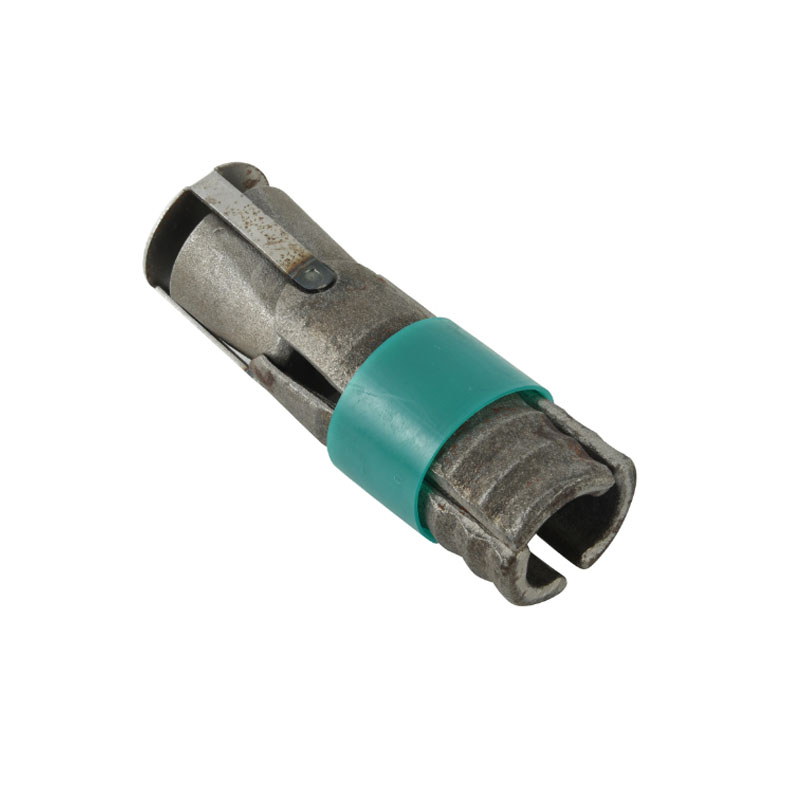
What actually separates a dependable expansion shell bolt supplier comes down to how they handle material traceability and tolerance control. Most catalogs list the same generic specs—carbon steel, zinc plating, a range of diameters—but a supplier worth relying on will show you the heat lot for every batch and won't flinch when you ask about hardness testing on the shell fingers. The weak point in these bolts is rarely the thread; it's the expansion mechanism. If the fingers are stamped inconsistently or heat-treated unevenly, they either collapse under torque or fail to grip the borehole wall. A good supplier knows this and builds their QC around the expansion behavior, not just dimensional checks.
Beyond the product itself, a dependable supplier acts like an extension of your own purchasing department. They'll tell you when a particular coating is backordered before you discover it on a jobsite, and they won't quietly substitute a lower-grade washer to hit a delivery date. That level of communication matters because expansion shell bolts are often installed in overhead or confined spaces where a failed anchor creates a safety hazard and a costly rework. You're not just buying a fastener; you're buying the supplier's ability to keep your installation schedule from becoming a rescue operation.
The third differentiator shows up after the sale. Dependable suppliers keep records long enough to support a forensic review if an anchor ever fails, and they can retrieve the original mill certificates without making you wait three weeks. They also tend to have engineers on staff who can advise on edge distance or recommend a different shell length for cracked concrete. If a supplier's response to a technical question is a PDF and a price quote, that's a sign they see the bolt as a commodity—and commodities don't get dependable when conditions get difficult.
The Material and Coating Details That Get Overlooked
Most people fixate on blade steel or handle ergonomics, yet the real story often hides in the microscopic interface between metal and environment. Take titanium nitride coatings, for instance: the gold-toned layer isn't just for looks. It subtly changes how the edge bites into cardboard or rope, reducing friction at a level you feel only after hours of repetitive cutting. When that coating wears unevenly near the tip, the knife starts behaving differently long before visible damage appears.
Powder metallurgy steels get the spotlight, but their performance hinges on something quieter: the heat treatment's ramp rates and quenching medium. Two knives with identical alloy composition can diverge wildly if one was austenitized a few degrees too hot. The overlooked detail is often the tempering cycle's duration, which trades a bit of hardness for a dramatic gain in toughness. It's why a budget knife sometimes outlasts a premium one in real-world abuse tests.
Then there are the coatings nobody mentions in marketing copy. A thin layer of diamond-like carbon can make a blade hydrophobic, but it also changes the sound of the edge slicing through paper—a crisp, almost ceramic ring. Over time, micro-chips in that coating create tiny stress risers, and a knife that once felt invincible starts showing premature edge rolling. The difference between a tool that ages gracefully and one that disappoints often comes down to whether the maker accounted for how these thin films interact with the base steel's grain structure.
Why Lead Times Are Often a Better Predictor Than Price
When buyers and suppliers negotiate, the sticker price grabs attention first, but it rarely tells the whole story. A quote that looks cheap on paper often comes with a hidden cost: a delivery window that stretches weeks beyond what the project can tolerate. In many industries, from custom manufacturing to electronic components, the quoted lead time reflects real conditions on the factory floor—machine availability, material stock, labor capacity, and backlog. Price, by contrast, can be manipulated with discounts or bundled services to win a bid, while lead time resists such smoothing. If a supplier promises a part in three days when everyone else needs three weeks, that speed usually signals either idle capacity or a desperate need for revenue—both of which carry their own risks.
Lead times also act as an early warning system for market shifts. When demand spikes, prices may lag because contracts are locked in or competitors hesitate to raise rates, but delivery dates slip almost immediately. A buyer who tracks supplier lead times across a category can spot tightening supply before it shows up in a cost increase. This is especially true for made-to-order goods: a growing gap between order date and ship date means the supplier is oversubscribed, and quality or communication may soon suffer. Price can stay flat while lead times double, giving observant buyers a head start to secure alternatives or adjust project timelines.
Finally, lead time is harder to fake in the long run. A supplier can advertise a low price to attract inquiries and then pad the quote with rush fees or change orders, but a promised delivery date is a commitment that gets tested on every order. Repeated misses destroy trust faster than a slightly high invoice ever could. Buyers who negotiate primarily on price often find themselves paying more in expedited shipping, production downtime, or canceled customer orders. Those who treat lead time as a core metric build supply chains that absorb shocks instead of amplifying them.
How to Read Client Reviews Without Falling for the Highlights
Most people skim reviews and only absorb the glowing sentences, but that’s how you end up disappointed. Instead of focusing on whether a reviewer said “amazing” or “best ever,” pay attention to the specific scenarios they describe. Did they mention a long wait, a confusing process, or a particular staff member? Those concrete details are far more telling than generic praise, because they reflect actual experiences rather than emotional reactions.
Look beyond the first page of reviews too. High ratings often rise to the top because of timing or a single viral moment, but the quieter, middle-of-the-road feedback can reveal patterns. If three separate people mention that “the photos looked better than reality” or “the return policy was awkward,” that’s a signal worth weighing more heavily than ten five-star comments that simply say “great job.” Consistency of specific complaints matters more than isolated enthusiasm.
And don’t trust reviews that read like marketing copy. Real clients rarely say things like “best decision I ever made, five stars across the board!” without some hesitation or a minor caveat. Watch for reviews that mention both a positive and a slight negative — those are usually the most honest. Also check the reviewer’s history if possible: someone who only ever posts one glowing review for a business may be connected to it, while a long-time reviewer with mixed feedback is more credible.
Thread Standards and Certifications Worth Asking About Upfront
Most shops can rattle off a list of thread standards, but the ones that matter depend entirely on where the part ends up. A metric ISO thread might be perfect for a machine sold in Europe, while a UNJ or NPT profile is non-negotiable for aerospace or fluid systems in North America. Rather than assuming a supplier knows the difference, ask which specific standard they actually cut to—and whether they can show the corresponding gauge or inspection record.
Certifications get thrown around loosely, too. ISO 9001 is a baseline for quality management but says little about thread competency. Look for evidence tied directly to the thread itself: calibration records for ring and plug gauges, material certs for the cutting tools, or first-article inspection reports that call out pitch diameter and lead error. If a vendor can't produce those on request, that's a stronger signal than any wall of certificates.
It's also worth clarifying how they handle borderline cases. Some shops will ship threads that are technically within tolerance but sit near the limit, which can cause assembly grief later. Ask about their acceptance criteria for no-go gauges, and whether they routinely check functional size rather than just measuring a few spots. A short conversation upfront beats a box of rejected parts after plating or heat treat.
What Hidden Costs Look Like in Expansion Shell Bolt Quotes
A quote that seems competitive at first glance often hides costs in the fine print around testing, certification, or minimum order quantities. For example, a supplier might list a low per-unit price but require you to purchase a full production run before any samples are shipped. That sample fee, sometimes labeled as a “tooling setup” or “engineering review,” can add hundreds of dollars without delivering a single usable bolt.
Another common hidden cost appears when the quoted material doesn’t match the actual application environment. A standard carbon steel shell might be priced attractively, but if your installation requires corrosion resistance or high-temperature strength, the quote quietly shifts to a premium alloy only after you’ve committed to the initial quote. Freight, import duties, and special packaging for oversized or non-uniform lengths are also frequently excluded until the final invoice arrives.
Watch for vague language around compliance and liability. If the quote doesn’t explicitly state which international standards the bolts will meet, or whether third-party inspection is included, you could end up paying for rework, rejected batches, or on-site replacement labor. A true comparison requires asking for a line-item breakdown that separates raw material, machining, heat treatment, coating, and documentation costs—otherwise the “lowest price” is simply the one with the most cleverly buried extras.
FAQ
They use a tapered plug design that expands the shell evenly against the borehole wall. The steel grade and heat treatment are chosen to handle high pull-out loads without deforming, which is why they are often used in concrete and rock anchoring.
Yes, we regularly produce non-standard lengths and metric or imperial threads. Send your specification and we'll confirm the lead time. For smaller quantities, there may be a small setup fee, but it's usually waived for repeat orders.
They perform reliably in solid concrete, natural stone, and some types of masonry. Avoid hollow blocks or very soft brick unless you are using a screen tube or resin hybrid, because the shell needs enough compressive strength to grip.
Every shipment includes a mill certificate for the steel and a conformance report with torque and pull-out test results. We can also arrange third-party inspection if your project requires it.
Start with the load requirement and the thickness of the fixture being fastened. As a rule, embedment depth should be at least 5 times the bolt diameter in concrete. Our technical team can review your drawings and suggest a size, but final confirmation should come from a structural engineer.
For standard sizes, we usually ship within 10–15 days after deposit. Custom threads or special coatings may add another 7–10 days. We keep common sizes in stock for urgent orders, so ask about current availability.
Yes, we offer zinc plating, hot-dip galvanizing, and stainless steel grades like 304 and 316. For marine or chemical environments, 316 with a passivation treatment is the best choice, but it costs more and may have a longer lead time.
Absolutely. We provide a one-page installation guide with each order, including recommended hole diameter, depth, and torque range. If your crew is unfamiliar with shell bolts, we can also share a short video or set up a call with our engineer.
Conclusion
Finding a top expansion shell bolt supplier is rarely about glossy brochures or the lowest sticker price. The suppliers worth your time are the ones who can explain why a specific steel grade, heat treatment, or coating—like hot-dip galvanizing versus zinc flake—actually matters for your rock conditions and humidity. They won't just quote a lead time; they'll break down how raw material availability, thread rolling, and final inspection affect the schedule, because a supplier that delays without warning will cost you more than a slightly higher per-unit rate. Ask for their thread standard certifications upfront—ISO 898, ASTM F432, or EN 14399—and don't accept vague assurances. Look at their client reviews for mentions of how they handled a late shipment or a non-conforming batch, not just the five-star headline quotes.
The difference between a dependable supplier and a costly mistake often hides in the fine print. Quotes that look cheap can quietly exclude testing fees, packaging, or export documentation, and a supplier that charges extra for a certificate of conformance or a simple dimensional report isn't doing you any favors. Lead times are a better predictor of reliability than price because a supplier with a clear, realistic schedule usually has its production and logistics under control, while one that promises overnight delivery may be cutting corners. When you're ready to choose, focus on the supplier that answers your technical questions directly, shares batch-level test data, and treats a deviation in thread tolerance as seriously as you would on site. That's what keeps your next project anchored without surprises.
Contact Us
Contact Person: Paul
Email: [email protected]
Tel/WhatsApp: 8615067447509
Website: https://www.spironcasting.com