

Top Pressure Vessel Designs for Industrial Applications
2026-10-08
Choosing the right pressure vessel design can make or break your industrial process—too often, teams settle for generic configurations that underdeliver on safety and efficiency. In this post, we’ve distilled the most effective pressure vessel designs from real-world applications, from compact high-pressure reactors to heavy-wall separators. Whether you’re upgrading an existing system or specifying a new one, these insights will help you avoid costly missteps. And if you're looking for deeper expertise, DYE offers proven, field-tested solutions tailored to demanding industrial environments.
Spherical vs. Cylindrical: Which Pressure Vessel Geometry Actually Saves More Space?
At first glance, spheres seem like the obvious space-saver because they enclose the greatest volume for a given surface area. A spherical tank holds more with less material wrapped around it, which is why you see them for high-pressure gas storage where every square meter of steel counts. But "saving space" isn't only about material efficiency—it's about the footprint you can actually build on and how neatly vessels fit together.
Cylindrical pressure vessels with dished or hemispherical heads convert a circular cross-section into something that can be laid horizontally in a row, stacked vertically, or tucked against flat walls without wasting the gaps that spheres inevitably leave. If you lay three spheres side by side, you'll always have triangular dead zones between them. Three cylinders, on the other hand, can sit almost touching along their length, making far better use of rectangular plots or skids. That's why refineries, chemical plants, and gas storage terminals usually favor cylinders even though their wall thickness must be slightly higher for the same pressure and volume.
The real answer hinges on installation context. For a single isolated vessel in an open yard, a sphere may reduce the overall height or diameter needed, but once you need multiple units, access aisles, piping, and maintenance clearance, cylinders tend to win on usable floor area. High-pressure hydrogen or CNG tube trailers, for example, bundle slender cylinders into a rectangular envelope that fits standard truck beds, while a spherical vessel of equal total volume would be taller and wider, forcing awkward transport and anchoring arrangements.
Why Multi-Layer Wall Construction Is Quietly Changing High-Pressure Storage
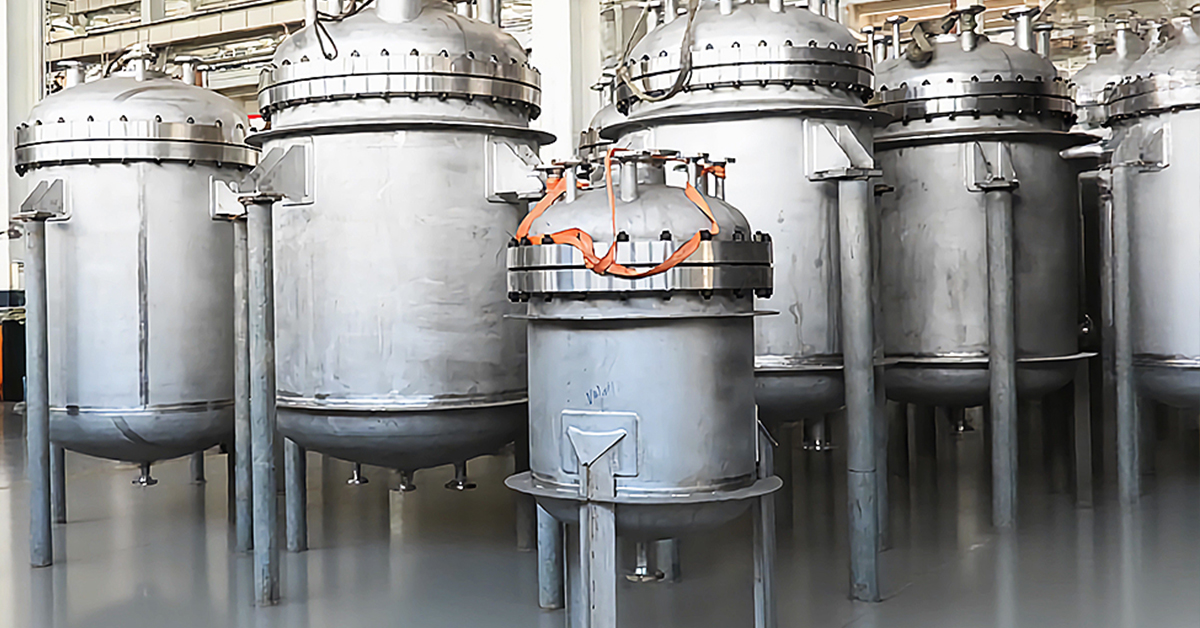
For decades, high-pressure storage relied on thick, single-wall steel or composite vessels that traded weight for strength. But the shift toward multi-layer wall construction is rewriting that equation. By wrapping or bonding multiple thinner layers—each tuned to handle specific stress directions—engineers can distribute internal pressure more evenly, reducing weak points that plague monolithic designs. The result isn't just a lighter tank; it's a vessel that fails more predictably, and often more gracefully, under extreme conditions.
What makes this approach quietly revolutionary is how it sidesteps the usual trade-off between capacity and portability. A single-wall tank must be overbuilt along its entire surface to accommodate peak stress at the joints and end caps. Multi-layer systems, in contrast, allow each layer to be optimized independently: an inner liner for chemical compatibility, a middle layer for hoop stress, and an outer wrap for impact resistance. This layering mimics natural structures like bamboo or arterial walls, where graduated stiffness prevents catastrophic rupture. It's a shift from brute-force material thickness to intelligent stress management.
Field data from hydrogen refueling stations and aerospace test beds shows another quiet advantage: lower inspection costs. Traditional single-wall vessels require ultrasonic scanning across every weld, but multi-layer designs can integrate sensor meshes between layers, turning the tank itself into a monitoring device. Early adopters in remote energy storage are finding that these vessels not only survive pressure cycling better but also degrade in ways that are detectable long before failure. The change isn't loud—it's buried in the wall—but it's reshaping how we think about storing energy under pressure.
How Thermal Stress Testing Prevents Catastrophic Vessel Failures
Thermal stress testing subjects pressure vessels to repeated heating and cooling cycles that mimic years of service in days. By forcing the metal to expand and contract under controlled conditions, inspectors can spot micro-cracks, weld flaws, and uneven thickness variations that remain invisible during routine hydrostatic checks. These flaws often start small but grow quickly when a vessel experiences sudden temperature shifts in real operation.
Catastrophic failures rarely happen without warning signs. Thermal gradients along a vessel wall create localized stress risers, especially near nozzles, flanges, and support lugs. Cyclic thermal testing pushes these weak points past their elastic limit in a safe environment, causing incipient cracks to open just enough for ultrasonic or dye-penetrant inspection. Removing or repairing such vessels before they return to service eliminates the chance of brittle fracture during a cold startup or thermal shock.
Unlike a single high-pressure burst test, thermal stress testing reflects actual operational reality where temperature swings are the primary driver of degradation. A vessel that passes a room-temperature pressure test may still fail after three winters of intermittent heating. By combining thermal cycling with periodic non-destructive evaluation, plant operators gain a clear picture of remaining life and can retire equipment before it reaches a dangerous state. This approach has sharply reduced incidents tied to thermal fatigue in refineries and chemical processing plants.
Horizontal or Vertical? A Field Engineer's Take on Vessel Orientation
Most spec sheets leave vessel orientation as an afterthought, but out in the field it dictates how you rig, pipe, and even troubleshoot. Horizontal vessels might seem like the default for skid-mounted packages, yet vertical units often save your back when dealing with tight well pads or solids-heavy production. I’ve lost count of the times a client insisted on a particular orientation from a P&ID, only to find the field layout made it impossible to drain properly or access level bridles without a ladder and a prayer.
The real deciding factor usually comes down to process behavior, not aesthetics. Gas-liquid separation favors horizontal vessels when you have high liquid loading or foamy crude that needs residence time. Vertical vessels shine when you’re dealing with small liquid volumes, high gas flow, or when you need a small footprint and natural gravity-driven liquid dump. I’ve seen vertical separators outperform horizontals in slug-heavy flow simply because the internals can be arranged to handle momentum better without blowing liquid out the top.
Then there’s the maintenance angle nobody likes to talk about. A horizontal vessel with a removable bundle looks great on paper until you realize you need 20 feet of clearance in front for tube pulling. Vertical reboilers and knockouts can often be cleaned in place with less downtime, but you’ll curse the day you need to replace a bottom head gasket with limited headroom. Orientation is a trade-off, and the best choice usually comes from standing next to the vessel, not from a CAD screen.
Composite Materials Are Rewriting the Rules for Corrosive Industrial Environments
Industrial facilities handling acids, chlorides, and aggressive solvents have long struggled with steel and concrete degradation. Corrosion eats away at structural integrity, drives up maintenance budgets, and forces costly shutdowns. Composite materials flip that script entirely. By combining high-strength fibers with resilient resin systems, these engineered solutions resist chemical attack at the molecular level. Piping, tanks, scrubbers, and structural profiles made from fiberglass-reinforced plastic or carbon fiber composites shrug off environments that would pit stainless steel within months. The result is longer asset life, fewer unplanned repairs, and a fundamentally different approach to designing for harsh chemical service.
Design flexibility is another quiet advantage composites bring to corrosive settings. Unlike traditional metals that must be welded, coated, or lined to survive, composite components can be molded with corrosion resistance built directly into the material matrix. Complex shapes, integrated flanges, and custom liners come out of the mold ready for duty. No post-fabrication coatings to chip or crack. No welds that create weak points. Engineers can tailor the laminate schedule, resin type, and fiber orientation to match the exact chemical exposure, temperature range, and pressure loads of each application. This moves corrosion protection from an afterthought to a core design parameter.
Lifecycle economics tell a compelling story as well. Upfront material costs for composites can sometimes exceed carbon steel, but total cost of ownership often reverses that equation within a few years. Reduced inspection frequency, elimination of repainting and recoating, lower installation weight, and longer replacement intervals translate into direct savings. Plants that adopt composite equipment typically report fewer leaks, less downtime, and improved safety for workers who no longer face constant exposure to corroded structures. In an era where operational reliability and environmental compliance carry heavy financial consequences, composite materials provide a practical way to rewrite the old rules of corrosion management.
What Pressure Vessel Codes Really Mean for Day-to-Day Plant Operations
Pressure vessel codes often get treated as a design-and-fabrication hurdle, but their real weight lands on the daily routines of operators and maintenance crews. Once a vessel is stamped, the code doesn't disappear—it sets the boundaries for allowable pressures, temperatures, and inspection intervals that shift how shifts are run. A plant might have a vessel rated for 150 psi at 400°F, and that number quietly dictates which gaskets get ordered, how often relief valves get pulled, and whether a weekend startup can be pushed without flagging an overpressure scenario.
For maintenance teams, the codes translate into paperwork that outlives any single repair. Weld repairs on a coded vessel aren't just a quick patch; they require qualified procedures, documented material traceability, and often a hydrostatic test before the vessel can return to service. What looks like a two-day job can stretch into a week because the code demands a level of record-keeping that production schedules rarely account for. Over time, plants learn to treat the code book less as a legal requirement and more as a maintenance calendar—predicting when thinning, corrosion, or fatigue will force the next shutdown.
On the operations side, the biggest hidden cost is training and consistency. A shift supervisor who doesn't understand why a particular relief valve setting can't be adjusted upward "just this once" can create a compliance finding that takes months to close. Codes also influence how operators respond to alarms: a high-temperature excursion isn't just a process upset if it exceeds the vessel's design limits, because it may trigger a fitness-for-service review before the equipment can run again. In day-to-day terms, pressure vessel codes turn invisible engineering margins into concrete rules that shape every startup, shutdown, and maintenance window.
FAQ
High-temperature service demands careful material selection, usually chrome-moly steels or stainless grades that retain strength without excessive creep. The vessel also needs thermal expansion allowances, such as sliding saddles or expansion bellows, and often internal refractory linings to shield the shell from direct flame or hot reactants. Nozzle reinforcement and weld details must be designed to avoid high local stresses that accelerate creep cracking.
A sphere distributes internal pressure uniformly across its shell, so for the same volume and pressure it requires roughly half the wall thickness of a comparable cylinder. That translates into less steel, lower fabrication cost at very large capacities, and reduced foundation loads. Spheres also have no end caps, eliminating the stress concentration found at cylinder-to-head transitions.
Composite vessels use a thin metal or polymer liner wrapped with high-strength fibers like carbon or glass in a resin matrix. They are significantly lighter than all-steel tanks, which matters for portable or aerospace applications. The trade-offs include higher inspection complexity, sensitivity to impact damage, and design limits at elevated temperatures where the resin can lose strength.
FEA allows designers to model localized stresses around nozzles, supports, and discontinuities that simplified code formulas cannot capture precisely. It helps optimize thickness, avoid fatigue hotspots, and validate designs for complex loading combinations like wind, seismic, and thermal cycling. Many codes now accept FEA results as a basis for design when conventional methods are overly conservative or not applicable.
Material toughness is the first line of defense, usually requiring impact-tested carbon steel or austenitic stainless steel. Design details include avoiding sharp corners and sudden thickness changes, using full penetration welds with controlled heat input, and specifying post-weld heat treatment to relieve residual stresses. Supports and attachments are often isolated or shaped to minimize restraint that could promote crack propagation.
A fixed tubesheet design bolts both tube sheets to the shell, making it simple and cheap but vulnerable to thermal expansion mismatch between shell and tubes. A U-tube design uses a bundle of U-shaped tubes with only one tubesheet, allowing the tubes to expand and contract freely, which suits services with large temperature differentials. The U-tube bundle is also easier to remove for cleaning, though individual tube interiors are harder to access.
A jacket provides uniform heating or cooling over the vessel wall without taking up internal space, making it ideal for processes that need consistent temperature control or have viscous contents where internal coils would foul. It is often chosen when the reaction is highly exothermic and needs a large heat transfer area, or when the product must be easily drained with no internal obstructions. Jacketed vessels also simplify cleaning and inspection of the inner shell because the interior remains smooth.
Conclusion
In practice, the choice between spherical and cylindrical pressure vessels rarely comes down to a simple rule of thumb. Spheres handle internal pressure with less wall thickness and a smaller footprint for a given volume, but they cost more to fabricate and are harder to fit into existing plant layouts. Cylindrical shells, especially with dished ends, often win on accessibility and ease of support. What has shifted recently is the quiet adoption of multi-layer wall construction for high-pressure hydrogen and ammonia storage. Instead of relying on one thick forged shell, these designs wrap several thinner layers that share stress more evenly. This not only reduces the risk of brittle fracture but also allows for tighter control of material defects during fabrication. Thermal stress testing has become the gatekeeper that separates a proven design from a theoretical one. By cycling vessels through temperature extremes while monitoring strain gauges, engineers catch weld weaknesses and residual stresses before they turn into field failures.
Field engineers often debate horizontal versus vertical orientation more than any code committee. Horizontal vessels simplify access to internals like demisters and distribution trays, while vertical units drain liquids more predictably and take up less plot space. In corrosive chemical service, composite materials have moved from experimental liners to full load-bearing shells. Fiber-reinforced polymers and thermoplastic-lined steel now survive acids and chlorides that would eat through stainless steel in months. However, none of these design choices mean much without a grounding in pressure vessel codes. In day-to-day plant operations, code compliance doesn't just dictate wall thickness or hydrotest intervals; it shapes shutdown planning, inspection routes, and even how operators respond to minor leaks. A well-designed vessel that fails its code audit can cost more in downtime than a conservative one that passes every cycle.
Contact Us
Contact Person: Ada Xu
Email: [email protected]
Tel/WhatsApp: 0577-86806088
Website: https://www.dayuwz.com/