

Top Roller Conveyor Shot Blasting Machine Company for Reliable Industrial Surface Prep
2026-08-20
What really separates a top roller conveyor shot blasting machine company from the rest? It's rarely just the machine. Behind every reliable industrial surface prep line is a builder that understands your production pressures, not just your specs. That's the standard PuHua holds itself to. If you're tired of equipment that underdelivers or suppliers that disappear after the sale, this guide breaks down what actually matters before you commit.
How Roller Conveyor Shot Blasting Eliminates Manual Handling in Heavy Fabrication
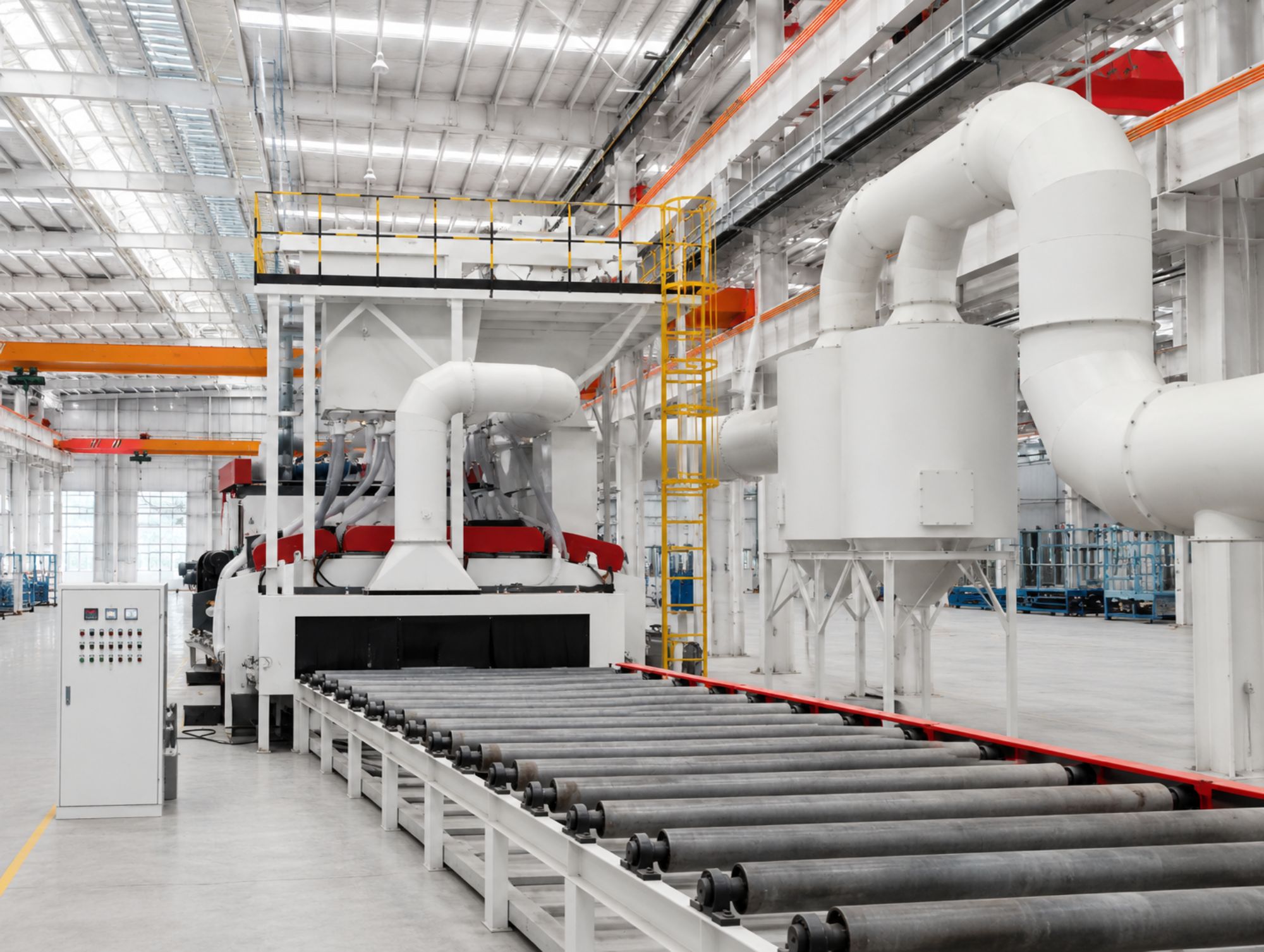
In heavy fabrication shops, moving a multi-tonne welded assembly through surface preparation has always meant overhead cranes, forklifts, and a full crew for slinging, flipping, and repositioning. Roller conveyor shot blasting changes that workflow at its core: the workpiece travels from the upstream cutting or welding station straight onto powered rollers, passes through the blast cabinet without being lifted again, and exits onto a take-away conveyor. The steel never touches the floor, and the manual handling that once dominated the process largely disappears.
Removing operators from the load path does more than speed things up. It eliminates the pinch points, suspended-load hazards, and repetitive strain injuries that are common when fabricators wrestle awkward heavy parts into fixed blast rooms. The conveyor feed also keeps the dwell time under the blast wheels consistent, so coverage on deep welds, stiffener plates, and internal corners becomes repeatable rather than dependent on how carefully a worker angles the part.
Modern systems add features that push this even further: variable-frequency drives match roller speed to part length and weight, mechanical or laser centering devices align skewed assemblies, and the blast parameters adjust automatically based on the profile of the incoming workpiece. That means the same line can handle an H-beam, a bridge girder segment, or a welded excavator frame without manual reconfiguration between jobs. For fabricators dealing with plate thicknesses from 10 mm to over 100 mm, the result is a continuous flow from welding booth to finishing line, with forklifts and cranes reserved for loading once at the start and unloading at the end.
Design Features That Keep Abrasive Velocity Consistent Over Long Runs
The heart of steady abrasive delivery lies in the blast pot’s internal geometry. Rather than relying on simple conical hoppers that allow media to compact unpredictably, advanced systems use a series of shallow angle transitions and a fluidizing membrane at the base. This membrane introduces a controlled air stream directly into the media column, breaking up bridging and rat-holing before they can form. The result is a dense, uniform flow into the metering valve, where a hardened orifice and a spring-loaded plunger work together to pinch off fluctuations. Even as the pot level drops from full to nearly empty, the pressure differential across the orifice stays within a few percent, keeping particle exit speed from creeping upward or sagging mid-blast.
A second layer of consistency comes from the abrasive metering valve’s feedback mechanism. Instead of a fixed opening that assumes constant media density, some designs incorporate a small pressure sensor just downstream of the valve. When the sensor detects a slight drop in line pressure—often caused by a momentary clump of fine abrasive—the valve’s actuator nudges the plunger a fraction of a millimeter wider. Conversely, if the media runs lean and line pressure spikes, the opening tightens. This closed-loop trimming happens several times per second, invisible to the operator but crucial for keeping nozzle velocity steady over a six-hour shift. Without it, even premium garnet or aluminum oxide will produce a sawtooth pattern of fast and slow impacts on the workpiece.
Hose and nozzle design also play a quiet but decisive role. Long runs generate heat from friction, and heat softens standard rubber hoses, causing internal diameter to swell and velocity to fall. To counter this, premium blast systems use a dual-layer hose with a thin, ceramic-lined inner sleeve that resists both wear and thermal expansion. At the nozzle end, a tapered bore—rather than a straight cylinder—acts as a final accelerator, smoothing out any residual turbulence from the hose. The taper angle is matched to the abrasive’s hardness and particle size distribution, so the media exits in a tight, predictable cone instead of a ragged spray. These design choices may seem minor on a spec sheet, but over a ten-hour production run, they are what separate a consistent anchor pattern from one that drifts outside the customer’s tolerance band.
Matching Machine Settings to Surface Cleanliness and Anchor Profile Requirements
Surface preparation rarely succeeds with a one-size-fits-all machine setup. The target cleanliness level—whether it is a light brush-off, commercial, or near-white metal blast—dictates how aggressive the abrasive stream needs to be, and the anchor profile requirement sets a separate constraint for tooth depth and peak density. Operators who simply run the same nozzle pressure and traverse speed for every job often end up reworking areas that are either too smooth for coating adhesion or too deeply pitted for the specified film thickness.
A practical way to align machine settings with the specification is to first verify the desired surface profile using replica tape or a digital depth micrometer, then adjust abrasive size and air pressure in small increments. Coarser grit at moderate velocity tends to produce a deeper, more irregular anchor pattern, while finer media at higher speed can achieve a similar cleanliness with a shallower profile—ideal when the coating system calls for a thin primer. Keep the blast angle between 60 and 75 degrees to the surface, and maintain a consistent standoff distance; these two variables often matter more than raw pressure.
On large steel structures, the same settings may need tweaking between horizontal plates and vertical stiffeners because gravity affects abrasive dwell time. A quick test patch on each orientation, checked against visual cleanliness standards and a profile comparator, saves hours of rework later. Record the final parameters for each substrate type and ambient condition, but do not treat them as sacred—humidity, hose length, and even nozzle wear can shift the result enough to warrant a fresh calibration before the next shift.
Why Variable-Speed Conveyors Outperform Fixed-Speed Systems on Mixed Jobs
On lines that handle a mix of large and small items, a fixed-speed belt rarely sits at the right pace. Run it fast enough for heavy loads and lightweight packages bounce or shift; slow it down for fragile pieces and the whole line backs up. Variable-speed conveyors solve this by letting operators or sensors set the belt speed to match the current load profile, so the line moves as quickly as conditions allow without sacrificing control.
The real advantage shows up in energy use and wear. A fixed-speed motor works at full RPM even when the belt is nearly empty, burning power and putting unnecessary cycles on bearings and rollers. With a variable-speed drive, the motor only draws what the moment demands — a nearly empty section can idle at a lower speed, then ramp up when a batch of dense parts arrives. This not only cuts electricity costs but also extends component life because there are far fewer hard starts and abrupt stops.
Mixed jobs also tend to produce uneven material flow, which can cause jams at transitions or chutes if everything arrives at one constant speed. Variable-speed control lets you fine-tune acceleration and deceleration zones, so items merge smoothly instead of piling up. In recycling facilities and distribution centers, that often means fewer manual interventions and a steadier throughput across shifts, even when the product mix changes hour to hour.
Reducing Downtime Through Smart Media Recovery and Dust Collection Layouts
Smart media recovery keeps the blasting or finishing line moving by returning spent abrasive to the hopper without manual shoveling or bucket transfer. When the reclaim path is matched to the actual media flow, operators spend less time clearing jammed screens and more time running parts. A well-tuned recovery loop also prevents the feed rate from dropping mid-shift, which is a common hidden cause of unscheduled stops.
Dust collection layouts matter just as much as the collector itself. Positioning pickup points close to the dust source, using straight duct runs, and avoiding long horizontal sections reduce the load on filters and fans. That means fewer filter changes, less pressure drop drift, and no mid-production alarms from clogged bags. Adding pulse-cleaning schedules tied to actual pressure readings rather than fixed timers keeps the system breathing longer between service intervals.
The biggest downtime gains come when recovery and dust extraction are designed as one path instead of two separate add-ons. In a blast room, for example, floor reclaim pulls heavy media toward a separator while the dust collector pulls fines from the same air stream. That stops fine particles from recirculating into the media mix, which protects both finish quality and reclaim components. The result is fewer cleanouts, fewer worn-part replacements, and fewer surprise shutdowns during peak runs.
What to Look for in a Builder’s Track Record Before You Commit
A builder’s past projects reveal far more than a polished portfolio. Start by asking for a list of homes completed in the last three to five years, then visit a few in person if possible. Look closely at the finish work—uneven trim, sloppy caulking, or mismatched grout lines often signal rushed subcontractors or weak oversight. Talk to the homeowners, not just the sales agent; ask how the builder handled punch-list items, delays, and unexpected cost overruns. Real accountability shows up in how problems were resolved, not in a spotless walkthrough on day one.
Beyond fit and finish, dig into the builder’s financial stability and legal history. A track record dotted with liens, unresolved warranty claims, or frequent LLC name changes should raise immediate red flags. Check public records for lawsuits involving construction defects or unpaid suppliers—these patterns often repeat. Also look at how many homes the builder delivered on time versus how many slipped by months. A builder who consistently finishes late isn’t just inconvenient; it can signal poor scheduling, undercapitalization, or too many concurrent projects, all of which put your build at risk.
Finally, examine the builder’s relationship with local subcontractors and inspectors. Builders who have worked with the same framing crews, electricians, and plumbers for years tend to produce more consistent quality, because those trades trust the builder’s process and payment reliability. Ask whether the builder holds pre-drywall walkthroughs or third-party inspections as a standard practice. A willingness to open the walls for independent review—not just the minimum code check—shows confidence in the work. If a builder dodges questions about their past or offers only vague references, treat that silence as the most telling part of the track record.
FAQ
Most designs include adjustable roller speed and blast wheel positioning. Operators can fine-tune these settings so thin sheets receive a gentler pass, while thicker sections get longer exposure without warping or excessive wear on the conveyor.
Steel fabrication shops, shipyards, pipe coating facilities, and heavy machinery manufacturers are common users. Any operation that needs to remove mill scale, rust, or old coatings from flat or slightly profiled parts before welding or painting benefits from this method.
Reliable surface prep equipment is a long-term investment. A supplier with years of field experience understands material handling quirks, wear patterns, and blast media efficiency, which reduces downtime and maintenance headaches later.
Yes, most roller conveyor models are designed for inline integration. They can be positioned between cutting and coating stations, using existing material handling systems to keep throughput steady without adding extra labor.
Regular inspection of blast wheels, conveyor rollers, and abrasive recycling separators is key. Worn blades and misaligned rollers cause uneven cleaning and premature wear, so scheduled replacements based on operating hours prevent costly unplanned stops.
Spent abrasive and removed contaminants fall through a floor grate, then pass through a screw or vibratory conveyor to an elevator. A separator splits reusable media from dust and fines, sending clean abrasive back to the blast wheels while exhausting fines to a dust collector.
Depending on the abrasive type and blast wheel speed, profiles from light brush blasting to deep anchor patterns are possible. This flexibility lets one machine handle both thin gauge panels and thick structural members.
Modern systems often include variable frequency drives on blast wheels and conveyors, plus efficient dust collection with automatic pulse cleaning. These features adjust energy use to match actual load, which lowers operating costs without sacrificing cleaning quality.
Conclusion
Roller conveyor shot blasting changes how heavy fabrication shops handle large steel sections, plates, and weldments. Instead of relying on overhead cranes or manual positioning, the work moves through the blast zone on driven rollers, which eliminates most of the lifting and turning that slows down production. The best builders pay attention to wheel placement and abrasive control so velocity stays consistent even on 60-foot or longer lines—this matters because uneven blasting leads to patchy profiles and costly rework. A top company tunes each machine to the actual surface cleanliness and anchor profile you need, whether that’s a quick sweep blast for mill scale or a deep profile for protective coatings.
Variable-speed conveyors add real value when a shop runs mixed jobs: thin sheet can move faster to avoid warping, while thick castings creep through for a deeper etch. Downtime gets reduced through smart media recovery and dust collection layouts—good builders separate fines from reusable shot continuously and position pickup points so dust never chokes the cabinet. Before you commit, look at a builder’s track record with similar-sized projects. Ask about machine uptime, replacement part lead times, and how they handle installation and training. A company that has delivered dozens of working lines in heavy fabrication will give you a far more reliable surface prep system than one that only quotes impressive specs.
Contact Us
Contact Person: Bruce
Email: [email protected]
Tel/WhatsApp: +86 15166629468
Website: https://www.povalchina.com/