

UNS N10276 Extruded Pipe Exporter Delivering Corrosion-Resistant Solutions Worldwide
2026-11-16
When corrosion is the enemy, UNS N10276 extruded pipe is the armor. From aggressive chemical processing to offshore oil and gas, this nickel-chromium-molybdenum alloy keeps systems running where lesser metals crack and fail. JILAIDA specializes in exporting these high-performance pipes to clients worldwide, but not every supplier delivers the same consistency. Here's what to look for before you place your next order.
What Makes UNS N10276 Extruded Pipe a Go-To for Acid Handling Systems
UNS N10276 stands out in acid handling because its nickel-chromium-molybdenum matrix shrugs off both reducing and oxidizing conditions. Hot sulfuric acid, hydrochloric acid with ferric ions, and phosphoric acid streams contaminated with chlorides are all handled without the pitting or crevice attack that plagues stainless steels. The alloy's low carbon content also minimizes carbide precipitation during welding, so even as-welded extruded pipe retains full corrosion resistance in the heat-affected zone.
Extrusion plays a bigger role than many realize. Forcing a heated billet through a die creates a seamless, fine-grained pipe with consistent wall thickness and no longitudinal weld seam to act as a corrosion initiation site. This microstructure improves toughness and makes the pipe less prone to cracking under thermal cycling—a common reality in acid regeneration and pickling lines. It also yields a smooth internal surface that resists fouling and simplifies cleaning.
For maintenance teams, the real payoff is predictability. UNS N10276 extruded pipe tolerates acid concentration swings, trace oxidizers, and temperature spikes without sudden failure. That reliability allows operators to extend inspection intervals and avoid frequent material replacement, which is why it remains a preferred choice for transfer piping, reactor coils, and scrubber systems across chemical processing.
Inside Our Extrusion Line, Controlling Grain Structure for Lasting Corrosion Resistance
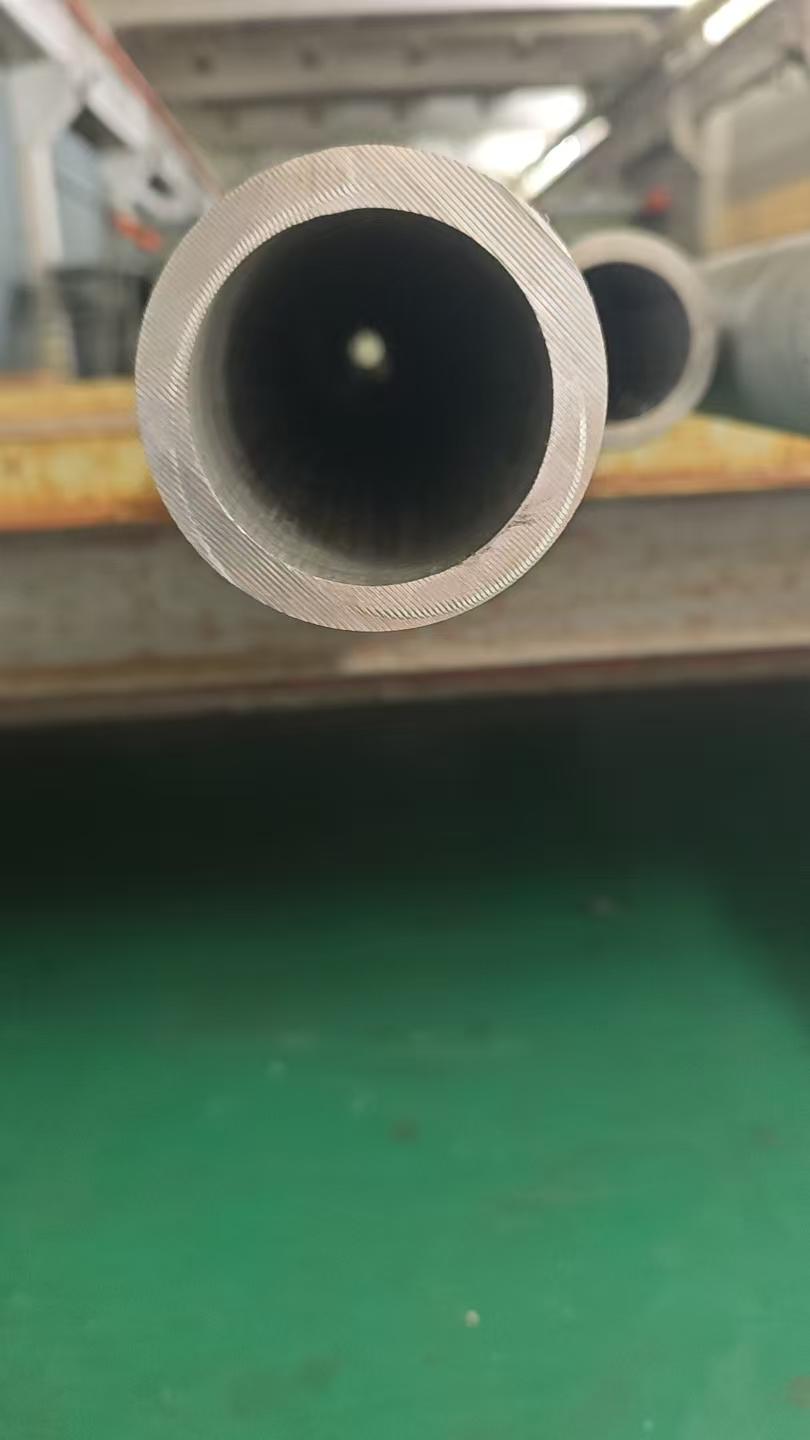
Walking the extrusion floor, you won't see a single dial left untouched. Every billet passes through a cooling zone calibrated to nudge grain boundaries into a tight, interlocking pattern. It's the kind of detail that gets lost in spec sheets, but it's exactly what keeps pitting from spreading across a railing years after install.
We don't rely on a single recipe. The press speed, quench rate, and die temperature shift with each alloy lot, matched against real-time grain size checks under the microscope. When the grains come out fine and uniform near the surface, the oxide layer stays put instead of flaking open at stress points.
That's why our corrosion tests run past the usual salt spray hours. A controlled grain structure means fewer pathways for chloride attack, and fewer surprise failures for the people bolting these profiles to coastal balconies or chemical plant walkways.
Export Logistics That Keep Your Project on Schedule and Out of Customs Delays
Every hour a shipment sits in customs is an hour your project timeline slips. That's why we map out the entire export journey before the first crate is sealed—checking tariff classifications, validating commercial invoices, and pre-clearing documentation with destination brokers. By the time your goods reach the border, the paperwork already speaks the local language, and the only surprise left is how smoothly the release goes.
We don't rely on generic routing. Instead, our team builds lane-specific plans around your delivery windows, selecting carriers and ports with proven low inspection rates for your commodity type. Real-time tracking feeds go straight to your project manager, so any potential hold gets flagged while there's still time to reroute or expedite. The result is a logistics flow that feels less like a gamble and more like a scheduled delivery—because it is.
What truly keeps delays away is the boring stuff done obsessively: harmonized codes double-checked against current rulings, certificates of origin filed days early, and packing lists that match physical reality down to the last carton. That attention to detail doesn't just clear customs faster; it prevents the kind of storage fees and demurrage charges that quietly wreck budgets. Your project stays on track, and your cargo doesn't become a case study in what went wrong at the border.
Getting the Right Wall Thickness and Diameter Without Paying for Unused Alloy
Start by mapping the actual pressure and flow requirements of your application before committing to a stock tube size. Often, a slight reduction in outer diameter combined with a carefully calculated minimum wall thickness can drop material weight by double digits without sacrificing burst ratings or fatigue life. This is where custom drawn tubing earns its keep: you pay only for the alloy that stays in the finished part, not the excess that would later be machined away.
Look closely at the tolerances your design truly needs. Standard mill tolerances on wall thickness and diameter are frequently tighter than necessary, and requesting tighter-than-needed specs drives up cost and lead time while adding no functional value. By matching tolerance bands to real operating conditions, you avoid paying a premium for precision that never gets used. Many suppliers will also offer cold drawing or pilgering to hold a near-net size, so secondary boring or turning is eliminated entirely.
Finally, treat scrap as a design variable. A tube that arrives one millimeter oversized in wall may look harmless, but across a production run that extra alloy becomes tons of waste. Work with your tube mill to specify a size that allows a clean finish pass rather than a roughing operation, and ask about off-the-shelf hollows that already sit close to your finished dimensions. The goal is simple: buy the wall thickness and diameter your part needs, and leave the unused alloy at the mill.
Why Our Testing Goes Beyond the Paperwork Other Exporters Rely On
Most exporters stop at a certificate. They assume a lab report from a third party means the product is fine, so they file it away and never look closer. We don't work that way. Our testing starts where the paperwork ends, because a piece of paper can't tell you how a batch behaves after three weeks in a humid container or how it holds up when a customer uses it daily for six months.
Every shipment we send out gets pulled from the actual production run, not a pre-approved sample that was hand-picked weeks earlier. We run those units through conditions that mimic real-world abuse: temperature swings, vibration, rough handling, and repeated cycles that go beyond standard checklists. If something fails, we don't just reprint a report. We dig into the root cause, fix the process, and retest until the whole batch meets the same bar.
That's why our defect rate stays under half a percent while others quietly accept two or three percent. The paperwork they rely on gives a snapshot. We test for the full journey, so what lands in your warehouse is the same quality you signed off on.
UNS N10276 Pipe in Action Offshore, Onshore, and Everywhere in Between
Out on a Gulf of Mexico platform, salt spray coats every surface, yet the UNS N10276 piping carries corrosive produced water without a hint of pitting. The alloy shrugs off chloride-induced stress corrosion cracking that would eat through standard stainless in months, keeping production flowing through hurricane season after hurricane season.
Move inland to a chemical complex in the Rhine Valley, and the same grade handles hot sulfuric acid streams where lesser materials turn brittle within weeks. Plant engineers rely on its molybdenum and tungsten content to maintain integrity in reactors, heat exchangers, and transfer lines, turning what used to be a maintenance nightmare into a predictable, scheduled inspection item.
Beyond the usual suspects, N10276 pipe shows up in geothermal brine extraction in Iceland, flue gas desulfurization units in Poland, and even pharmaceutical waste treatment in Singapore. Each installation quietly disproves the idea that one alloy can't handle both reducing and oxidizing environments, proving that 'everywhere in between' isn't a marketing phrase—it's an operational reality.
FAQ
The alloy’s high molybdenum, chromium, and tungsten content gives it exceptional resistance to pitting, crevice corrosion, and stress corrosion cracking, so it holds up in acids and chloride-rich media.
Extrusion produces a dense, uniform grain structure that enhances mechanical strength and consistency, which translates to reliable performance under high pressure and temperature.
Yes, they ship worldwide and often handle orders for offshore platforms where seawater and sour gas demand materials that won't degrade quickly.
Most exporters stock a range from small-diameter instrument tubing to heavy-wall pipe in schedules 40, 80, and 160, and can arrange custom dimensions for specific projects.
Absolutely. Its resistance to sulfuric acid and chlorides makes it a common choice for scrubbers, ducting, and other components in FGD units.
Reputable exporters provide mill test certificates, third-party inspection reports, and traceability documents showing chemical composition, mechanical properties, and hydrostatic test results.
Chemical processing, pulp and paper, waste treatment, marine engineering, and pharmaceutical manufacturing all rely on this alloy for critical piping systems.
Many do. Besides straight lengths, they can supply cut-to-size sections, beveled ends, and pre-fabricated spools to reduce on-site welding time.
Conclusion
When handling aggressive acids and chloride-rich streams, UNS N10276 extruded pipe has become the practical choice because its nickel-chromium-molybdenum makeup shrugs off pitting and crevice attack that would sideline lesser alloys. Our extrusion process does not simply force metal through a die; it carefully manages deformation and cooling so the final grain structure stays uniform, which is what preserves corrosion resistance from the inside wall to the outside surface. That same control allows us to hold tight tolerances on wall thickness and diameter without oversizing the blank, so you pay for the alloy you actually need rather than the extra material a less disciplined mill would machine away. This way, a single lot can move from acid storage to heat exchanger piping without a second thought.
Before anything leaves the warehouse, every heat is tested beyond the standard mill certs that many exporters simply pass along. We cut samples from the extruded length itself and run corrosion, hardness, and dimensional checks so the paperwork reflects the pipe in your hands, not a generic heat number. On the logistics side, we prepare export documentation and pack containers to avoid the customs holds that quietly eat project schedules, while coordinating with forwarders who know the routes for offshore platforms, chemical terminals, and remote onshore sites. That is why the same UNS N10276 pipe ends up in subsea acid injection lines, tank farm transfer piping, and reactor cooling loops—places where a failed joint costs far more than the pipe itself.
Contact Us
Contact Person: Chenji Li
Email: 521 Zhonghui Road, Huishan Economic Development Zone
Tel/WhatsApp: +86 83112233
Website: https://www.jldnickelalloy.com/