

Water Packaging Bag Manufacturer: Quality, Safety, and Innovation in Liquid Packaging
2026-11-03
Every water packaging bag carries a promise—that what's inside stays safe, sealed, and uncontaminated. Meeting that promise demands more than just machinery; it requires a manufacturer that treats quality, safety, and innovation as one continuous process. Kody has built its reputation on this exact principle, turning liquid packaging into a precise science. If you've ever wondered what separates a premium water packaging bag from a risky one, this guide breaks down the key factors—and shows how Kody leads the way.
What Separates a Dependable Water Packaging Bag Maker
A dependable water packaging bag maker rarely announces itself with flashy claims. Instead, it shows up in the details: consistent seal strength across thousands of bags, raw materials that don't leach odd tastes into stored water, and a willingness to share batch-test results without being asked. These manufacturers treat every roll of film like it's heading to a community that has no backup supply, because often, that's exactly the case.
Look closely at how they handle the unglamorous parts—the inner layer formulation, the corner folds, the tolerance for slightly off-spec film. A reliable maker will reject a lot that another factory would ship, not because the bag would fail immediately, but because it might weaken after six months in direct sunlight. That quiet refusal is the real separator. It costs money and no one applauds it, but it's precisely what keeps clean water from turning into a logistical disaster somewhere down the road.
You can also spot them by their conversations. Instead of leading with price per unit, they ask about fill temperature, transport distance, stack height, and how the end user will open the bag. That shift in focus—from selling a product to engineering a failure-free cycle—is rare. And when problems do arise, they don't offer a coupon; they send a technician to the filling line. Dependability isn't a label they print on the carton. It's a pattern of behavior that emerges over years, and it's unmistakable once you've worked with both types.
Layering Materials to Lock in Purity and Strength
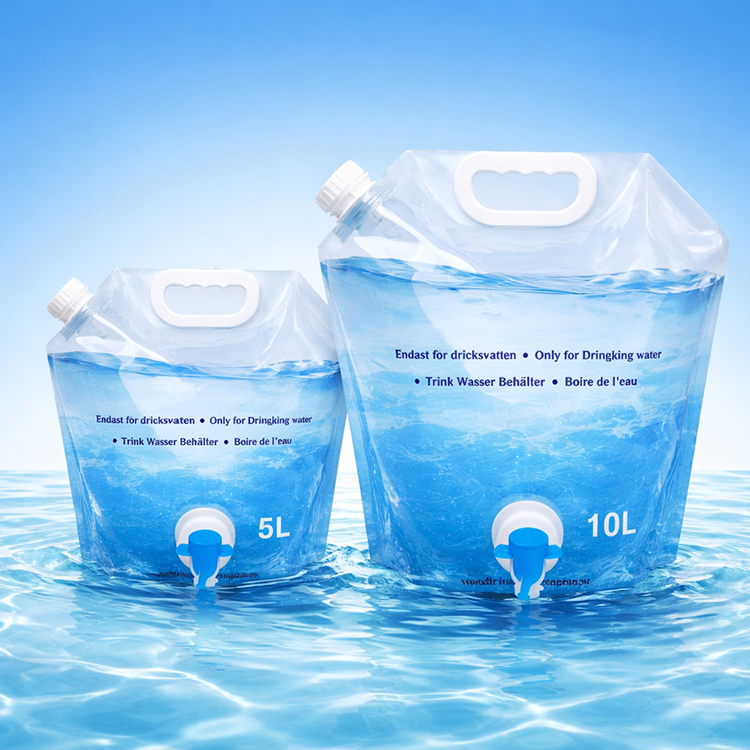
The process begins with a base layer that acts as a quiet foundation—often a dense, minimally reactive substrate chosen not for show but for its ability to hold everything else steady. Over this, a second material is applied in thin, even passes, each one sealing microscopic gaps that would otherwise invite contamination. The trick is patience: rushing this stage leaves invisible channels where impurities can creep in later, undermining the entire structure.
Then comes the binding layer, where chemistry does the heavy lifting. Rather than simply sitting on top, this coat diffuses slightly into the one below, creating a gradient rather than a hard boundary. That interlocking zone is what gives the final product its surprising toughness—stress gets distributed across millions of tiny anchor points instead of concentrating at a single seam. Even under thermal cycling or mild flexing, the layered stack holds together because no single interface is asked to do all the work.
Finally, a sacrificial outer skin takes the hits from the environment, sparing the inner layers from scratches, UV exposure, and chemical attack. This top film can be reapplied without disturbing the load-bearing structure beneath, which means long-term purity isn’t a fragile promise but a maintainable reality. The result is a composite that feels monolithic to the hand yet behaves with the quiet redundancy of a well-built wall.
From Resin to Sealed Pouch: A Walk Through the Process
The journey begins with raw resin pellets, chosen for their purity and flexibility. These tiny granules are fed into a heated extruder, where they soften and merge into a continuous molten tube. Air pressure inflates this tube into a thin, uniform bubble, which is then cooled and flattened into rolls of film. Operators monitor thickness and clarity at every stage, adjusting settings to keep the material consistent.
Next, the film moves to a slitting station, where it is cut into precise widths for pouch formation. A sealing machine folds the film and applies heat along the edges, creating strong side seams. Meanwhile, a separate line produces the zipper closure or tear notch, depending on the pouch design. These components are aligned and fused together, ensuring the seal will hold up under repeated use.
Finally, the pouches pass through a quality check, where sensors detect any microscopic gaps or weak spots. Approved pouches are stacked, counted, and slipped into outer packaging for shipment. Every batch carries a traceable lot code, linking the final sealed pouch back to the resin lot that started the entire process.
Certifications and Checks That Put Safety First
Every batch goes through a gauntlet of independent lab testing before it ever reaches a shelf. We look beyond the basics, checking for allergens, heavy metals, and microbial contamination at levels stricter than most industry standards require. The paperwork isn't just filed away—it's reviewed by our quality team and kept ready for anyone who wants to see it.
On the production floor, safety checks happen at every shift change. Equipment gets swabbed, temperatures get logged, and line workers are empowered to stop the run if something feels off. Those small, everyday decisions matter more than a single annual audit. It's why our facility holds multiple voluntary certifications that demand unannounced inspections.
We also run finished-product stability tests under real-world conditions, not just ideal storage. That means leaving samples in warm, humid environments and checking them weeks later. If a product can't hold up there, we won't ship it. No exceptions, no rushed approvals.
Tailoring Shapes, Spouts, and Films to Your Product
Every product has its own pour, seal, and shelf story. By adjusting film stiffness, gusset depth, or spout placement, you change how a pouch stands on a shelf, how cleanly it dispenses, and how it feels in a customer’s hand. A thicker laminate might protect oxygen-sensitive ingredients, while a shaped side wall can make a pouch easier to grip for children or older users.
That level of control also helps your package look less like a generic off-the-shelf option. Custom contours around a spout reduce awkward pooling, angled films improve tear paths, and matched valve geometry keeps thicker formulas moving without bursts. The result is packaging that behaves the way your product needs it to—without forcing your formula to adapt to a stock shape.
New Directions in Eco-Conscious Liquid Packaging
The shift away from single-use plastics has pushed liquid packaging into a creative phase where materials like algae-based films, molded fiber, and even edible coatings are moving from lab trials to store shelves. Rather than chasing a single universal solution, brands are matching the packaging to the liquid's specific needs—shelf-stable juices might use paper bottles with thin bio-liners, while fresh dairy alternatives lean on compostable pouches that break down in home bins.
A quieter but equally important trend is the redesign of dispensing systems. Concentrated refills in lightweight sachets, reusable aluminum bottles with standardized threads, and tap-to-refill stations in supermarkets are cutting transport weight and packaging volume without asking consumers to compromise on convenience. The focus has shifted from simply making a container recyclable to making the entire liquid delivery loop smaller, lighter, and easier to reuse.
What ties these efforts together is a move away from the old 'reduce, reuse, recycle' checklist toward a more fluid, systems-level approach. Packaging developers now talk about carbon drawdown during material production, water usage in deinking processes, and how a bottle might behave in real-world waste streams—not just in idealized lab conditions. This honesty about trade-offs is giving rise to hybrid solutions that mix recycled content, bio-based barriers, and regional refill networks, each tuned to the liquid inside and the community where it will be sold.
FAQ
Look beyond glossy catalogs and ask for documented process control. A dependable supplier will openly share their material sourcing, in-house testing frequency, and failure rate data. Check whether they run real-time seal inspection on the line, not just batch sampling at the end. Ask about their response when a pinhole leak is found in a finished lot — a strong manufacturer traces it back to the exact extrusion batch and adjusts parameters immediately.
Safety comes from layered controls, not a single certificate. Food-contact grades are verified for each resin lot using migration testing under worst-case temperature and time conditions. Many producers also run sensory panel tests to rule out off-taste or odor transfer. For drinking water, they often add a UV or ozone-compatible inner layer and validate that no monomers or additives leach beyond regulatory limits.
The workhorse structure is usually a multi-layer laminate: an outer polyester or nylon layer for puncture resistance, a middle aluminum foil or EVOH layer for oxygen and moisture barrier, and an inner polyethylene layer for sealing and food contact. For water without sensitive flavors, a simpler two-layer PE/nylon film may be enough. The choice depends on shelf life targets, fill temperature, and whether the bag must survive rough handling.
One meaningful shift is the move from flat seals to ribbed or cross-hatch sealing patterns that distribute stress more evenly. Another is the use of coextruded tie layers that prevent delamination even when the bag is dropped while cold. Some manufacturers now use laser-scored tear features that open cleanly without weakening the side seams, and spout welding has moved from hot-bar to ultrasonic methods, reducing micro-cracks around the fitment.
A single weak seal can ruin an entire pallet and damage trust with downstream buyers. Water is unforgiving because it flows through the smallest defect, so QC must catch flaws before filling. Strong lines combine inline vision systems for seal width, pressure decay testing on sealed empty bags, and periodic burst tests on filled samples. The goal is not just to reject bad bags but to identify process drift early enough to prevent them.
Yes, but customization should start with the liquid's chemistry, not just branding. Citrus-infused water may need a high-barrier film to prevent flavor loss, while still water in a short supply chain can use a lower-cost structure. Custom options include spout type and placement, handle cutouts, gusset depth for standing stability, and surface treatment for print adhesion. The manufacturer should run fill-line trials with your actual product before committing to a final spec.
Many buyers now push for mono-material polyethylene structures that are easier to recycle than mixed laminates. Others ask for downgauged films that use less resin without compromising burst strength. A few manufacturers offer post-consumer recycled content in the outer layer, though the food-contact layer still requires virgin resin. The real innovation is designing for end-of-life: clear labeling of material composition and avoiding unnecessary aluminum foil when a clear barrier will do.
Seal strength is measured by cutting a 15 mm strip across the seal and pulling it in a tensile tester, with pass values typically above 30 N per 15 mm for liquid bags. Leak resistance uses a pressure decay method: the empty sealed bag is inflated to a set pressure and held for a fixed time while sensors detect pressure drop. For filled bags, a drop test from 1.2 meters onto a hard surface is common, followed by a visual check for micro-leaks at the seal corners.
Conclusion
A dependable water packaging bag manufacturer sets itself apart through a combination of material discipline and process control. The careful layering of films serves two essential purposes: locking in purity by preventing external contaminants and delivering the structural strength needed to withstand rough handling, stacking, and long-distance shipping. The manufacturing route, which takes raw resin all the way to a sealed pouch, involves tightly regulated extrusion, lamination, and sealing steps. Temperature stability, consistent film tension, and repeated integrity checks separate a consistent supplier from one that occasionally produces weak seams. Without this attention to detail, even a well-designed film structure can fail when exposed to real-world stress.
Safety is not treated as an afterthought. It is embedded in every stage, from incoming resin qualification to final seal strength testing. Certifications and routine checks cover microbial limits, heavy metal migration, and organoleptic properties, ensuring that the inner layer remains inert when in contact with drinking water. At the same time, manufacturers are expected to tailor shapes, spouts, and film structures to fit different product formats—whether it is a stand-up pouch for a water dispenser, a narrow-neck bag for sports use, or a compact emergency pack. Increasingly, this flexibility extends into eco-conscious liquid packaging, with thinner yet tougher mono-material films, bio-based layers, and designs that reduce material waste without sacrificing hygiene or shelf life. The result is a manufacturer that balances practical reliability, regulatory compliance, and forward-looking material choices in a rapidly shifting packaging landscape.
Contact Us
Contact Person: Cindy Lee
Email: [email protected]
Tel/WhatsApp: 8613622669331
Website: https://www.dgkody.com