

Why OEM UL FM Grooved Butterfly Valves Are Essential for Reliable Piping Systems
2026-09-01
Not all butterfly valves are built the same, especially when your piping system must perform under pressure. For true reliability, OEM UL FM grooved butterfly valves—like those engineered by DRIFCO—offer certified performance that generic alternatives simply can’t match. Here’s why that distinction matters more than you think.
Certification Isn't Optional When Piping Systems Can't Fail
When a piping system carries high-pressure steam, corrosive chemicals, or fire-suppression water, there is no room for doubt in material traceability or weld integrity. Certification becomes the only language that engineers, inspectors, and insurers all trust without translation. A missed heat number or an unverified pressure rating can turn a routine audit into a shutdown—or worse, a catastrophic failure.
In critical facilities such as refineries, hospitals, and data centers, the cost of non-certified components is measured not in dollars, but in downtime, liability, and lost lives. That is why procurement teams increasingly reject “equivalent” products that lack documentation. The paper trail is not bureaucracy; it is the engineering record that proves a system was built to withstand its worst-case scenario.
The strongest differentiation comes from suppliers who treat certification as a design parameter, not an afterthought. They embed testing, marking, and third-party verification into the manufacturing workflow. For piping systems where failure is unacceptable, certified does not mean premium—it means baseline.
Grooved Butterfly Valves: No Welding, No Waiting
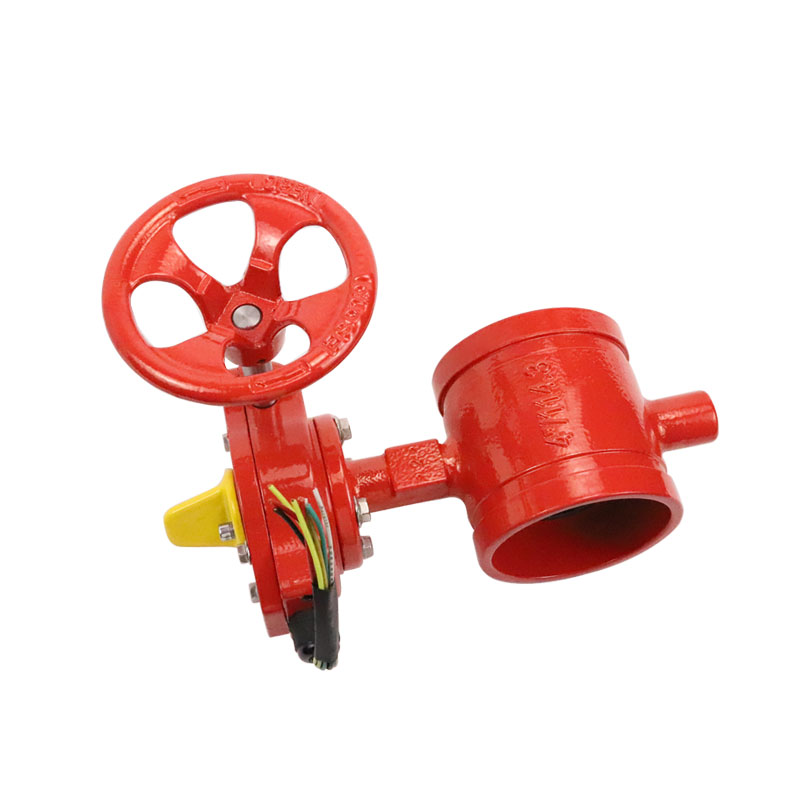
The real advantage of grooved butterfly valves shows up the moment a pipe modification is needed. Instead of scheduling a certified welder, shutting down the line for hot work permits, and waiting for inspections, a crew can cut the pipe, prep the ends, and lock the valve into place with a couple of grooved couplings. It turns a multi-day shutdown into an afternoon job.
That speed also changes how facilities handle repairs and expansions. Because there is no weld bead to clean or X-ray, the system can be back in service almost immediately after a pressure test. Maintenance teams can keep a few standard grooved butterfly valves on the shelf and swap them without relying on outside contractors, which is a practical way to avoid delays on tight production schedules.
The connection itself is designed to handle real working conditions. The grooved ends seat into the coupling gasket and create a union that allows slight movement, which helps absorb vibration and thermal expansion without transferring stress to the valve body. That means fewer leak points over time and a faster, cleaner installation than welded or flanged alternatives.
OEM Fit Matters More Than You Think
A part number match is just the beginning. What actually keeps your equipment running smoothly over thousands of hours is how well that part was designed to fit your specific machine—not just any machine from the same family. Even small differences in bushing tolerances, seal geometry, or bolt-hole alignment can change load distribution and wear patterns. In practice, this means a generic alternative might bolt up fine but quietly rob you of performance, leading to more frequent adjustments, premature seal wear, or uneven tire scrub. When the fit is genuinely OEM, those tiny critical interfaces stay within the original engineering envelope, so the component behaves as one system with the surrounding parts rather than fighting them.
Think about the places you cannot easily see: pin bores that hold grease differently, a flange face that seats against a mating surface with a specific flatness, or a dust boot whose lip must ride in a machined groove. These are not marketing details—they are measurable geometry. A slightly loose pin fit may feel acceptable on day one, but under reversing loads it hammers the bore, enlarges it, and eventually sends metal particles through the joint. That is why OEM fit is not about brand loyalty; it is about preserving the fatigue life of everything around that wear part. When every contact patch and clearance matches the original print, stress stays where it was intended, and your service intervals actually hold.
Field feedback often shows the same pattern: a machine gets a “compatible” bushing or seal kit, runs for a few hundred hours, and then develops a wobble or a leak that no one traces back to the initial part selection. The cost of that second repair—and the downtime—usually dwarfs any upfront savings. A genuine OEM fit avoids that hidden tax by keeping tolerances tight where they matter and letting the component wear predictably, not catastrophically. Before you accept a cross-reference, ask whether the supplier can show you the actual dimensional data for the critical interfaces. If they cannot, the “savings” may only be an illusion that shows up later as a bigger invoice.
Why UL and FM Approvals Change the Safety Equation
A valve carrying both UL and FM marks isn't just another component with extra stickers. It signals that an independent lab has pushed the product through fire tests, cycle tests, pressure spikes, and corrosion scenarios that most spec sheets never mention. That matters because installed fire protection isn't a collection of isolated parts; it's a chain. When a pump, a valve, and a monitor all carry dual approvals, the weak-link question largely disappears from the design conversation.
There's another shift that gets less attention: field accountability. Once an AHJ sees UL/FM-listed equipment on the drawings, the path to sign-off shortens because the review shifts from "prove this will work" to "confirm it matches the listed assembly." That change moves more of the engineering burden into the product's documented performance, and it gives owners a defensible position long after the installation crew leaves the site.
Fewer Leaks, Less Maintenance: The Hidden Payoff
Most people only think about leaks when water is already dripping onto the floor. But the real cost isn't the puddle—it's the slow damage happening inside walls, under floors, and around pipe joints. A small leak left alone can quietly wreck insulation, warp wood, and invite mold, turning a cheap fix into a full renovation. Preventing leaks isn't just about avoiding repairs; it's about not having to think about them at all.
Regular checks and simple upgrades—like replacing worn washers, tightening fittings, or swapping out old rubber seals—take minutes but can add years to a system. The hidden payoff is time. You stop reacting to emergencies and start enjoying a space that just works. No weekend cut short by a burst pipe, no surprise plumber bill. Just the quiet confidence that everything is holding together.
Maintenance doesn't have to be a chore. Think of it as an occasional glance under the sink or a five-minute walk around the water heater. Catch the drips before they become damage, and you'll spend less money, less effort, and far less stress. Fewer leaks truly mean fewer headaches—and that's a return worth more than any quick fix.
Designing for Uptime: Valves That Handle Real Pressure
A valve that leaks, sticks, or erodes under high differential pressure isn’t just a nuisance—it’s a scheduled outage waiting to happen. Uptime-focused design starts by rejecting the assumption that a generic globe or gate valve can survive where pressures swing from 300 to 3,000 psi in minutes. Instead, engineers look at seat geometry first: a hard-faced, full-bore ball valve with a scraper seat keeps particulates from tearing the soft seal, while trunnion mounting cuts operating torque by 40% compared to floating ball designs at the same pressure class. The stem gets live-loaded packing with Belleville washers, so thermal cycling doesn’t loosen the seal over time.
Material mismatch kills more valves than pressure alone. A 316 stainless body with a carbon steel bonnet expands at different rates, and after a few dozen cycles the body-bonnet joint starts weeping. That’s why high-uptime valves spec forged bodies over cast—no hidden porosity, tighter grain structure—and match trim alloys to the exact corrosive species in the line, whether it’s wet CO2, chlorides, or amine carryover. Finite element analysis isn’t a marketing checkbox; it’s how you locate the stress riser at the intersection of the bonnet flange and neck before a hydrotest finds it for you. We’ve seen designs that pass API 598 but fail after 20,000 cycles on a test rig because the seat retaining ring wasn’t filleted properly.
But uptime also means you can fix the valve without draining the whole header. Top-entry trunnion ball valves let a crew pull the internals through the bonnet while the line stays pressurized on the downstream side. Blowout-proof stems, captured seat rings, and anti-static devices aren’t add-ons—they’re the difference between a 2-hour repair and a 12-hour shutdown. One midstream operator in the Permian replaced a bank of wedge gate valves with double block-and-bleed trunnion ball valves and cut unplanned maintenance events by nearly half in the first year, simply because the valves could be serviced in place instead of cut out and welded back.
FAQ
These valves combine factory-matched compatibility, third-party safety certifications, and a groove-end design that speeds up installation while reducing leak paths. That mix is hard to replicate with generic alternatives, especially when system uptime and fire protection compliance are on the line.
UL and FM marks mean the valve has passed independent testing for pressure handling, durability, and performance under fire conditions. For engineers and facility managers, that translates into fewer approval hurdles and greater confidence during inspections, instead of relying on unverified manufacturer claims.
Grooved ends eliminate hot work, cut alignment time significantly, and allow for slight angular deflection without stressing the pipe. Maintenance is also faster because the valve can be removed from the line by loosening two couplings, reducing downtime in critical systems.
Yes, the same basic design often serves both, provided the OEM version meets the required UL/FM listings and material specs. In fire protection, they commonly handle sprinkler risers and pump suction lines; in industrial settings, they regulate cooling water, HVAC, and process fluids where reliable shutoff matters.
Key factors include the valve body and disc material compatibility with the fluid, the seat material's temperature and chemical resistance, the gear operator's torque rating, and whether the OEM provides full traceability for UL/FM listed assemblies. A poorly matched substitute may save initial cost but often fails sooner under cycling or pressure surges.
Grooved couplings create a flexible, self-restrained joint that absorbs vibration and thermal movement, which reduces stress on the valve body and adjacent piping. This lowers the chance of fatigue cracks and leaks over time, especially in high-rise or earthquake-prone installations.
The upfront cost is typically higher because of certification testing, precision manufacturing, and traceable materials. But the total cost of ownership tends to be lower when you factor in faster installation, fewer leak repairs, accepted insurance and inspection compliance, and less frequent replacement under demanding conditions.
Routine checks should include cycling the valve at least once or twice a year to prevent seizing, inspecting the seat and disc for wear or mineral buildup, and verifying that grooved couplings remain properly torqued after initial system pressurization. Lubricating the stem and gear operator prevents galling in humid or outdoor environments.
Conclusion
In industrial settings where shutdowns aren't an option, the choice of valve often separates a routine day from a costly failure. Certification isn't a box-ticking exercise; it's the baseline for systems that carry water, foam, or critical process media under real pressure. Grooved butterfly valves earn their place by eliminating welding entirely, which cuts installation time and removes heat-affected zones where corrosion and stress cracks start. But not all grooved valves are equal. An OEM-matched design ensures that every seal, disc profile, and groove dimension aligns with the coupling and pipe, so the connection behaves as one engineered system rather than a collection of compatible parts. The result is fewer leak paths from day one.
UL and FM approvals change the safety equation because they represent third-party validation of performance under fire, surge, and fatigue conditions—not just a manufacturer's claim. That matters when a valve must hold line pressure at 300 psi or survive the jolt of a water hammer without backing off. The hidden payoff shows up in maintenance logs: fewer callbacks, less drip-leg rust, and no re-torquing after the first thermal cycle. Valves designed for uptime use ductile iron bodies, EPDM or nitrile seats rated for the service, and a stem seal that doesn't weep when the handle is cycled a thousand times. For a fire protection or HVAC contractor, that reliability means a piping system that stays quiet, dry, and ready for inspection years after installation. Cutting corners on certification, fit, or groove geometry may save a few dollars at rough-in, but it buys a steady drip of risk no schedule can absorb.
Contact Us
Contact Person: George
Email: [email protected]
Tel/WhatsApp: 13863633883
Website: https://www.es-fire.com